 Sci-Tech

HKSTP Partners with Leading Science and Technology Company Merck to Open a New Chapter in I&T Collaboration
1.
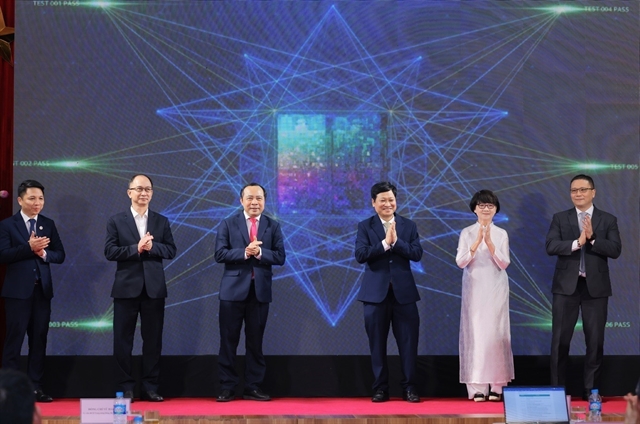 |
| Minister of Science and Technology Vũ Hải Quân and delegates launch the Vietnam National Multi-Project Wafer Coordination Center (VNMPW/CC) in Hà Nội on June 26. — VNA/VNS Photo |
HÀ NỘI — Việt Nam's first national centre to support semiconductor chip prototyping was launched on Friday, aiming to help domestic researchers and companies bring chip designs to production more quickly and at lower cost.
The Việt Nam National Multi-Project Wafer Coordination Center (VNMPW/CC), established by the Ministry of Science and Technology, will connect Vietnamese chip designers with the global semiconductor manufacturing ecosystem and provide shared infrastructure for prototyping, testing and commercialisation.
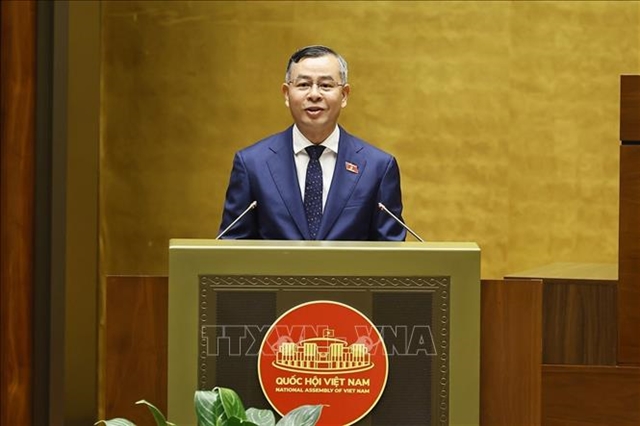
Speaking at the launch ceremony in Hà Nội, Minister of Science and Technology Vũ Hải Quân said the centre was part of the Government's strategy to build a complete semiconductor ecosystem, following recent legal and policy reforms to promote the industry.
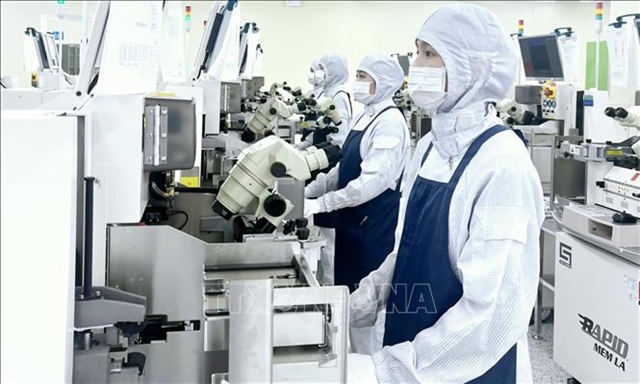
Việt Nam currently lacks industrial-scale chip manufacturing capacity, forcing universities, research institutes and chip design firms to send prototype designs to overseas foundries. The process typically costs between US$30,000 and $200,000 per design and can take 12 to 24 months.
The new centre will operate under a Multi-Project Wafer (MPW) model, allowing multiple chip designs to share a single fabrication run. The approach is expected to reduce prototyping costs, shorten development time and accelerate the commercialisation of 'Make in Vietnam' semiconductor products.
According to the ministry, Việt Nam has around 60 chip design companies, 7,000 chip design engineers and 166 universities offering semiconductor-related programmes. Initial registrations indicate demand to prototype about 30,000 chips.
The centre will support the entire semiconductor value chain, including design verification, prototyping, packaging, testing and technology transfer, while linking domestic organisations with international manufacturing and technology partners.
Under the Government's roadmap, the State will fully subsidise prototyping costs during 2026-2027 to encourage participation by universities, research institutes and businesses. The centre will continue receiving funding through 2030 to expand its shared facilities before aiming to become a leading semiconductor prototyping hub in Southeast Asia.
At the launch ceremony, the centre signed cooperation agreements with 19 domestic and international partners and established an advisory board of 21 semiconductor experts. — VNS
Sci-Tech
 Sci-Tech
 Sci-Tech
 Sci-Tech
 Sci-Tech
 Sci-Tech
 Sci-Tech
 Sci-Tech
 Sci-Tech
 Sci-Tech
 Sci-Tech
 Sci-Tech
 Sci-Tech
 Sci-Tech
 Sci-Tech