 Sci-Tech

Weaving the unique heritage of the Thu Lao
1.
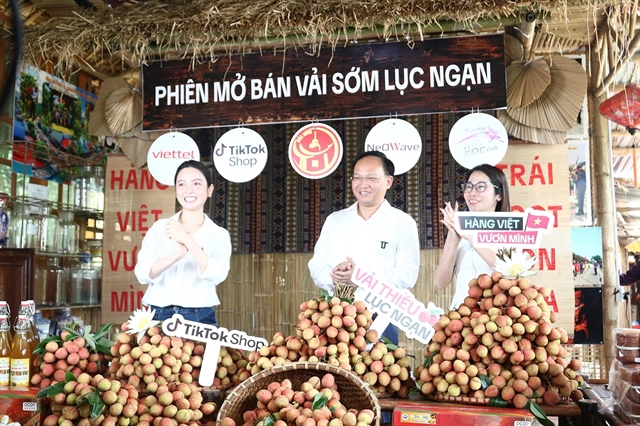 |
| Phạm Văn Thịnh (middle), vice chairman of the People’s Committee of Bắc Ninh Province, recently took part in a livestream session selling early-season lychees in Nam Dương Commune. — VNA/VNS Photo Việt Hùng |
Phạm Văn Thịnh, vice chairman of Bắc Ninh Province People’s Committee, speaks to Việt Nam News about sci-tech applications in improving the quality of exported lychee this year as output declines due to poor weather conditions.
Can you share this year’s lychee cultivation area size, estimated output and export volume for the province?
This year, Bắc Ninh Province’s lychee cultivation area has remained largely stable at around 21,000 to 22,000 hectares. As for output, we estimate production will reach only about 60 to 65 per cent of the 2025 level.
Facing such conditions, lychee prices were already quite high at the beginning of the season.
Many orchard owners said harsh weather has reduced supply while demand remains high. Will this affect export orders already placed this year?
Our priority is to fulfil orders that were signed in advance.
Farmers have gradually become accustomed to contract-based production and sales.
Even though prices for the main lychee harvest have risen sharply, farmers are still honouring contracts signed for exports to Australia, Canada and Japan.
With the spirit of cooperation between farmers, cooperatives and traders, we are working together to fulfil previously committed contracts.
The remaining output will then be sold to the domestic market.
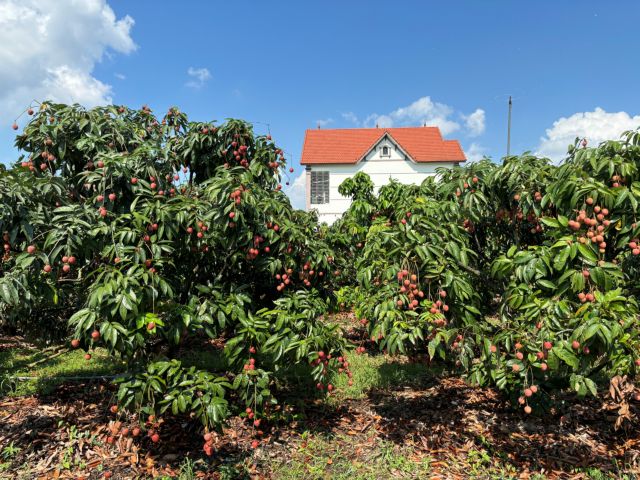 |
| A lychee orchard in Nam Dương Commune, Bắc Ninh Province. The province faces declining output of lychee this year, which leads to lower selling prices. — VNS Photo Khánh Dương |
To meet export requirements in demanding markets such as Japan and the EU, what sustainable strategies is the province pursuing?
Our view is that we must first do well with what we already have, especially for growing-area codes that have been approved for exports to strict markets such as Australia, Japan, the United States and Canada.
Right from the start of the season, we updated farmers on new cultivation techniques to ensure higher biological safety standards.
We have also strengthened regular monitoring and gradually piloted blockchain technology to manage the entire production process, including the use of fertilisers and farming materials.
I hope that if this blockchain-based traceability system continues to expand in line with government directives, the quality of lychees will improve further.
Consumers around the world will also be able to monitor product origins by accessing traceability applications.
Amid intensifying competition, what is the key for the Bắc Ninh lychee brand to gain access to more demanding markets?
I believe digital transformation and technology will continue to play a key role in managing quality and production processes for lychees.
Under the Vietnamese government’s direction on stricter quality management, traceability and processing standards, I believe this is the most sustainable way to help lychees in particular, and agricultural products in general, improve quality and meet increasingly high customer requirements.
This will also create opportunities to raise the value of Vietnamese agricultural products, allowing them to command higher prices associated with better quality.
Regarding domestic consumption, Bắc Ninh has been promoting digital transformation and local sales channels, including TikTok livestreaming under Resolution 57. Could you elaborate on efforts to diversify distribution channels and expand digital sales for lychees this year?
We began applying digital transformation to agricultural product sales, including lychees, in 2025.
Through this process, we realised that alongside training farmers in lychee-growing areas, it is also important to equip young people in these communities with the skills to naturally tell their own stories about how they care for and cultivate lychees.
Through these stories, consumers can better understand and appreciate the quality of the lychees produced by farmers in Bắc Ninh. — VNS
Sci-Tech
 Sci-Tech
 Sci-Tech
 Sci-Tech
 Sci-Tech
 Sci-Tech
 Sci-Tech
 Sci-Tech
 Sci-Tech
 Sci-Tech
 Sci-Tech
 Sci-Tech
 Sci-Tech
 Sci-Tech
 Sci-Tech