 Sci-Tech

AITO Looks Ahead to Europe, Building a Thriving Automotive Ecosystem
1.
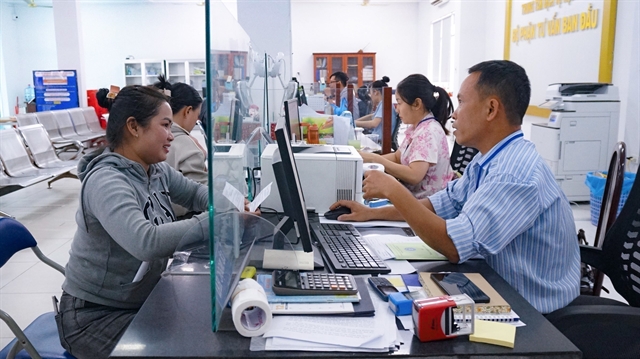 |
| Citizens in Tân Ninh Ward, Tây Ninh Province carry out administrative procedures online with support from public servants. — VNA/VNS Photo Minh Phú |
HÀ NỘI — Using digital technology to create momentum for economic breakthroughs has been one of Việt Nam’s major focuses in the past year, with the Politburo’s Resolution 57 on science and technology breakthroughs as a guiding compass.
Apart from the ‘digital transformation’ successes that have made people’s lives better, there remain challenges that require coordinated efforts from the Government, the private sector and society to place Việt Nam among the most technologically advanced countries.
The Politburo’s Resolution 57, issued on December 22, 2024, is a key instrument that lays the groundwork for the country’s acceleration of science and technology development and innovation, which are considered the main drivers of economic growth until 2030 and 2045.
Although the resolution has only been implemented for 18 months, Việt Nam’s progress towards digital transformation started six years ago with the National Digital Transformation Programme, launched by the Prime Minister on June 3, 2020.
During the programme, the digital transformation process has been implemented on three pillars: digital government, digital economy, and digital society, which support one another to make daily life more convenient and create a foundation for new governance and socio-economic development methods.
A new phase of development is unfolding as data becomes a strategic resource and artificial intelligence (AI) becomes a tool to boost productivity.
This means that digital transformation from now on requires not only technological breakthroughs but also the collaboration of the State, businesses, and society to improve regulations and policies, develop human resources and build an innovation ecosystem, which are key to actualising Resolution 57.
Success stories
On the pillar of digital government, the most noticeable change is the increasing availability of online public services, which reduce travel time, costs and paperwork for the people.
Nguyễn Thị Hường from Nghĩa Đô Ward, Hà Nội, sees this change most clearly when going for her regular health check-ups.
"Before, I had to carry both my health insurance card and my ID card. But now when I go for check-ups at E Hospital, I only need to use my chip-embedded ID card to get an automatic appointment number at the kiosk situated right at the entrance,” she told Tin tức (News) online newspaper, under the Vietnam News Agency.
After entering the information as instructed, the examination and treatment take place smoothly thanks to an electronic signal system that guides the process, she added.
"When everything is done, I would go down to the ground floor to get my medicine and pay the fees, which can all be done through the computer system, which is much more convenient than before," said Hường.
 |
| People queue to get appointment numbers from an electronic kiosk at E Hospital in Hà Nội. — Photo baotintuc.vn |
Đoàn Thành An, a bank employee in Hà Nội, has also had positive experiences with electronic public service systems. He no longer has to queue from early morning when going to complete land mortgage procedures at the Hanoi Public Administrative Service Centre.
"I signed up for a slot online in advance, so I didn't have to wait long. Previously, during peak times when there were a lot of applications, I had to be there from 5am to get a queue number," he said.
A total of 5,136 administrative procedures have been listed on the National Public Service Portal, of which 3,745 can be carried out entirely on the portal.
On May 29, the portal was fully connected to the National Data Centre, which connects with the administrative procedure processing information systems of all 15 ministries, agencies and 34 cities and provinces to form a unified ‘one-stop shop’ governance model nationwide.
The administrative reform has proven to be economically effective, with the online public services helping to save nearly VNĐ840 billion (US$31 million) at the central level, VNĐ4.8 trillion ($319.5 million) in localities, and VNĐ1.6 trillion ($60.9 million) in Hà Nội alone.
In addition, the digital economy has opened up new growth opportunities, with e-commerce, digital businesses and digital payments being the key sectors. One of the fastest-growing in Southeast Asia, it currently contributes 14 per cent of gross domestic product (GDP).
 |
| A livestream session of women in Phiêng Luông Village in the northern province of Tuyên Quang to sell agricultural produce on digital platforms. — VNA/VNS Photo |
The digital transformation of society is also making significant progress. Citizens are becoming increasingly familiar with using chip-embedded identity (ID) cards and the VNeID mobile application to carry out administrative procedures, make cashless payments, scan QR codes or look up information online.
For many people, especially the young, smartphones are no longer simply a means of communication but have become a ‘digital wallet’ that supports many daily tasks.
Remaining challenges
At the conference to review the first 1.5 years of implementing Resolution 57, held in Hà Nội on July 1, data from the Central Steering Committee on Science, Technology Development, Innovation and Digital Transformation showed that 84.8 per cent of the tasks laid out for the period had been completed.
However, according to the committee’s deputy head Nguyễn Hải Ninh, the actual results are not entirely commensurate with the reported targets, with several tasks remaining on paper and not implemented.
In many localities, elderly people and small businesses still have difficulties accessing digital platforms, from electronic identification and online public services to online tax declaration and payment.
Many remote areas still experience electricity shortages or insufficient telecommunications coverage, which hinder the deployment of digital platforms. About 30 per cent of the terminal equipment used for work in localities still does not meet the minimum requirements for digital connection, hindering digital transformation at the grassroots level.
Data and database development remains slow. Many national and specialised databases are incomplete or not yet interconnected, affecting the growth of the data economy and the improvement of online public services.
From a business perspective, Mạc Quốc Anh, vice president of the Hanoi Association of Small and Medium Enterprises (HAMESA), said that costs remain one of the biggest barriers to digital transformation in small- and medium-sized enterprises (SMEs), which make up about 97 per cent of Vietnamese businesses.
To digitalise workflow, they must invest in a comprehensive range of hardware, software and new technological solutions, including AI-integrated tools, which can push costs up about 20-30 per cent and place significant pressure on the enterprise.
 |
| Staff members of a tech company introduces digital solutions and equipment for household use at a science conference held in the southern province of Khánh Hòa earlier this year. — VNA/VNS Photo Nguyễn Thành |
In addition to a lack of financial resources, many businesses also lack technological personnel and management thinking, he added.
"The business leader plays a decisive role in the digital transformation process. Without a commitment to innovation, businesses can easily lose their competitive advantage," said Quốc Anh.
Apart from the barrier of costs, according to Lê Hồng Quang, general director of MISA JSC., a member of the Việt Nam Association of Corporate Directors (VACD), many businesses don't know where to start or how to build a digital transformation roadmap.
“Many of them are unsure about the effectiveness of their investments, and are using multiple separate software programmes, which leads to scattered data, disconnected processes and difficulties in data use,” he said.
Possible solutions
These challenges show that for technology, innovation and digital transformation to be new growth drivers as envisioned by Resolution 57, a comprehensive system of solutions is needed, from improving policies and infrastructure to enhancing people’s digital skills and supporting businesses in mastering technology and data.
From a research perspective, Lê Văn Châm, director of the Institute for Research and Development of New Technologies, said that data needs to be identified as a national strategic resource that should be standardised, connected, shared and used effectively.
Digital skills for the people should be continuously improved to narrow the digital divide between regions, he added.
“Most importantly, digital transformation needs to be evaluated by its actual effectiveness through cost reduction, increased labour productivity, improved quality of public services and the creation of specific socio-economic value, rather than just by the digitising processes,” said Châm.
 |
| A member of the community digital team in Yên Ninh Commune, Thanh Hóa Province instructs citizens to install mobile applications, use online public services and make digital payments, part of the nationwide Digital Literacy Programme. — VNA/VNS Photo Khiếu Tư |
Based on recommendations from the Ministry of Science and Technology, on June 9, the Prime Minister issued Decision 1033, launching the Programme for the Development of the Digital Economy and Digital Society for 2026-30, with specific goals outlined.
For SMEs, on March 16, the Prime Minister issued Decision 433, specifying a plan to support about 500,000 businesses in accessing digital solutions.
The support policies in this plan not only introduce technology but also help businesses build a digital transformation roadmap and connect them with suitable digital platforms, products and incentive programmes from technology companies, according to Nguyễn Phú Tiến, deputy director of the Department of Digital Economy and Society, under the science ministry.
“Through these programmes, businesses would gradually have the chance to invest in equipment, apply digital technology to their production and operations, and improve their management capabilities and competitiveness,” he said.
 |
| A public servant instructs citizens in Nình Bình Province to use an electronic kiosk to verify information and issue digital copies of electronic documents in June. — VNA/VNS Photo Hải Yến |
Speaking at the Vietnam Digital Summit 2026, held on June 5 in Ninh Bình Province, Deputy Minister of Science and Technology Bùi Hoàng Phương stressed that digital transformation must be anchored in addressing the practical difficulties and obstacles faced by citizens, businesses and organisations.
Digital technology should be used to redesign work and service processes and create more effective management methods, rather than simply transferring old processes to an electronic environment, he said.
"Digital transformation is not about digitising old processes, but creating new ways of doing things using digital technology with outstanding efficiency," said Phương.
The success of digital transformation will only be confirmed when citizens can complete administrative procedures faster, businesses reduce operating costs, and officials can focus on their expertise instead of processing paperwork, he added.
“When these benefits are clearly felt in practice, citizens, businesses and government agencies will proactively participate in, and create momentum for sustainable digital transformation,” he said.
The ministry is working on a Basic Digital Skills Framework, a foundation for developing digital skill training programmes for agencies, organisations, businesses and individuals under its management. The Ministry of Education and Training will develop teaching materials based on this framework.
Meanwhile, the Ministry of Public Security will continue to implement the Digital Literacy Programme for the People to help public servants and citizens enhance their skills in using technology and online public services. — VNS
Sci-Tech
 Sci-Tech
 Sci-Tech
 Sci-Tech
 Sci-Tech
 Sci-Tech
 Sci-Tech
 Sci-Tech
 Sci-Tech
 Sci-Tech
 Sci-Tech
 Sci-Tech
 Sci-Tech
 Sci-Tech
 Sci-Tech