 Sci-Tech

AITO Looks Ahead to Europe, Building a Thriving Automotive Ecosystem
1.
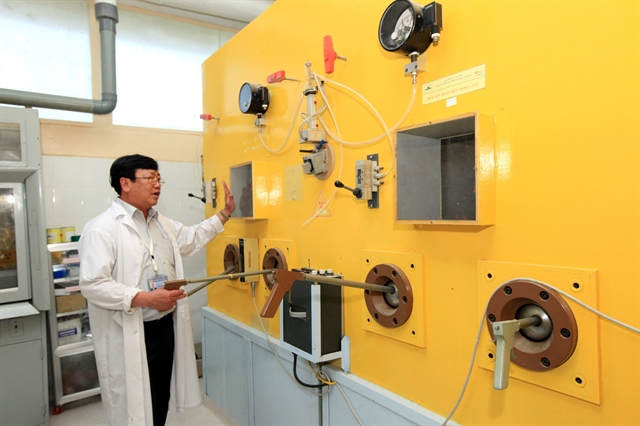 |
| A nuclear engineer prepares radioactive isotopes for medical use at the Đà Lạt Nuclear Reactor. — VNA/VNS Photo |
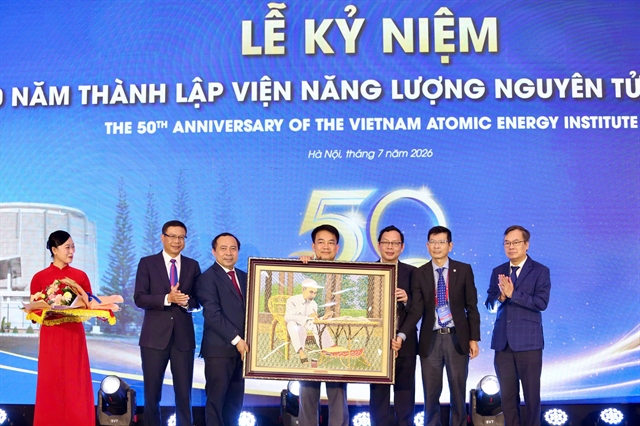
HÀ NỘI — Việt Nam's top atomic research body marked its 50th anniversary this year by declaring a new ambition: full mastery of nuclear technology and a stronger footing on the world stage.
The Việt Nam Atomic Energy Institute (VINATOM) traces its roots to the Đà Lạt Nuclear Research Institute, founded in 1976, and was formally established under its current name in 1979.
Today it runs two facilities of national importance – the Đà Lạt Nuclear Reactor and an electron beam accelerator in Hà Nội – and is building a third, the National Centre for Nuclear Science and Technology, anchored by a roughly 15-megawatt multipurpose research reactor.
That new reactor is meant to do double duty. It will underpin Việt Nam's revived civilian nuclear power ambitions while helping the institute build toward a bigger name in international nuclear research, according to Trần Chí Thành, the institute director.
Thành traced the country's nuclear vision back to the years just after independence, when leaders first identified atomic energy as strategically important.
That thinking, he said, carries through to Politburo's Resolution 70, which maps out energy security through 2030 with a vision to 2045, and calls for wider peaceful use of nuclear technology across the economy.
The path hasn't been straight. Lawmakers approved the Ninh Thuận 1 and Ninh Thuận 2 power plant projects back in 2009, settling on pressurised water and boiling water reactor designs, and VINATOM spent years researching the technology and safety questions involved.
But in 2016, the programme was shelved.
Work didn't stop, though. Through the pause, the institute kept building expertise – studying newer Generation III+ reactor designs and, increasingly, small modular reactors.
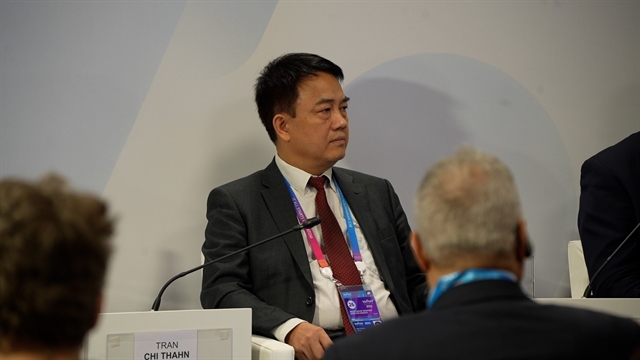 |
| VINATOM director Trần Chí Thành at an international workshop on nuclear technology in Russia, September 2025. — VNA/VNS Photo |
When Việt Nam's nuclear plans revived in late 2024, that groundwork became the foundation for VINATOM's current mandate: assessing reactor safety for large-scale plants – work that will feed directly into the Ninh Thuận projects, training the next generation of nuclear specialists and pushing forward its own small modular reactor designs for eventual domestic use.
The institute has also kept up technical cooperation with the International Atomic Energy Agency on small reactors, nuclear safety and fuel research, Thành said.
The applications go well beyond electricity, he added. Nuclear techniques already help diagnose and treat cancer, breed higher-yielding crops that resist pests, drought and salinity through induced mutation and test industrial equipment, infrastructure and microchips without damaging them.
They're also used to track groundwater reserves, pollution and land subsidence, and increasingly, in defence and security work.
Looking ahead, Thành said the institute's priorities flow from Politburo guidance on peaceful nuclear development and Decision 438, which lays out a strategy through 2035 with a further outlook to 2050.
Alongside reactor physics and safety research to support new power plants, the priorities include expanding nuclear medicine and radiation technology, and broadening applications in agriculture, natural resources and the environment.
Radiation monitoring, management of nuclear waste and spent sources and emergency response to radiation incidents will get particular attention, he said, alongside deeper research collaboration in fields such as neutron physics, radiation safety and radiobiology.
Phạm Duy Hiển, a former VINATOM deputy director who also once led the Đà Lạt institute and helped bring its reactor back online in the 1980s, put it starkly: a research reactor, he said, is essential to the survival of the country's nuclear sector – a precondition, not an option, for expanding peaceful nuclear applications.
Building out the sector, he added, demands patience and a long view, backed by steady investment in infrastructure and people.
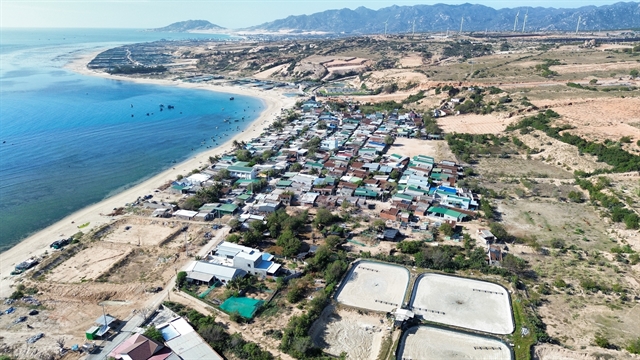 |
| Phước Dinh Commune in the south-central province of Khánh Hòa, part of the planned site for the Ninh Thuận 1 nuclear power plant. — VNA/VNS Photo |
Among the institute's proudest achievements over the past half-century, Thành pointed to the development of targeted radiopharmaceuticals, which he said showcases its research strength in nuclear medicine and its promise for cancer care.
Nuclear and isotope techniques have also sharpened the ability to track climate change impacts and to support sustainable farming, resource management and environmental protection, he said – while the Đà Lạt reactor's decades of safe operation have underpinned economic development all along.
Now entering its next chapter, the institute says it aims to become the leading nuclear research and development centre not just at home but across the ASEAN region, push further onto the international stage. — VNS
Sci-Tech
 Sci-Tech
 Sci-Tech
 Sci-Tech
 Sci-Tech
 Sci-Tech
 Sci-Tech
 Sci-Tech
 Sci-Tech
 Sci-Tech
 Sci-Tech
 Sci-Tech
 Sci-Tech
 Sci-Tech
 Sci-Tech