 Sci-Tech
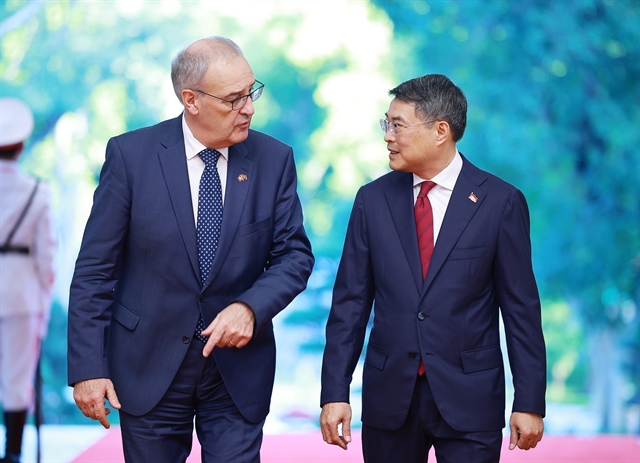
Việt Nam, Switzerland to turn education, sci-tech, innovation into cooperation focus
1.
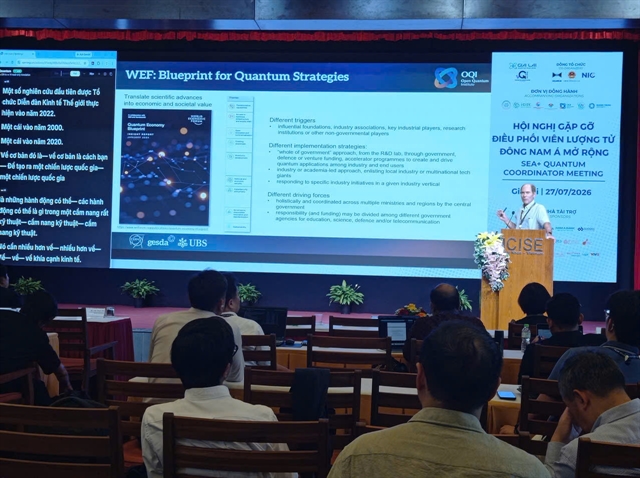 |
| Tim Smith from the Open Quantum Institute (OQI) highlights international at the Southeast Asia Plus Quantum Coordinator Meeting on Monday. — VNS Photo Khánh Chi |
GIA LAI — The current geopolitical situation, protectionism are hindering global cooperation, increasing risks and impeding development progress, warned Tim Smith from the Open Quantum Institute (OQI) within the IT Department at the European Laboratory for Particle Physics.
“If we don’t collaborate internationally, we know all of the problems – that is going to exacerbate the risks and diminish the collective benefits. Excessive focus on security-related concerns is going to slow down the general progress,” Tim told the Southeast Asia Plus Quantum Coordinator Meeting in Gia Lai Province on Monday.
As quantum technologies move rapidly from laboratory research toward real-world applications, Southeast Asian nations face both a shared opportunity and a shared challenge: how to coordinate talent development, research infrastructure, industrial partnerships, and policy frameworks so that the region can participate meaningfully in and benefit from the global quantum revolution.
Speaking at the roundtable discussion on National and Regional Policies for Quantum Technologies roundtable discussion, Tim analyses models for developing quantum strategies, ranging from government initiatives and industry associations to research institutes. He also cited 2025 OECD and World Economic Forum reports regarding the core pillars: research & innovation, talent development, commercialisation/startups, infrastructure, national security, and international cooperation.
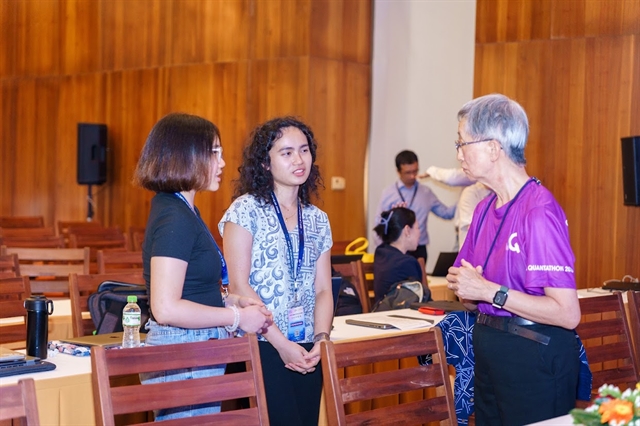 |
| Delegates discuss quantum technologies during the break time. — Photo ICISE |
“It’s absolutely underpinning everything is the idea that we should actually be collaborating on this. We can’t go it alone. Supply chains, talent chains - they’re all transnational. So it has to be underpinned by international collaboration,” said the expert.
“So we really do need international collaboration. We need to pool resources. We need to synchronise the funding. This is the only way to amplify the impact of all of this investment and achieve the economies of scale. And it distributes the risk also amongst the countries.
“And especially in our domain that we’re studying in the OQI, the only way to accelerate progress towards breakthroughs that will help address these major societal challenges are because they’re global challenges, they have to have global responses.”
Deputy Director of Gia Lai Provincial Department of Science and Technology, Dr Nguyễn Hữu Hà emphasised that the event serves not only as a meeting point for quantum technology coordinators from Southeast Asia and international partners but also as a forum to share visions, experiences, and new initiatives aimed at promoting cooperation in research, training, human resource development, and technology transfer.
“We expect the meeting to contribute to strengthening the cooperative network among regional nations, enhancing connectivity between research centers, universities, and scientific organisations. This will lead to the creation of practical cooperation programmes focused on addressing shared challenges through science and technology,” Dr Hà said.
Gia Lai does not aim to develop science through isolated steps.
The province's ambition is to become a reliable partner, ready to collaborate with research institutes, universities, businesses, and international organisations in developing research programmes, training, technology transfer, and high-quality human resource development, according to Dr Hà.
He said he also expected that discussions will open up new collaborative initiatives, joint research programmes, scholar exchange activities, personnel training, and innovation connectivity between Southeast Asian nations and our international partners.
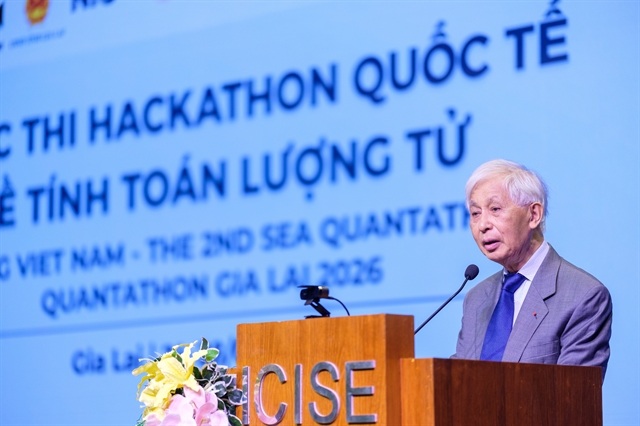
Officially opened at the International Centre for Interdisciplinary Science and Education (ICISE), the meeting is one of the events under the Gia Lai Quantum Year 2026 programme.
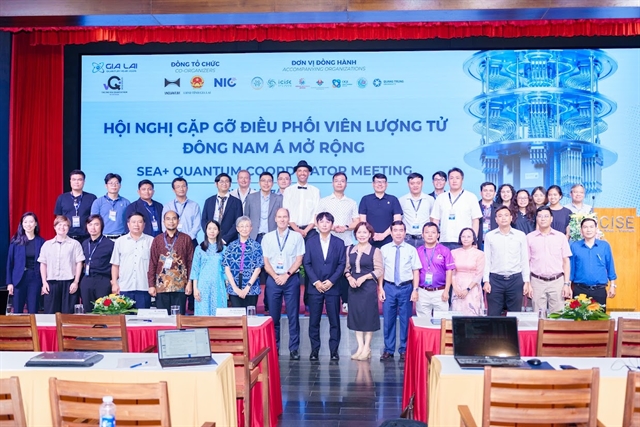 |
| Southeast Asia Plus Quantum Coordinator Meeting gathers nearly 50 participants from Southeast Asia and international partners. — Photo ICISE |
The meeting brings together nearly 50 participants, including quantum coordinators, researchers, policymakers, diplomats, representatives from research institutions, and industry stakeholders from Việt Nam and abroad, to exchange perspectives on quantum technology policies, workforce development, and quantum infrastructure.
The meeting is structured around three thematic sessions national and regional policies for quantum technologies; developing the quantum workforce and talent pipeline; and quantum infrastructure: national sovereignty and shared infrastructure.
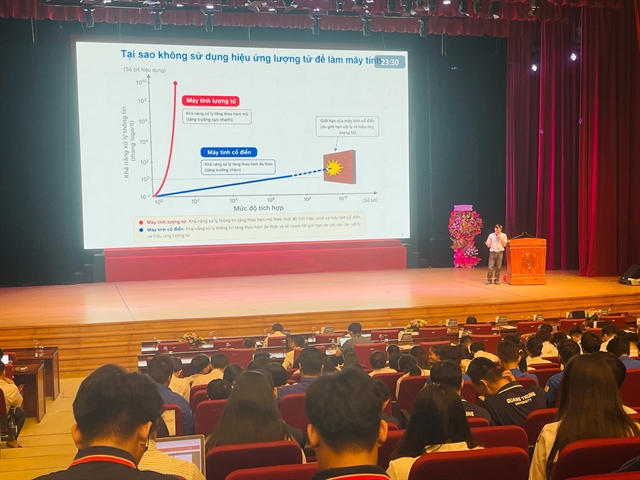
In his technical remarks for the Challenges in Quantum Technology Development session, Dr Nguyễn Quốc Hưng, Director at the Institute for Quantum Technologies, Vietnam National University, Hanoi, highlighted practical applications, development progress, and challenges in quantum technology; establishing a shared foundation for the policy dialogue sessions.
Meanwhile, Science, ICT and Communications Attaché at the Embassy of the Republic of Korea in Việt Nam, Lee Eunkyu, provided insights and experience in advancing quantum technology and other strategic technologies.
He noted that in 2026 alone, the RoK has issued Quantum Comprehensive Plan, Quantum Cluster Plan and made amendment to the Quantum Technology Industry Act which officially took effect in November, 2024. The amended act focuses on five key obligations and policy measures, mandating the establishment of quantum security systems and impact assessments for quantum technology utilisation projects
In his presentation, the official also explored opportunities to strengthen cooperation in science, technology, and innovation between Việt Nam and South Korea. — VNS
Sci-Tech
 Sci-Tech
 Sci-Tech
 Sci-Tech
 Sci-Tech
 Sci-Tech
 Sci-Tech
 Sci-Tech
 Sci-Tech
 Sci-Tech
 Sci-Tech
 Sci-Tech
 Sci-Tech
 Sci-Tech
 Sci-Tech