 Sci-Tech
EVNNPT seeks over $224 mln in bank loans for grid expansion
1.
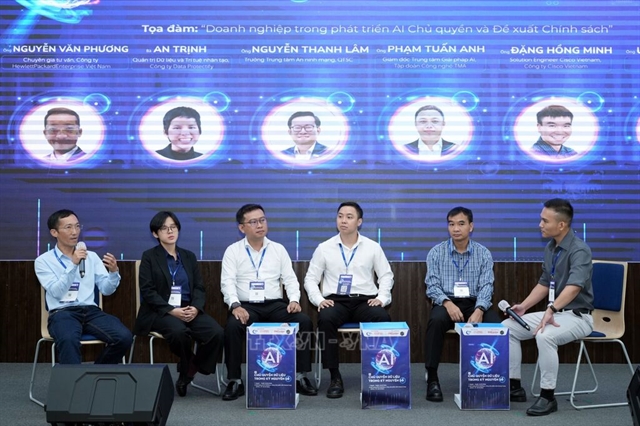 |
| Experts speak during a panel discussion at the seminar on "AI and Data Sovereignty in the Digital Era" in HCM City on July 22. — VNA/VNS Photos Tiến Lực |
HCM CITY — Việt Nam must master its data, computing infrastructure, technology, and workforce to build sovereign artificial intelligence (AI), an imperative for the country's sustainable digital economy, experts said at a seminar in HCM City on Wednesday.
Speaking at the event, experts highlighted that AI is no longer a technology of the future but has become essential infrastructure for the present.
The event, titled "AI and Data Sovereignty in the Digital Era", was co-organised by the Việt Nam Internet Association’s (VIA) Southern Office, Quang Trung Software City Development Company Limited (QTSC), HCM City Digital Transformation Support and Consulting Centre (DXCenter), and Security Bootcamp.
Phạm Thị Kim Phượng, deputy director of QTSC, said AI only generates real value when nurtured by data.
Today, data has become a strategic asset, a critical engine for socio-economic development, and the cornerstone of national competitiveness.
Effective data governance, exploitation, and protection have become urgent requirements for all organisations and enterprises.
“Sovereign AI is not merely about owning AI technology, but about the capacity to master data, computing infrastructure, tech platforms, human resources, and innovation capabilities to serve national and corporate interests.”
This is a pivotal moment for Việt Nam, as legal and policy frameworks regarding data, cybersecurity, personal data protection, and AI governance are being refined to lay the foundation for a safe and sustainable digital economy, experts said.
Nguyễn Văn Phương, a representative from Hewlett Packard Enterprise Việt Nam, said vital data – such as state secrets, financial records, and medical files – face severe risks of unauthorised access when processed or stored on uncontrolled infrastructure, posing major threats to data sovereignty and information security.
“Developing sovereign AI is a strategic necessity.”
While organisations may have different priorities, common drivers include boosting economic competitiveness, ensuring technological autonomy, guaranteeing national security, promoting innovation, and preserving cultural identity and language, Phương said.
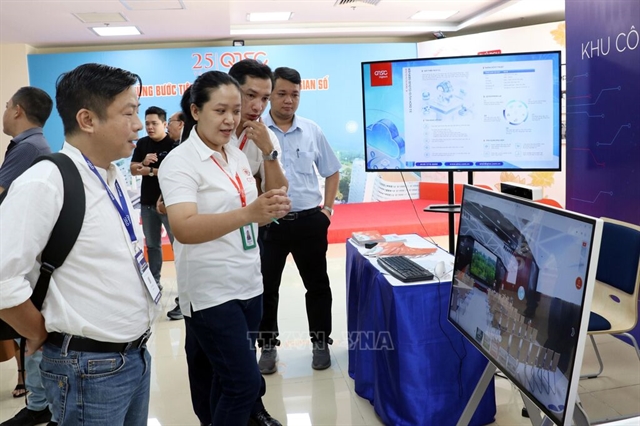 |
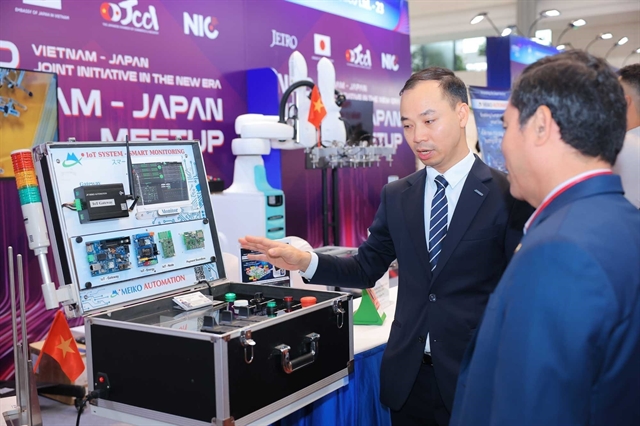
| Delegates learn about technology solutions displayed at an exhibition within the framework of the seminar in HCM City on July 22. |
In-house AI solutions on the rise
Current trends show that more companies, particularly those handling sensitive or high-security data, are moving away from total reliance on public cloud platforms.
Instead, they are deploying AI in-house to better protect their sensitive assets.
Delegates discussed the Local Data - AI Solutions model, which enables enterprises to process data on private infrastructure by combining Local Large Language Models (LLM), multi-agent AI, and Edge AI to maximise data control, reduce latency, and mitigate security risks.
Experts also highlighted the fundamental relationship between digital infrastructure, data, and sovereign AI.
Data infrastructure, GPUs, High-Performance Computing (HPC), and large-scale AI deployment models play a foundational role in forming autonomous AI capabilities for both enterprises and the nation.
Addressing cybersecurity concerns, Trần Thanh Lâm, head of QTSC’s Cybersecurity Centre, said AI sovereignty in cybersecurity must begin with managing the AI attack surface rather than simply adopting technology.
Businesses need to shift from traditional security to comprehensive AI attack surface management, he said.
“Organisations must map their AI assets, establish clear usage policies and data classifications, and regularly conduct security drills alongside collaborative research and training.”
He also underscored the crucial role of robust IT infrastructure, data centres, and continuous information security monitoring in ensuring stable and safe AI operations.
Within the framework of the event, an exhibition showcased various practical AI applications and digital transformation solutions, while organisers reiterated VIA’s commitment to bridging enterprises, regulatory agencies, and research institutes to foster innovation and workforce development. — VNS
Sci-Tech
 Sci-Tech
 Sci-Tech
 Sci-Tech
 Sci-Tech
 Sci-Tech
 Sci-Tech
 Sci-Tech
 Sci-Tech
 Sci-Tech
 Sci-Tech
 Sci-Tech
 Sci-Tech
 Sci-Tech
 Sci-Tech