 Sci-Tech

HKSTP Partners with Leading Science and Technology Company Merck to Open a New Chapter in I&T Collaboration
1.
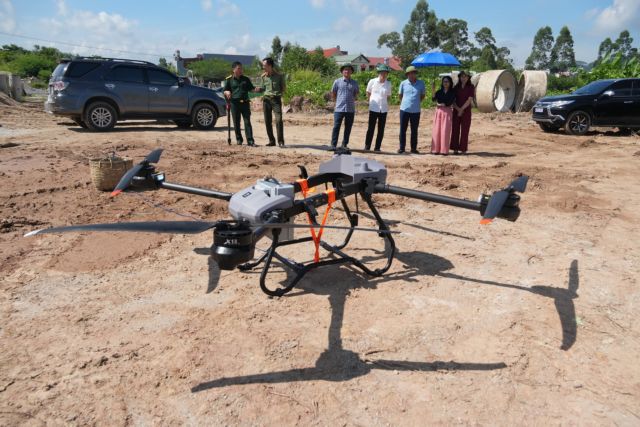 |
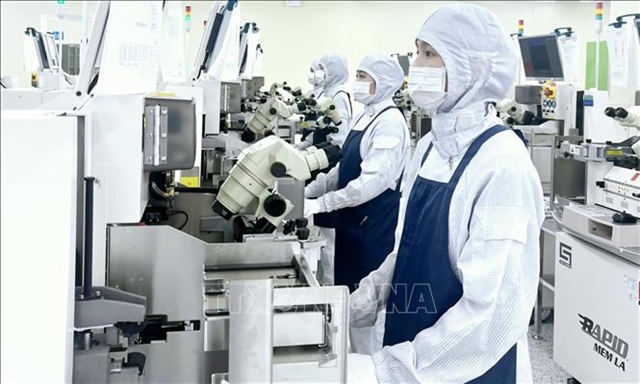
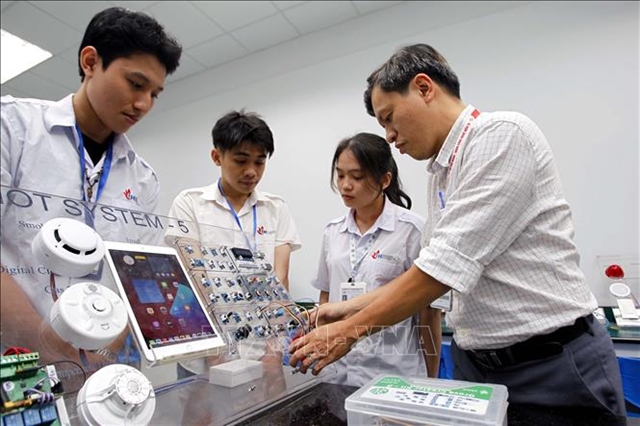
| The northern province of Lạng Sơn has made coordinated and targeted efforts in recent years to advance science and technology, innovation and digital transformation, yielding positive results. Lạng Sơn considers digital technologies, unmanned aerial vehicles and artificial intelligence applications in governance and public administration as key drivers of broader digital transformation. These are also seen as practical applications of core and strategic technologies in support of socio-economic development and the province’s goal of achieving double-digit economic growth. — VNA/VNS Photo Tiến Vĩnh |
HÀ NỘI — Việt Nam has rolled out an extensive package of incentives and special mechanisms to accelerate the development of strategic technologies, as the country seeks to build greater technological self-reliance and reduce its dependence on imported know-how.
The new framework, which includes tax breaks, funding support, greater autonomy for researchers and measures to attract top talent, is expected to provide a major boost to efforts to master core and strategic technologies.
The policies stem from Politburo Resolution No. 57-NQ/TW, which identifies science, technology, innovation and national digital transformation as strategic breakthroughs and key drivers for helping Việt Nam escape the middle-income trap.
According to Nguyễn Phú Hùng, director general of the Department of Science, Technology and Innovation under the Ministry of Science and Technology, the resolution reflects the country's determination to move beyond an economic model based on outsourcing and imported technologies.
“The goal is to master core and strategic technologies and gradually build an independent and self-reliant technological foundation for the country,” Hùng said.
To support that ambition, Việt Nam has established a legal framework centred on the Law on Science, Technology and Innovation and the Law on High Technology.
Further guidance has been provided under Government Decree No. 260/2026/NĐ-CP, which details mechanisms to support the development of strategic technologies, while Decision No. 21/2026/QĐ-CP defines the list of strategic technologies and products eligible for incentives.
Prime Ministerial Decision No. 808/QĐ-TTg has also assigned development tasks to ministries and agencies.
Hùng described the new regulations as both a “declaration of action” and a solid legal foundation for mobilising resources to develop and master strategic technologies.
Under the new rules, enterprises and research and development centres engaged in strategic technology projects will be eligible for some of the highest levels of support currently available.
The State may cover up to 100 per cent of funding for strategic technology projects commissioned by the Government or financed through the National Foundation for Science and Technology Development (NAFOSTED) and ministerial and local funds.
Participating organisations will also receive priority access to regulatory sandboxes for emerging technologies, products and business models, as well as to national laboratories, testing facilities and research centres funded by the State.
Tax incentives are another key component of the package. Organisations and individuals conducting research and development in strategic technologies will be exempt from import duties on machinery, equipment, specialised materials and scientific publications used directly in their projects.
Businesses investing in scientific research, technological development and innovation will also be eligible for subsidised loans through the National Technology Innovation Fund (NATIF) and other ministry and local funds.
The support will cover up to 100 per cent of the contractual lending rate, capped at 10 per cent annually, for a maximum period of five years.
Authorities hope the incentives will encourage companies to invest more aggressively in research, development and the commercialisation of strategic technologies.
Decree 260 also establishes a special national programme dedicated to strategic technologies, built around three categories of projects.
The first covers projects commissioned directly by the Government and implemented by ministries and agencies. The second focuses on proposals originating from ministries and local authorities, which will be assessed and supported by the Ministry of Science and Technology.
The third category is designed to fund breakthrough technological solutions through competitive calls for proposals managed by public funds.
According to the ministry, all three categories will operate under unprecedented mechanisms aimed at accelerating innovation.
Among the most notable changes is a milestone-based funding model, under which disbursement and settlement of funds will depend on progress and results achieved at each stage of a project.
Research institutions, businesses and project leaders will also be granted greater autonomy in financial management, project implementation and contractor selection, in a bid to remove administrative bottlenecks that have long hampered research and development activities.
The programme additionally introduces a multi-track independent research mechanism, allowing the State to fund two organisations simultaneously to pursue different technological approaches to the same challenge.
Officials will evaluate the outcomes at predefined milestones and continue investing in the most promising solution. The ministry believes the model will foster healthy competition and improve the chances of achieving technological breakthroughs.
Special arrangements are also being designed to attract leading scientists and experts from both Việt Nam and abroad through more flexible remuneration and reward policies.
Hùng said the institutional framework for strategic technologies was now largely in place, but emphasised that effective implementation would be critical.
He added that, given the speed at which the framework had been developed, shortcomings and challenges could emerge during implementation.
“We hope to receive feedback from scientists, businesses and management agencies so that policies can continue to be refined and the most favourable legal environment can be created for the development of strategic technologies,” he said. — VNS
Sci-Tech
 Sci-Tech
 Sci-Tech
 Sci-Tech
 Sci-Tech
 Sci-Tech
 Sci-Tech
 Sci-Tech
 Sci-Tech
 Sci-Tech
 Sci-Tech
 Sci-Tech
 Sci-Tech
 Sci-Tech
 Sci-Tech