 Economy



Vietnamese Prime Minister meets Cambodian National Assembly President
1.
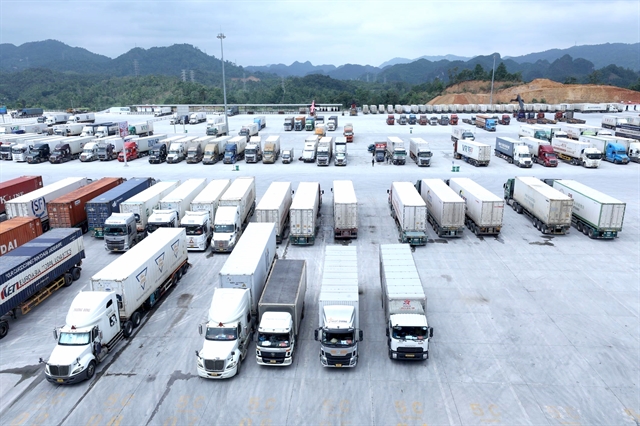 |
| Viettel Logistics Park in Lạng Sơn. The rapid growth of e-commerce and the digital economy has heightened the risk of online fraud, data theft, cyberattacks and privacy violations. — VNA/VNS Photo |
HÀ NỘI — Experts say policies on taxation, customs and logistics need further refinement to ensure more protection for cross-border transactions.
Dr Trần Anh Tuấn of the Department of International Law and Investment Dispute Settlement under the Ministry of Justice said that, in order to safeguard the legitimate rights and interests of Vietnamese individuals and organisations in cross-border transactions, it is necessary to strengthen consumer protection mechanisms and improve policies on taxation, customs, logistics and related regulations governing international trade.
According to Tuấn, cross-border transactions now encompass nearly every sector, ranging from civil and commercial activities to investment and international service provision.
Overseas investments by Vietnamese enterprises, foreign investment in Việt Nam, import-export activities, cross-border service delivery and civil relations involving foreign elements are all expanding rapidly.
These activities are increasingly becoming important drivers of economic growth and are helping broaden development opportunities for businesses and citizens alike.
The rapid growth of e-commerce and the digital economy has also heightened the risk of online fraud, data theft, cyberattacks and privacy violations.
Meanwhile, compliance with international standards on data protection, anti-money laundering, export controls, and risk management in the digital environment remains a relatively new area for many businesses and individuals.
In response to these challenges, Tuấn proposed further improvements to the legal framework governing electronic transactions, digital commerce and emerging business models to meet the demands of the Fourth Industrial Revolution.
Economist Nguyễn Phan Mạnh agreed that, amid increasingly deep international integration, improving the legal framework to protect the lawful rights and interests of Vietnamese individuals and organisations in cross-border transactions has a direct impact on national interests.
The rapid expansion of e-commerce and cross-border digital platforms has given rise to numerous new legal issues involving consumer protection, market competition, product quality, environmental management, electronic waste treatment and other challenges that require timely legal responses.
Deputy Minister of Justice Nguyễn Thanh Tú said that the ministry would focus on fully assessing the impact of Big Data, information technology (Infotech), and biotechnology (Biotech) in the context of digital transformation and international integration.
In addition, Việt Nam needs to establish an appropriate governance framework that can effectively manage risks, prevent data misuse and monopolisation in digital field. At the same, it will maximise the benefits of technological advancements to support socio-economic development, improve the quality of products and services, and enhance the competitiveness of Vietnamese enterprises.
A recent Ministry of Justice report on protecting the legitimate rights and interests of Vietnamese individuals and organisations in cross-border transactions also proposed solutions centred on improving the institutional framework for the digital economy and cross-border digital transactions.
This is expected to become one of the key pillars of the legal system in the coming years. Priority areas include further improvements to legislation on e-commerce, data standardisation, electronic contracts and mechanisms for the international recognition of digital signatures.
The report also recommends studying emerging issues such as central bank digital currencies (CBDCs), cross-border digital payments, and anti-money laundering measures using big data and artificial intelligence. They also include protection of personal data and trade secrets, consumer rights, and the development of online dispute resolution mechanisms, digital arbitration and digital courts.
At the same time, Việt Nam should leverage effectively international commitments and the flexible mechanisms under international treaties to which it is a party, thereby providing stronger protection for the legitimate rights and interests of Vietnamese citizens and businesses. VNS
Economy
 Economy
 Economy
 Economy
 Economy
 Economy
 Economy
 Economy
 Economy
 Economy
 Economy
 Economy
 Economy
 Economy
 Economy