 Economy



NA must embody spirit of action, innovation, development: top legislator
1.
|
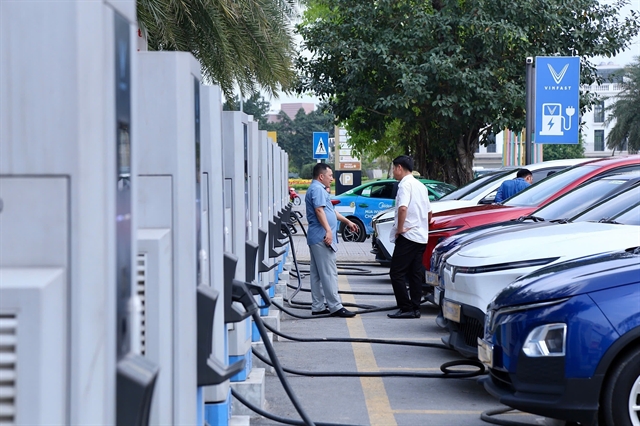
| A charging station in Hà Nội. Battery electric vehicles will continue to enjoy exemption on the first-time registration fee through the end of 2030. — VNA/VNS Photo Hà Anh |
HÀ NỘI — Buyers of battery electric vehicles (EVs) will continue to enjoy a full exemption from first-time registration fees until the end of 2030 under a new Government decree designed to accelerate Việt Nam’s transition to greener transport and support the development of the domestic EV industry.
Decree No. 202/2026/NĐ-CP, issued on June 8, will take effect on March 1, 2027, replacing Decree No. 51/2025/NĐ-CP on registration fees.
According to the Ministry of Finance, the extension is intended to help reduce air pollution from road transport, encourage investment in EV manufacturing and supply chains, and stimulate consumer demand for EVs.
Việt Nam first introduced registration fee incentives for EVs under Decree No. 10/2022/NĐ-CP, which exempted buyers from first-time registration fees for three years from March 1, 2022. The policy was followed by a 50 per cent reduction for the subsequent two years compared with gasoline- and diesel-powered vehicles of the same seating capacity.
In February 2025, the Government extended the exemption until the end of February 2027 under Decree No. 51/2025/NĐ-CP.
The ministry said the zero-rate policy has supported consumers, manufacturers and distributors of EVs while contributing to environmental protection efforts.
It also noted that the global EV market has expanded rapidly in recent years, becoming a major segment of the automotive industry.
Global EV sales exceeded 17 million units in 2024, accounting for more than 20 per cent of total vehicle sales. The figure is estimated to surpass 20 million units in 2025, representing more than a quarter of the market.
Many countries are moving to phase out fossil fuel-powered vehicles and promote cleaner transport alternatives while expanding charging infrastructure to support the growing adoption of EVs, the ministry said. — BIZHUB/VNS
Economy
 Economy
 Economy
 Economy
 Economy
 Economy
 Economy
 Economy
 Economy
 Economy
 Economy
 Economy
 Economy
 Economy
 Economy