 Economy


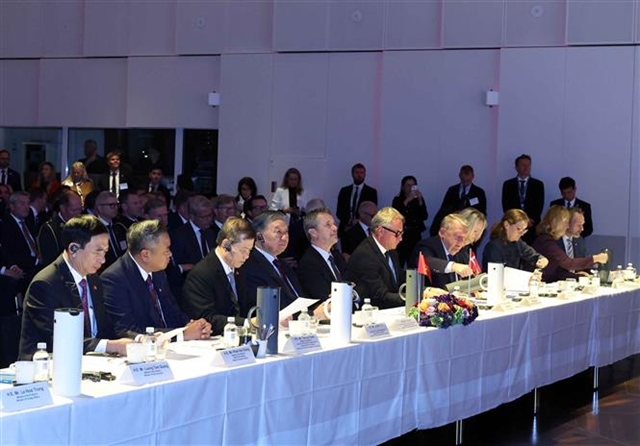
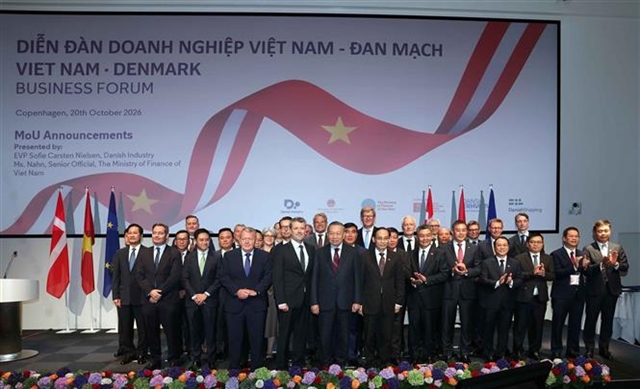
Việt Nam, Denmark issue joint statement on establishment of Comprehensive Strategic Partnership
1.
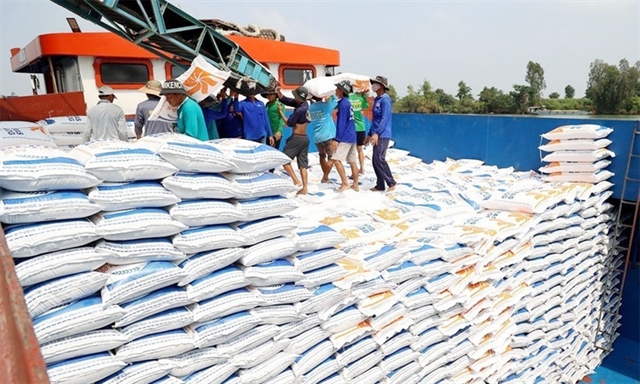 |
| The Philippines remained Việt Nam’s largest rice market, accounting for 47.6 per cent of total exports. — VNA/VNS Photo |
HÀ NỘI — Việt Nam exported an estimated 640,000 tonnes of rice worth US$289.4 million in February, according to the Ministry of Agriculture and Environment.
In the first two months of the year, rice exports reached 1.3 million tonnes valued at $599.3 million, up 5 per cent in volume but down 11.2 per cent in value compared with the same period last year.
The average export price during the January–February period was estimated at $464.1 per tonne, a decrease of 15.4 per cent year on year.
The Philippines remained Việt Nam’s largest rice market, accounting for 47.6 per cent of total exports. China and Ghana followed with shares of 18.3 per cent and 8.9 per cent, respectively.
Compared with the same period last year, export value to the Philippines rose 17.6 per cent, while shipments to China surged 5.8-fold. In contrast, exports to Ghana declined 31 per cent.
Among the 15 largest export markets, rice exports recorded the strongest growth in China, increasing 5.8 times, while exports to Côte d’Ivoire saw the sharpest drop, down 90.9 per cent.
According to exporters, Việt Nam’s 5 per cent broken rice is currently quoted up to $365 per tonne, unchanged from the previous week. Trading activity has slowed as buyers expect prices to fall further, while domestic supply is rising amid the peak harvest of the winter–spring crop.
Preliminary data show southern ports handled more than 382,000 tonnes of rice in February, most of which was shipped to the Philippines and African markets. Although the conflict in the Middle East has not directly affected Việt Nam’s rice shipments to Africa, traders said freight costs have increased significantly due to higher insurance premiums and fuel prices. — VNA/VNS
Economy
 Economy
.jpg) Economy
Economy
 Economy
 Economy
 Economy
 Economy
 Economy
 Economy
 Economy
Economy
Economy
 Economy
 Economy
 Economy
 Economy