 Economy

Government considers easing market access conditions for foreign investors
1.
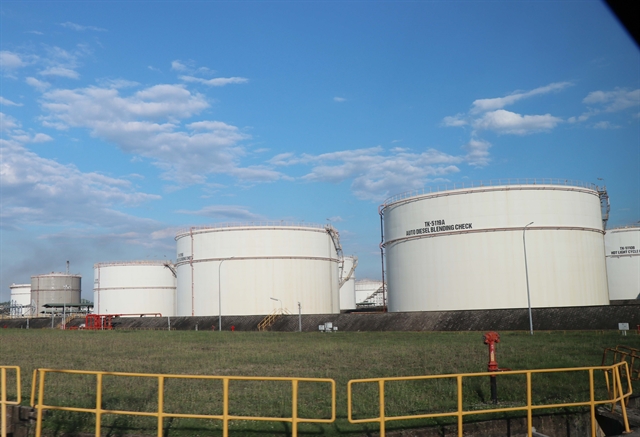 |
| Dung Quất Refinery. Việt Nam must prepare for potential disruptions to oil supply and sharp price increases triggered by escalating tensions in the Middle East. — VNA/VNS Photo Phạm Cường |
HÀ NỘI — As tensions escalate in the Middle East, Việt Nam must brace for potential oil supply disruptions and sharp price increases, with priorities including bolstering domestic crude reserves, limiting exports when necessary and maintaining flexible fuel price management to safeguard national energy security, industry insiders said.
Global crude prices have climbed in recent weeks amid mounting concerns over possible supply interruptions through the Strait of Hormuz, widely regarded as the world’s most critical energy choke point.
According to the US Energy Information Administration, roughly 20 million barrels of crude oil and condensate, nearly 20 per cent of global consumption, pass through the route each day.
Notably, 84 per cent of oil flows through the Strait of Hormuz are bound for Asian markets, leaving the region directly and rapidly exposed to any disruption or escalation affecting the vital shipping lane.
Although major producers such as Saudi Arabia and United Arab Emirates operate alternative pipeline systems, their combined bypass capacity, estimated at about 2.6 million barrels per day, would be insufficient to fully offset a severe disruption in maritime traffic, analysts say.
Investment banks have warned that any sustained supply shock could trigger significant price spikes.
JPMorgan Chase said in a recent risk assessment that if Iranian supply were disrupted, Brent crude could climb towards US$120 per barrel.
Goldman Sachs has also cautioned that a supply shock of 1 million barrels per day or more could add $20–25 per barrel to current prices, particularly as OECD commercial inventories remain relatively low.
Priority on domestic reserve
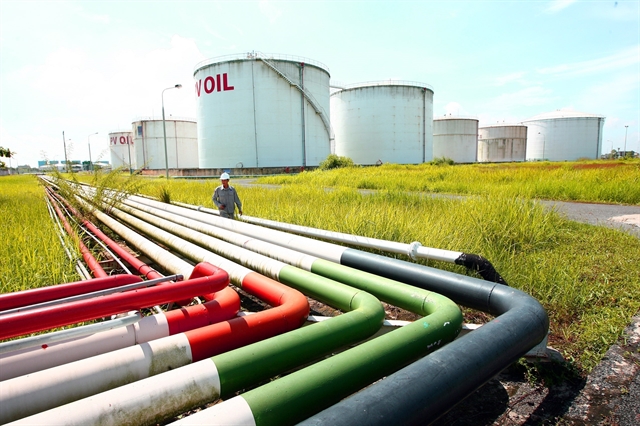 |
| Việt Nam should accelerate efforts to diversify its energy mix and reduce reliance on imports from high-risk regions. — VNA/VNS Photo Huy Hùng |
Nguyễn Việt Thắng, general director of Bình Sơn Refining and Petrochemical, a subsidiary of Petrovietnam, said the Dung Quất refinery currently sources about 30–35 per cent of its crude feedstock from imports, including shipments from West Africa, the Mediterranean, the US and the Middle East.
If regional tensions persist, freight rates, insurance premiums and input costs could continue to rise sharply, increasing financial risks for refiners, he said.
Since the beginning of this year, BSR has stepped up efforts to boost inventories, diversify suppliers and sign supply agreements with major US energy firms. Between March and May 2026, the company contracted about 3 million barrels of imported crude.
However, with plans to operate at 120 per cent of capacity in the coming months, BSR faces mounting pressure in procuring crude oil amid volatile market conditions.
Another significant risk is potential supply chain disruption, as some countries may curb exports to prioritise domestic demand, while volatile shipping and insurance markets could prolong delivery times, Thắng pointed out.
“The refinery’s operation will be under significant pressure, particularly in late second quarter and early third quarter of 2026,” he said.
BSR has proposed that authorities temporarily prioritise domestically produced crude and condensate for Dung Quất refinery and consider restricting crude exports during peak risk periods, at least until the end of the third quarter of 2026 or until global markets stabilise.
Nguyễn Thường Lạng of the National Economics University said rising global oil prices would significantly increase Việt Nam’s fuel import bill, weighing on transport, logistics and production costs as well as inflation.
He urged close attention to reserve strategy to help cushion cost shocks when the market enters a period of sharp price escalation, warning that any delay in building reserves could cause import costs to surge rapidly and narrow the room for fuel price management.
It is also necessary to develop worst-case oil price scenarios to prepare for severe market volatility, he said, adding that a long-term stockpiling strategy for crude oil, combined with the use of forward purchase contracts and futures instruments, should be carefully considered.
At the same time, Việt Nam should accelerate efforts to diversify its energy mix and reduce reliance on imports from high-risk regions.
“The current turbulence could also serve as an opportunity to advance the transition toward cleaner and alternative energy sources, easing cost pressures while aligning with longer-term development trends,” he stressed.
Flexibility
 |
| Việt Nam should accelerate efforts to diversify its energy mix and reduce reliance on imports from high-risk regions. — VNA/VNS Photo Thế Duyệt |
Cao Hoài Dương, Chairman of PVOIL, the second largest fuel distributor in Việt Nam, said about 80 per cent of the company’s supply comes from the country’s two domestic refineries, Dung Quất and Nghi Sơn, with the remaining 20 per cent imported mainly from Singapore and South Korea.
PVOIL has signed long-term contracts with both domestic refineries and foreign suppliers to help ensure a stable fuel supply for the local market.
Following the outbreak of tensions in the Middle East, representatives from both refineries affirmed they would be able to meet all committed contractual volumes for March, but supply for April and May will depend largely on how the conflict evolves, Dương said.
Domestic fuel pricing policies should remain flexible during periods of geopolitical instability to fully reflect costs, so that wholesalers have sufficient financial capacity to continue importing and supplying the domestic market, he said.
He recalled the period of the Russia-Ukraine conflict in early 2022, when global oil prices surged sharply but domestic retail prices were not adjusted in time, prompting private fuel importers to halt shipments to avoid losses and leading to localised shortages in the domestic market. — VNS
Economy
.jpg) Economy
Economy
 Economy
 Economy
 Economy
 Economy
 Economy
 Economy
.jpg) Economy
Economy
 Economy
.JPG) Economy
Economy
 Economy
 Economy
 Economy
 Economy


.jpg)



