 Economy


Coca-Cola Hong Kong Launches "Coca-Cola Recycling Academy"
1.
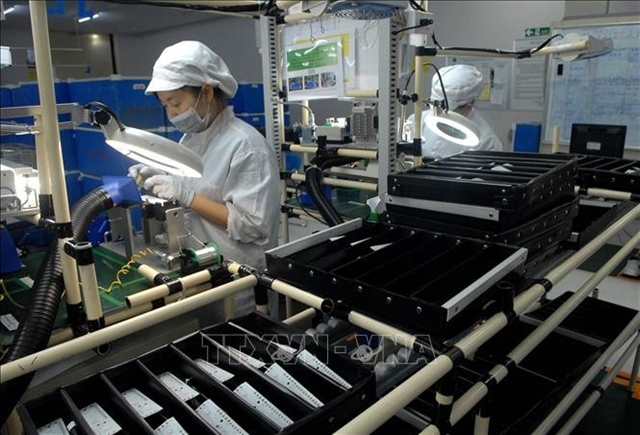 |
| A production line for electronic devices and automotive and motorcycle lighting equipment at Vietnam Stanley Electric Co., Ltd., a Japanese-invested company in Hà Nội. — VNA/VNS Photo |
HÀ NỘI — Nearly one year since the issuance of the Politburo’s Resolution No. 68-NQ/TW on private sector development, significant shifts in governance thinking, coupled with the private sector’s proactive adaptation, have generated fresh momentum for the economy.
Experts and business leaders note that the initial impact of the resolution, issued on May 4 last year, is reflected in a sharp rise in newly established and reactivated enterprises and business households, a rebound in import-export activities, and the private sector’s growing contribution to state budget revenues. Many enterprises have made notable strides by making the most of the opportunities created under the resolution.
Assessing the first year of implementation, Lê Nho Thạnh from the Institute of International Economics and Law under the Vietnam Union of Science and Technology Associations described Resolution No. 68 as both a political message and an institutional catalyst. It represents a breakthrough in development thinking, formally recognising the private sector’s leading role.
According to Thạnh, the resolution marks a critical turning point, dispelling long-standing caution among investors and encouraging long-term capital commitments. A highlight is the transformation in regulatory management: instead of imposing cumbersome inspections and licensing procedures upfront, authorities now facilitate business operations first and conduct compliance checks later, supported by digital technologies.
This shift, he said, is a key enabler for private enterprises to confidently contribute capital, expertise and innovation, becoming a principal driving force in the country’s next development phase.
Despite accounting for around 50 per cent of GDP and more than 30 per cent of total state budget revenues, the private sector continues to face structural bottlenecks. Thạnh pointed to a persistent gap between strong central-level directives and inconsistent implementation at certain localities and agencies. Limited administrative capacity and lingering biases toward the private sector have, in some cases, slowed policy enforcement and constrained access to resources.
In response, he noted, the institute has undertaken practical support initiatives, including advising small- and medium-sized enterprises on greenhouse gas inventories to meet international standards and applying blockchain and AI solutions to supply chain management in order to unlock green financing. Its rapid response task force model has also effectively addressed tax and legal bottlenecks at the early stages, thus safeguarding legitimate business interests.
It plans to develop a digital ecosystem and a portal for legal and business affairs to provide real-time feedback on emerging challenges, alongside quarterly supply-demand information forums to ensure policies remain aligned with market developments.
From the business community, Nguyễn Văn Lưu, Chairman of the Nam Hải Phát Investment and Import-Export Co. Ltd, said his company has capitalised on policy incentives under Resolution No. 68 by building a comprehensive technology ecosystem.
The integration of high technology with a sustainability-driven mindset enables the company to maximise advantages generated by the resolution to bring Vietnamese agricultural products to the global stage, Lưu said. — VNA/VNS
Economy
 Economy
 Economy
 Economy
 Economy
 Economy
 Economy
 Economy
 Economy
 Economy
 Economy
 Economy
 Economy
 Economy
 Economy