 Economy

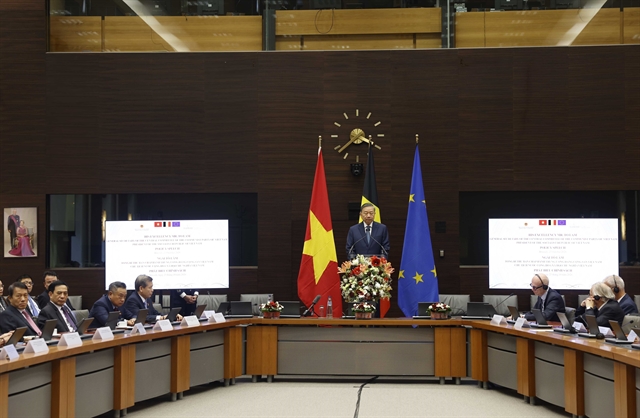
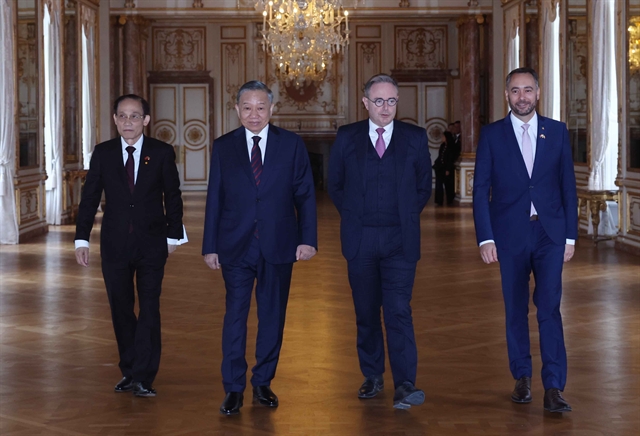
Top Vietnamese leader meets with Belgian Senate Speaker, House President
1.
|
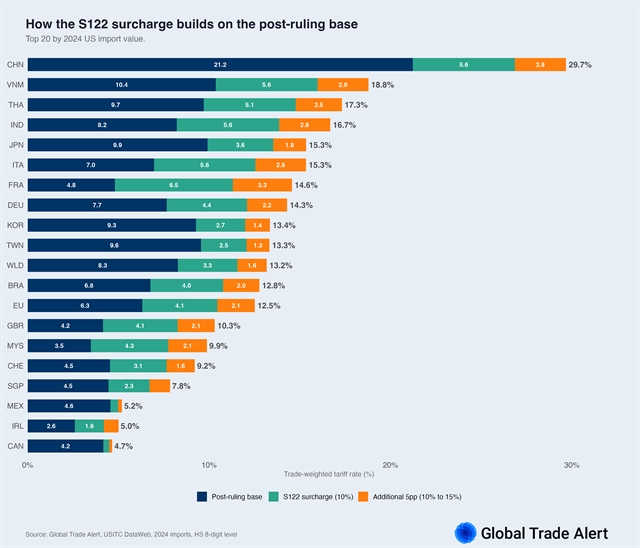
| Chart shows trade-weighted US import tariff rates by major partners after the Section 122 surcharge. — Photo Global Trade Alert |
HÀ NỘI — Average US import tariffs on Vietnamese goods have dropped to around 16 per cent from 21.6 per cent following a major shift in US trade policy that took effect at 00:00 (US time) on February 24, according to data compiled by Global Trade Alert.
The decline came after the US Supreme Court struck down tariffs imposed under the International Emergency Economic Powers Act (IEEPA). The administration of President Donald Trump replaced them with a 10 per cent additional tariff under Section 122 of the Trade Act.
Despite the new surcharge, the combined effective duty on Vietnamese goods is still lower than under the previous regime.
Việt Nam is among the countries seeing the most significant reductions. The US currently imports about US$136.1 billion worth of goods from Việt Nam, making it one of Washington’s largest trading partners.
The change also reduced the global average effective tariff on imports into the US to about 11.6 per cent, down from 15.3 per cent previously.
Other economies recorded similar declines. Tariffs on Chinese goods fell from 36.8 per cent to 26.9 per cent, while India’s dropped from 22.3 per cent to below 14 per cent. Brazil and several Asian exporters also benefited, making them what analysts described as “temporary winners” of the adjustment.
The effective tariff reflects the real average duty paid on imports after exemptions and preferences, typically lower than nominal schedules.
|
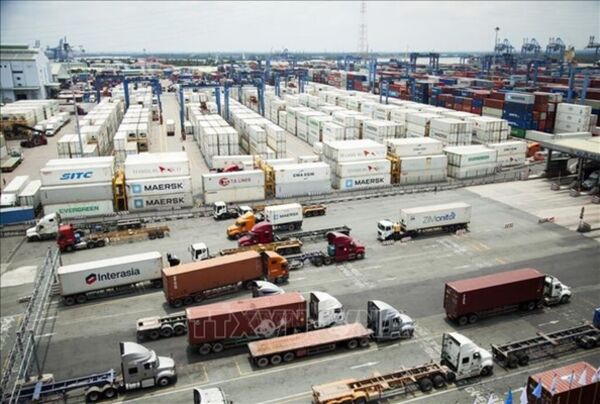
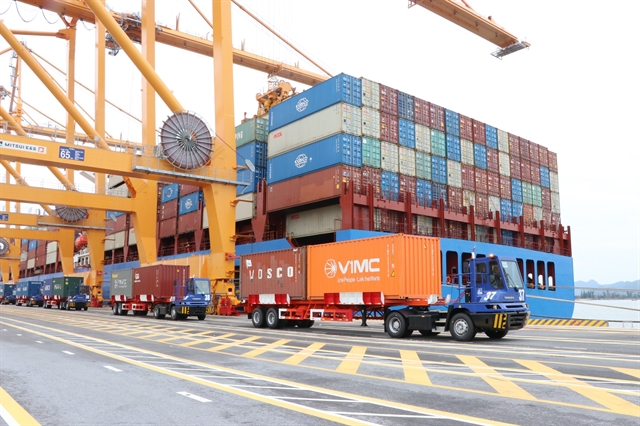
| Containers at Tân Cảng - Cát Lái Terminal in HCM City. — VNA/VNS Photo |
According to KBSV Research, Vietnamese exporters will benefit as effective tariffs fall from roughly 20 per cent under IEEPA to around 10–15 per cent under the new structure, easing cost pressure on shipments to the US.
However, competition may intensify if reciprocal tariffs are applied more uniformly across countries, reducing Việt Nam’s previous advantage over some rivals, particularly China. The risk is considered limited as Washington is expected to continue country-specific measures, especially targeting Beijing.
The relief may also be temporary. Section 122 tariffs are valid for only 150 days unless approved by Congress for extension. Analysts say the US is shifting toward more durable legal tools while maintaining a protectionist stance.
Washington is expanding trade investigations under Section 232 into sectors including robots, wind turbines and pharmaceuticals, while additional probes under Section 301 are being considered against major partners over excess capacity and technology discrimination.
US Trade Representative Jamieson Greer warned partners against withdrawing from negotiated agreements and signalled the possibility of higher tariffs if commitments are not met.
The policy uncertainty is expected to keep global businesses cautious as supply chains and investment plans adjust to changing trade rules. — VNS
Economy
 Economy
 Economy
 Economy
 Economy
 Economy
 Economy
 Economy
 Economy
 Economy
 Economy
 Economy
 Economy
 Economy
 Economy