 Brandinfo
Việt Nam, EU and Belgium seek deeper, practical cooperation
1.
Strong capital shifts
According to estimates by Deloitte, the total asset value of sovereign wealth funds reached $12 trillion by the end of last year and is projected to hit $18 trillion over the next five years. Gulf countries (including Bahrain, Kuwait, Oman, Qatar, Saudi Arabia, and the UAE) account for about 40 per cent of this, while possessing six of the world’s ten largest investment funds.
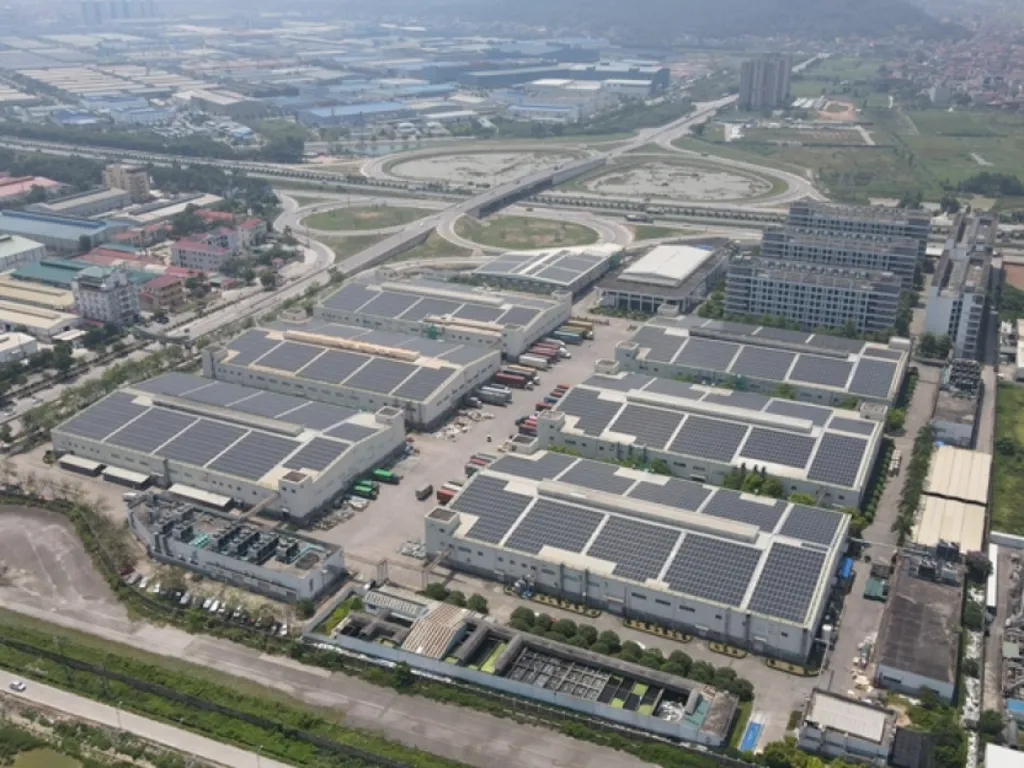 |
| Gulf investment funds are gradually shifting their attention to regions with lower geopolitical risks such as South Asia and Southeast Asia. Photo: VOI |
These funds primarily operate with a dual objective: increasing asset value and supporting sustainable global development strategies. This creates a major distinction from private equity funds.
The first is their risk appetite. A common trait of Gulf sovereign wealth funds is a relatively low risk appetite and a long-term vision, allowing them to accompany invested businesses for decades, enabling companies to focus on long-term development plans rather than chasing short-term profits.
Second, Gulf sovereign wealth funds often bring high levels of stability and reliability. Their presence typically creates a positive spillover effect, attracting capital from other investors. They also provide invested businesses with “privileges” in global networks, market expansion opportunities, and technology transfer.
Despite numerous economic and geopolitical fluctuations, the capital scale and disbursement pace of these Gulf "sharks" show no signs of slowing. They disbursed $55 billion in the first nine months of last year, equivalent to two-thirds of new investment activities by sovereign wealth funds globally.
However, this group’s capital flows are shifting strongly, both in terms of destinations and investment sectors. Previously active investors in the U.S. tech market with billion-dollar deals, they are now gradually turning their attention to regions with lower geopolitical risks, such as South Asia and Southeast Asia. This group is particularly interested in flexible macroeconomic policies and economic openness through signed free trade agreements.
With all these factors in place, plus numerous policies attracting investment in science and technology, innovation, and green growth to serve national development goals, Việt Nam has become a potential destination for Gulf investment funds. Some funds have poured hundreds of millions of USD into the country while continuing to seek two-way cooperation opportunities with domestic businesses.
A model ‘magnet’ for attracting Gulf capital
The Vietnam Oman Investment (VOI) is a prime example of a channel for Gulf capital into Việt Nam. Since its establishment in 2008, the fund has disbursed approximately $500 million into key Vietnamese sectors such as healthcare, education, clean water, renewable energy, agriculture, food, infrastructure, bridges, and roads. Projects in which VOI has invested, such as the Rach Mieu 1 Bridge, Rach Mieu 2 Bridge, Song Hau Water Company, BCG Long An 1 and BCG Long An 2 solar power projects, and Hanh Phuc General Hospital in An Giang Province, have contributed immensely to upgrading infrastructure, ensuring energy security, and improving social welfare for communities.
In the financial sector, VOI has also created positive impacts, with a $30 million investment in F88 that helped the business expand its network, digitise, and improve risk management before listing on the stock exchange earlier this year. Most recently, VOI participated in the initial public offering (IPO) of Techcom Securities (TCBS), contributing to Việt Nam’s tokenised asset development strategy.
As the intergovernmental fund, VOI also serves as a bridge helping Vietnamese goods penetrate the Gulf market, and vice versa, opening opportunities for Omani businesses to strengthen their presence in Southeast Asia. VOI’s success has laid the foundation for the two countries’ investment agencies to agree on establishing the "Việt Nam New Era Growth Fund" with a minimum capital of $200 million, marking the beginning of a deeper cooperation phase.
“VOI has played the role of a collective capital conduit, attracting other Gulf funds to Việt Nam. This is not only economic investment but also contributes to promoting social development, improving people’s lives, and reinforcing Việt Nam’s image as a safe and attractive destination. We strive to become an effective bilateral bridge for the two governments, indirectly elevating Việt Nam-Oman relations to new heights and expanding to the entire Gulf region,” a fund representative shared.
At the Political Consultation meeting at the end of September, diplomatic representatives from both countries agreed that Việt Nam and Oman share many similarities, their economies complement each other, and there is ample room to develop multifaceted cooperation. Omani Deputy Foreign Minister Khalifa Bin Ali Al Harthy reaffirmed that Việt Nam is a dynamic economy, politically stable, fast-growing, and highly promising in the Asia-Pacific. Oman views Việt Nam as an important partner in its “Look East” policy.
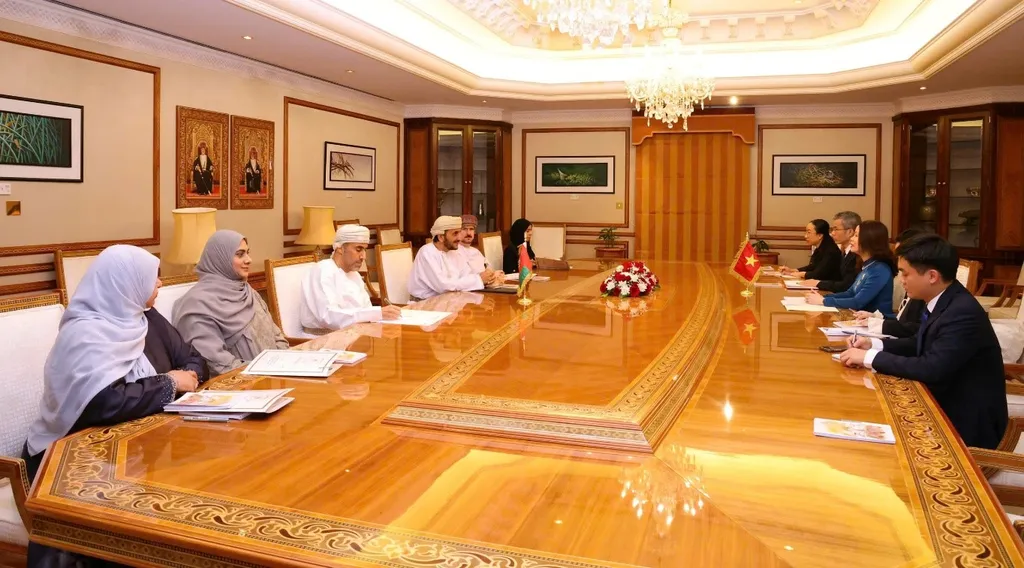 |
| Deputy Minister Nguyen Minh Hang in political consultation with Omani Deputy Foreign Minister Khalifa Bin Ali Al Harthy. Photo: Ministry of Foreign Affairs |
This, combined with policies attracting international investors into key national projects on technology infrastructure and international financial centres, is expected to become a "magnet" drawing capital from Oman and other Gulf countries to Việt Nam.
According to a VOI representative, sovereign wealth funds always have strict investment standards and due diligence processes based on pre-determined risk appetites. With priorities in seeking stable and sustainable returns for both themselves and the recipient, they often look for leading enterprises with healthy competitive advantages and high governance standards.
“Việt Nam possesses many long-term growth drivers, but risks are higher compared to developed markets. Therefore, governance thinking and risk mitigation play a special role in investment due diligence. To access capital from Gulf 'sharks,' Vietnamese enterprises need to demonstrate transparency and meet international standards in finance, auditing, and risk management. These factors will help build trust with the investment funds while reducing risks for the enterprise’s own operations,” the VOI representative recommended.
Gulf sovereign wealth funds are also pursuing investment strategies tied to sustainable development. Therefore, enterprises integrating ESG (environment, social, and governance) pillars into business strategy and operations will create alignment with partner priorities.
Beyond creating financial value, Vietnamese enterprises can increase their appeal to sovereign wealth funds by acting as bridges and distribution channels to pave the way for their goods and services into Southeast Asia. According to the VOI representative, this is currently an advantage but will gradually become a prerequisite for entering the portfolios of Gulf investment funds./.
Brandinfo
 Brandinfo
 Brandinfo
 Brandinfo
 Brandinfo
 Brandinfo
 Brandinfo
 Brandinfo
 Brandinfo
 Brandinfo
 Brandinfo
 Brandinfo
 Brandinfo
 Brandinfo
 Brandinfo