 Sci-Tech

Quán Ăn Ngon Restaurant receives two top awards at World Top Gourmet Awards 2026 in Malaysia
1.
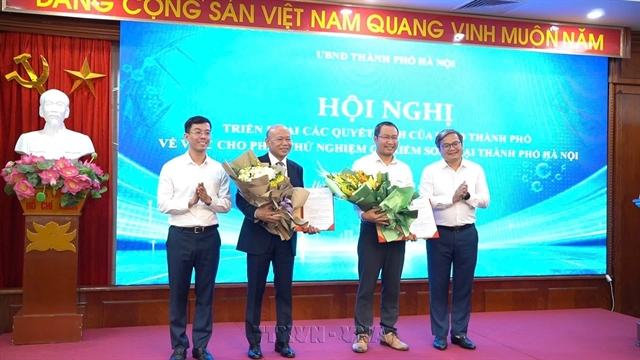 |
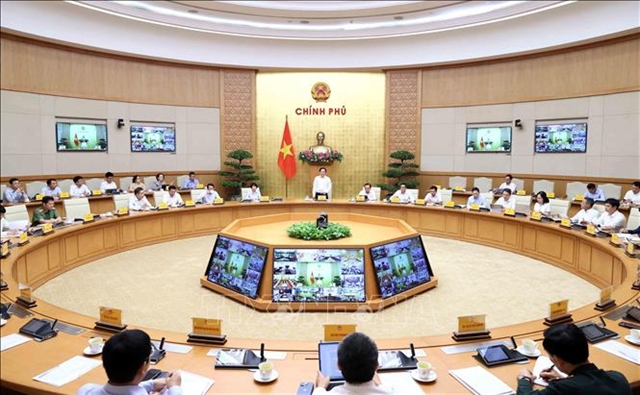
| Vice Chairman of Hanoi People's Committee Trương Việt Dũng presents sandbox decisions to two businesses. VNA/VNS Photo Vũ Quang |
HÀ NỘI — Hà Nội has approved controlled pilot testing of two technology projects at the Hoà Lạc High-Tech Park, marking a new step towards building a regulatory environment for emerging technologies and helping bring research results from laboratories into practical use.
The selected projects are an intelligent autonomous transport system developed by Phenikaa-X Joint Stock Company and technology for producing mixed rare earth oxides of more than 95 per cent purity on a semi-industrial scale, developed by the Mining Technology and Construction Consulting Joint Stock Company.
Testing to refine policy
The Hà Nội People’s Committee held a conference at the Hoà Lạc High-Tech Park on September 10 to implement the decisions authorising the controlled pilot tests. The conference was chaired by Trương Việt Dũng, Vice Chairman of the municipal People’s Committee.
Speaking at the event, Dũng said its significance lay not only in the two decisions or the technologies selected, but more importantly in Hà Nội’s trial of a new governance model.
Rather than waiting for technologies to mature before legislation catches up, the city is proactively creating a defined environment in which technologies can be tested, risks controlled, data generated and policies refined based on practical experience, he said.
He stressed that the regulatory sandbox was not a mechanism for granting or withholding approval for new technologies on a case-by-case basis. Instead, it was a tool enabling the State and enterprises to work together to find faster ways of bringing new products into practical use while ensuring safety and accountability.
Although the two projects are in different fields, both address emerging challenges, involve advanced scientific and technological content and have the potential to contribute to socio-economic development.
Validating autonomous transport technology
The pilot of Phenikaa-X’s intelligent autonomous transport system is expected to last 24 months.
The testing process will assess not only the operational capabilities of autonomous buses, robotaxis and other robotic vehicles, but also their safety, stability, ability to respond to various situations and compatibility with existing transport infrastructure.
The results must provide the data and practical evidence needed to determine the conditions for commercialising the technology and deploying it on a larger scale.
Associate Professor Dr Lê Anh Sơn, Director of Phenikaa-X Joint Stock Company, said the city’s decision to proceed with the pilot followed more than five years of research, thousands of test runs and tens of thousands of kilometres of trial operations.
According to Sơn, Vietnamese engineers have mastered the entire autonomous driving software system, described as the vehicles’ “brain”. It integrates digital mapping, high-precision positioning, environmental perception, route planning, vehicle control and other components.
Traffic conditions in Việt Nam pose particular challenges, especially because of the high density of motorcycles and rapidly changing situations. Vehicles may emerge from blind spots or change direction with little warning, requiring autonomous systems to identify threats accurately, process information quickly and make safe decisions.
Sơn said safety would remain the overriding priority throughout the testing process. The company has committed to reporting operational data fully and honestly, including both achievements and any problems that arise.
The experience and data gathered during the 24-month pilot are expected to contribute to the development of a legal framework for autonomous vehicles.
Mastering rare earth processing technology
The second project will test technology for producing mixed rare earth oxides of more than 95 per cent purity on a semi-industrial scale. The pilot is expected to last 18 months.
Lê Văn Tuấn, Chairman of the Board of Directors of the Mining Technology and Construction Consulting Joint Stock Company, said the project was the result of about a decade of research by Vietnamese scientists.
During 2024 and 2025, the company manufactured and installed a semi-industrial system in Thái Nguyên and conducted trial runs without raw materials.
Following approval for the controlled pilot, the company will continue upgrading its workshop, installing equipment and completing the automation system at the Hoà Lạc High-Tech Park.
It has committed to mobilising the necessary financial, technical and human resources to achieve the project’s objectives while complying with monitoring and risk-control requirements throughout the testing process.
Dũng said the pilot must clearly determine how far the company had mastered the technology, as well as the production line’s stability, product quality and efficiency in the use of raw materials, chemicals and energy.
Waste management, environmental protection and radiation safety must also be strictly controlled. The results will provide a basis for determining whether the technology is ready to move to the next stage of production.
“Testing is not about proving at all costs that a technology can be successfully deployed. The process must provide data to determine whether it should proceed and, if so, how,” Dũng said.
“The success of the sandbox is not measured solely by the number of projects approved for testing, but more importantly by the number of promising technologies that can move from the laboratory through validation, reach the market and create value for society.”
From technology testing to governance innovation
The city has required both companies to comply fully with the scope, schedule and conditions of their respective pilots, proactively identify and manage risks, and report data honestly.
Relevant departments and agencies have been instructed to support and supervise implementation, promptly address difficulties and compile emerging issues to inform proposals for improving policies and regulatory mechanisms.
Hà Nội expects the projects to test not only the technologies themselves, but also the city’s capacity to govern innovation.
To become a leading centre for science, technology and innovation, the capital must create an environment in which enterprises can propose new ideas, scientists can drive innovation and regulators can make data-based decisions while ensuring that risks are identified and controlled.
The sandbox mechanism at the Hoà Lạc High-Tech Park represents a new approach to technology management and development. It is also expected to strengthen the capital’s scientific, technological and innovation capacity while enabling products developed by Vietnamese scientists and engineers to be tested, refined and gradually introduced into practical use for socio-economic development. — VNS
Sci-Tech
 Sci-Tech
 Sci-Tech
 Sci-Tech
 Sci-Tech
 Sci-Tech
 Sci-Tech
 Sci-Tech
 Sci-Tech
 Sci-Tech
 Sci-Tech
 Sci-Tech
 Sci-Tech
 Sci-Tech
 Sci-Tech