 Sci-Tech

Visit Vietnam app to showcase AI-powered platform at ITB Asia 2026
1.
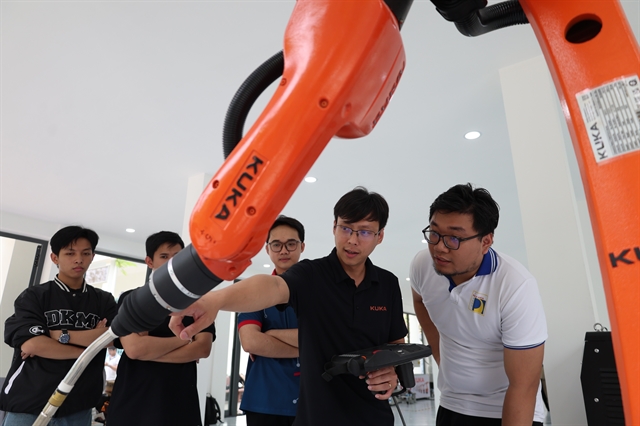 |
| An industrial robot is tested at the Centre for Training, Research and Development of Industrial Robotics and Artificial Intelligence Applications of the University of Science and Technology under the University of Đà Nẵng. — VNA/VNS Photo Khoa Chương |
HÀ NỘI — As data, artificial intelligence and digital platforms become increasingly integrated into production and business activities, a skilled workforce with digital expertise has become a key factor in translating technological advances into higher productivity, better quality and greater competitiveness.
This is particularly important in the field of standards, metrology and quality (SMQ), where developing a skilled workforce capable of operating in a digital environment is essential to the effective operation and development of the national quality infrastructure.
Key to digital transformation
Hoàng Hữu Hạnh, Deputy Director of the National Digital Transformation Agency under the Ministry of Science and Technology, said Việt Nam has identified national digital transformation as a key strategy. This is reflected in Politburo Resolution No. 52-NQ/TW on a number of guidelines and policies for actively participating in the Fourth Industrial Revolution and the National Digital Transformation Programme through 2025, with a vision to 2030.
Digital infrastructure, artificial intelligence and a digitally skilled workforce are among the pillars of the country's rapid and sustainable development. Hạnh said the digital workforce is a decisive factor in determining the pace and success of digital transformation, as a strong digital future cannot be built without a large pool of high-quality digital talent.
Việt Nam is therefore stepping up efforts to develop its digital workforce, with a particular focus on attracting and nurturing talent capable of driving innovation, developing new technologies and creating new business models.
In the SMQ field, Lê Minh Tâm, Director of the Training Centre for Standards, Metrology and Quality, said the digital workforce is a core factor in determining the effectiveness of efforts to promote socio-economic development. Investment in technical infrastructure, data and artificial intelligence cannot be fully leveraged without a workforce equipped with the necessary professional expertise and digital skills to adapt to the digital environment.
Tâm said SMQ experts will need not only in-depth professional expertise but also foreign language proficiency and digital skills to support international integration, along with the capacity to participate in the development of standards at regional and international levels.
Developing a modern SMQ workforce
On July 3, the Prime Minister issued Decision No. 1202/QĐ-TTg approving a scheme on training and developing human resources for the SMQ sector nationwide through 2030 and beyond. The scheme identifies the development of SMQ human resources as a key requirement for operating the national quality infrastructure and improving the productivity, quality and competitiveness of the economy.
By 2030, around 20,000 officials, public employees and workers in the SMQ sector will receive training to strengthen their professional capabilities.
The scheme also aims to develop 1,500 SMQ experts with in-depth expertise, including at least 300 qualified to participate in SMQ activities within international organisations.
It also seeks to provide SMQ training and professional development to at least 100,000 employees of businesses, cooperatives and household businesses, with priority given to high-tech and strategic technology sectors. The target is for 80 per cent of trainees to meet the standards set out in the relevant competency framework.
All officials, public employees and workers involved in state management, policymaking, inspection, examination and law enforcement in the SMQ sector will receive training and professional development to meet the requirements of their positions.
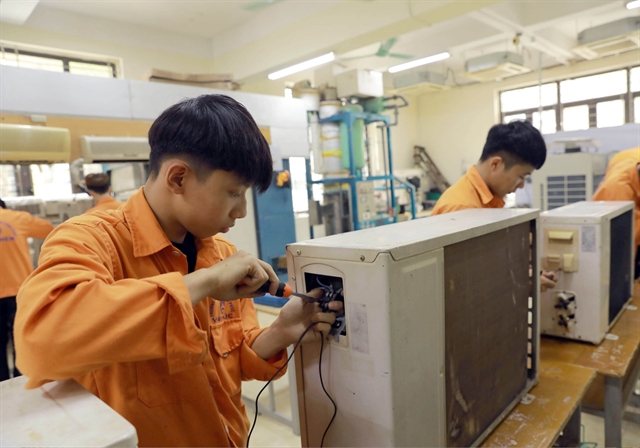 |
| Students at Vĩnh Phúc College of Technology and Engineering practise repairing equipment in an industrial air-conditioning workshop. — VNA/VNS Photo Hoàng Hùng |
A key focus of the scheme is to modernise the training system to make it more comprehensive, coordinated and closely aligned with practical needs. By 2028, Việt Nam aims to establish a competency framework, criteria for assessing training outcomes, and a system of core training programmes and materials for the SMQ sector.
Training programmes will make greater use of digital platforms, new technologies and artificial intelligence, while placing greater emphasis on post-training competency assessments and linking training outcomes to job positions and workforce needs.
The scheme also aims to integrate standards, metrology and quality content into training programmes at around 50 universities and vocational education institutions specialising in engineering, technology and economics.
The network of training and professional development institutions will be strengthened, with efforts to develop a core team of lecturers and experts and enhance cooperation among regulatory agencies, training institutions and businesses.
Alongside domestic training, the scheme focuses on developing experts capable of contributing to the development of international standards and participating in regional and international technical forums.
The State will also encourage universities, vocational education institutions and socio-professional organisations to participate in training and human resource development in the field.
The scheme is expected to help build a high-quality workforce for the national quality infrastructure, supporting businesses in meeting market standards and technical requirements, improving productivity and product quality, and strengthening competitiveness as Việt Nam deepens its international integration. — VNS
Sci-Tech
 Sci-Tech
 Sci-Tech
 Sci-Tech
 Sci-Tech
 Sci-Tech
 Sci-Tech
 Sci-Tech
 Sci-Tech
 Sci-Tech
 Sci-Tech
 Sci-Tech
 Sci-Tech
 Sci-Tech
 Sci-Tech