 Sci-Tech
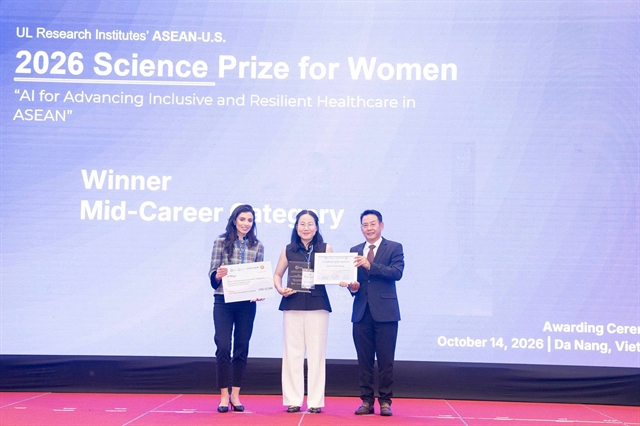
Vietnamese scientist wins ASEAN-US Science Prize for Women
1.
HÀ NỘI — Việt Nam has called on Japan to expand cooperation in strategic technologies, including semiconductors, artificial intelligence (AI) and renewable energy, and in workforce development during talks between science and technology officials from both countries.
The proposal was made on September 3 as Deputy Minister of Science and Technology Lê Xuân Định welcomed a delegation from the Education, Culture, Sports, Science and Technology Committee of Japan's House of Representatives, led by committee chair Saito Hiroaki.
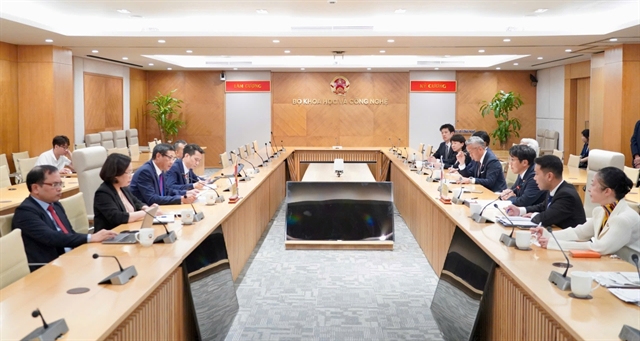 |
| Deputy Minister of Science and Technology Lê Xuân Định meets with a delegation from the Education, Culture, Sports, Science and Technology Committee of Japan's House of Representatives. — Photos courtesy of the Ministry of Science and Technology |
The meeting focused on strengthening bilateral collaboration in semiconductor research, AI, energy technologies and personnel training, while promoting the NEXUS joint research programme and closer links between businesses in strategic technology industries.
Định praised the Japanese Parliament's contribution to advancing the comprehensive strategic partnership between the two countries, particularly through policymaking in science, technology, innovation, education and workforce development.
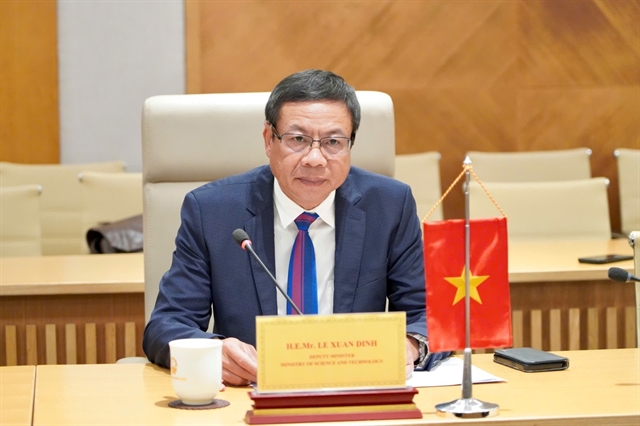 |
| Deputy Minister Lê Xuân Định speaks at the meeting. |
He noted that bilateral cooperation has achieved encouraging results in recent years. Under the NEXUS programme, Việt Nam and Japan are working towards co-funding semiconductor research projects, covering chip design, advanced materials, supporting technologies and manufacturing, with plans to further expand cooperation in 2027.
The two countries are also stepping up collaboration in information and communications technology. A Việt Nam–Japan joint working group is scheduled to meet in late October to advance specific cooperation programmes, including technology transfer and stronger business connectivity in the semiconductor sector.
The deputy minister also urged Japan to continue supporting Việt Nam's AI ambitions, particularly the development of sovereign AI capabilities and Vietnamese-language large language models.
Three priorities for future cooperation
Looking ahead, Định outlined three areas in which Việt Nam hopes to deepen cooperation with Japan.
First, he proposed expanding the NEXUS programme into a regular annual cooperation mechanism between Việt Nam and the Japan Science and Technology Agency, while broadening joint research to fields where Japan has particular strengths, including AI, new materials, renewable energy and biomedicine.
He also called for closer collaboration between businesses from both countries in science, technology, innovation and digital transformation initiatives.
Finally, Việt Nam hopes Japan will continue supporting the training of highly skilled professionals, especially senior engineers and experts in strategic technology sectors, through flexible cooperation mechanisms.
Japan shows interest in Việt Nam’s energy transition
For the Japanese side, Saito Hiroaki said the delegation was particularly interested in Việt Nam's science and technology development strategy, especially its semiconductor industry and labour policies.
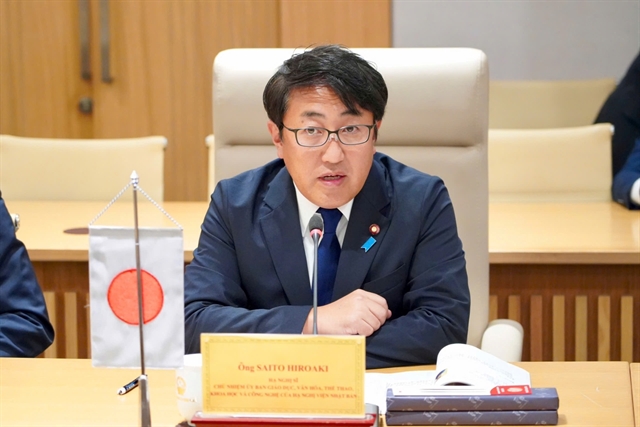 |
| Saito Hiroaki, a member of the Japanese House of Representatives and Chair of its Committee on Education, Culture, Sports, Science and Technology, speaks at the meeting. |
Japanese lawmaker Moriyama Masahito also highlighted Japan's interest in Việt Nam's long-term energy strategy, including its renewed commitment to nuclear power development.
Định said Việt Nam is pursuing a diversified energy mix that combines conventional sources with renewable energy and nuclear power to meet growing long-term demand.
He added that the country is studying advanced nuclear technologies, including small modular reactors, alongside large nuclear power projects.
The deputy minister said that Việt Nam's energy transition will require substantial investment, sustained implementation and a highly qualified workforce, expressing the hope that Japan will remain a key partner in building the energy foundation needed to support the country's high-tech industries. — VNS
Sci-Tech
 Sci-Tech
 Sci-Tech
 Sci-Tech
 Sci-Tech
 Sci-Tech
 Sci-Tech
 Sci-Tech
 Sci-Tech
 Sci-Tech
 Sci-Tech
 Sci-Tech
 Sci-Tech
 Sci-Tech
 Sci-Tech