 Sci-Tech

Tiny Titan domination: VinFast VF3 is the best-selling BEV model in the Philippines
1.
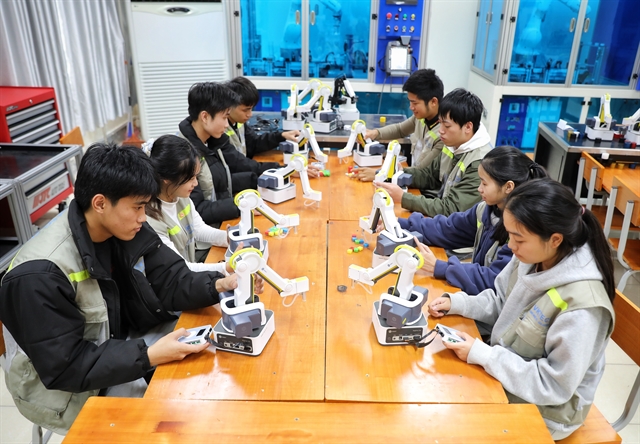 |
| Students practise microcontroller programming at Việt–Hàn Bắc Giang College of Technology. — VNA/VNS Photo Danh Lam |
HÀ NỘI — Việt Nam must shift away from growth driven by natural resource extraction and low-cost labour and build an economy based on productivity, knowledge, technology and human capital, experts have said.
At the third Plenum of the 14th Party Central Committee, Party General Secretary and State President Tô Lâm identified four key strategic shifts, including establishing a development model driven by productivity, knowledge, technology and people.
Experts said the shift will be critical to accelerate growth while reducing the country's dependence on finite resources and cheap labour.
Optimising resources and productivity
Professor Nguyễn Xuân Cự, deputy director of the Center for Environmental Economics under the Việt Nam Association of Environmental Economics, said the transition would fundamentally change how Việt Nam uses resources including land, water and minerals.
But technological upgrades alone would not be enough, he said.
Production methods, resource allocation and the way businesses build competitive advantages also need to change.
A productivity-, knowledge- and technology-driven economy requires long-term capital, highly skilled workers, stronger innovation capacity, the ability to absorb new technologies and institutions that encourage long-term investment, Cự said.
He said Việt Nam needed to move from a cost-based competitive advantage towards greater productivity, technological capacity and added value.
To raise productivity, businesses should optimise every stage of the production chain and assess which resources are being depleted, where pollution originates and what environmental costs are being generated, he said.
Productivity should not be measured only by labour and capital, he added, but should also reflect the use of land, water, energy, raw materials and other environmental resources.
Cự also called for greater focus on practical applications of green research, including resource efficiency, the circular economy, low-carbon development, waste management and green industries.
Research should be geared towards technologies that can be applied in practice and reduce emissions, while policy assessments should be based increasingly on scientific evidence and data, taking into account economic efficiency, environmental costs, social impacts and the feasibility of projects.
The gap between research and the market should also be narrowed through closer links between universities, research institutes, businesses and government agencies, including joint training programmes and expert networks, he said.
Turning knowledge into economic value
Professor Nguyễn Văn Nội, chairman of the Vietnam Association of Testing Laboratories and former rector of the University of Science under Việt Nam National University, Hanoi, said turning science and technology, innovation and artificial intelligence into productivity and added value represented a crucial step from research to commercialisation.
The Government has begun laying the institutional groundwork.
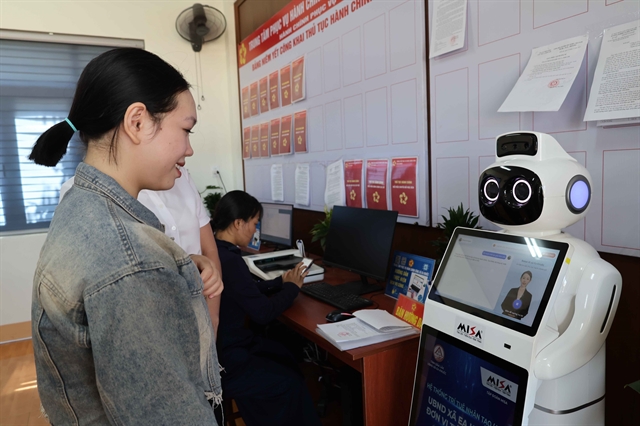 |
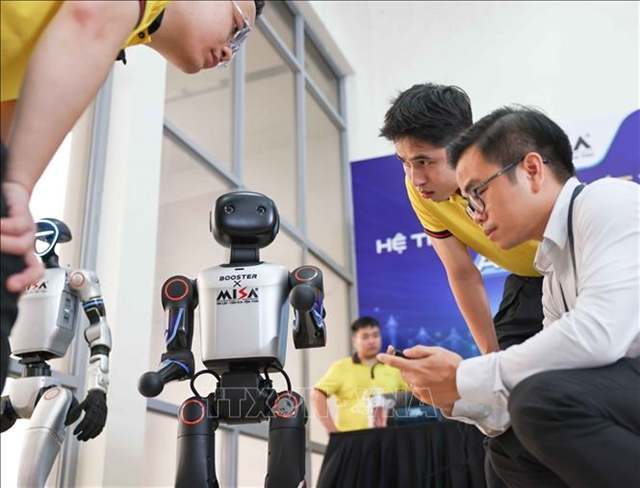
| A resident receives guidance from a virtual assistant robot on administrative procedures before approaching the service counter at the Ea K’Nuếc Commune Public Administration Service Centre in Đắk Lắk Province. — VNA/VNS Photo Hải Âu |
A decision signed by Prime Minister Lê Minh Hưng on August 4 approving a scheme to develop research and testing centres and national key laboratories focused on strategic technologies sets out, for the first time, a clear role for national key laboratories, research and testing centres, and inspection and certification facilities, Nội said.
Testing and certification facilities provide measurement and conformity assessments, helping products meet national and international technical standards and regulations. They can also strengthen market confidence by providing independent evidence that products meet requirements and overcome technical barriers to trade.
But Việt Nam needs more targeted investment, he said.
The State should prioritise internationally accredited testing centres for core technologies such as semiconductors, biotechnology and advanced materials, rather than spreading investment too thinly and leaving facilities without adequate equipment, he said.
Public-private partnerships should also be expanded to encourage major technology companies to invest in and jointly operate national key laboratories.
Việt Nam should establish regulatory sandboxes for emerging technologies without established legal frameworks, allowing them to be tested under controlled and closely monitored conditions, Nội said.
To make skilled workers and knowledge genuine drivers of growth, the Government should strengthen cooperation between the State, universities and research institutes, and businesses, he said.
Companies should be involved in designing training programmes, commissioning graduation projects and providing practical internships.
Nội also called for more concentrated investment in core science and technology fields, including scholarships and greater support for basic sciences and priority technologies to attract and retain talent.
Research institutions should be given greater autonomy over intellectual property, while scientists should be freed from excessive administrative work so they can focus on research and professional activities, he said. — VNS
Sci-Tech
 Sci-Tech
 Sci-Tech
 Sci-Tech
 Sci-Tech
 Sci-Tech
 Sci-Tech
 Sci-Tech
 Sci-Tech
 Sci-Tech
 Sci-Tech
 Sci-Tech
 Sci-Tech
 Sci-Tech
 Sci-Tech


.jpg)




