 Sports

Ping An Digital Bank Completes HKMA’s Second GenA.I. Sandbox Cohort
1.
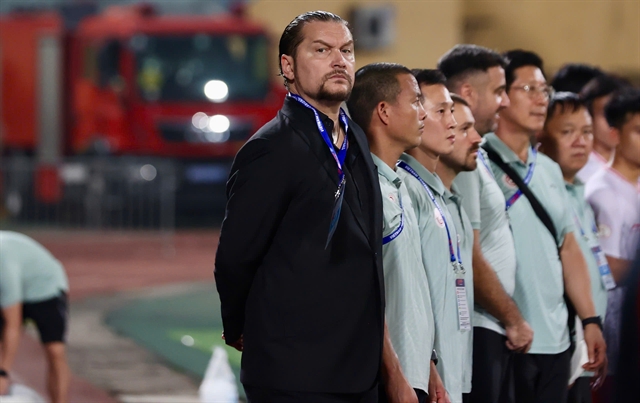 |
| Coach Velizar Popov of Thể Công-Viettel. His familiarity with Southeast Asian football has allowed him to adapt effectively to conditions in Việt Nam. — VNA/VNS Photo |
HÀ NỘI — As the 2025–26 V.League 1 season continues, instability on the sidelines has already become one of its defining features.
A total of 18 coaching changes have been recorded so far, with some clubs replacing their head coach more than twice.
The trend underlines a stark truth: Việt Nam’s top-flight league is an unforgiving environment for managers.
From the opening weeks, a wave of changes swept across multiple teams. Clubs such as Ninh Bình, Thanh Hóa and Nam Định have all seen frequent turnover, with the list of departing and incoming coaches growing steadily for multiple reasons.
Some managers were dismissed due to poor results, others failed to align with their club’s long-term vision, and a number simply struggled to adapt to the unique demands of Vietnamese football.
One common theme is the increasingly short tenure of coaches, particularly foreigners. In many cases, just a handful of defeats or a brief dip in form is enough to put a manager’s position at serious risk. Patience appears to be in short supply, and the pressure to deliver immediate results often outweighs long-term planning.
The experience of coach Mauro Jeronimo illustrates these challenges clearly. After a relatively stable spell working with a young squad at PVF-CAND, he was expected to leave a strong mark at ambitious Nam Định, a club boasting a roster of high-profile players.
However, the move proved difficult.
Jeronimo struggled to manage the locker room, balance strong personalities and cope with the intense pressure for success. As a result, he was unable to fully implement his ideas and eventually stepped down.
He was replaced by Vũ Hồng Việt, whose deeper understanding of the club’s internal dynamics provided a more stable solution.
Jeronimo’s case is far from unique. Young domestic coaches such as Nguyễn Công Mạnh of Hà Tĩnh and Thạch Bảo Khanh of PVF-CAND have also been unable to hold onto their positions.
Meanwhile, foreign newcomers like Choi Won-kwon at Thanh Hóa FC and Gerard Albadalejo at Ninh Bình FC failed to last the season. Most recently, experienced coach Lê Huỳnh Đức parted ways with HCM City Police FC, further highlighting the league’s volatility.
Despite the turbulence, there are patterns among those who succeed. Coaches who manage to stay and perform well often share key qualities: extensive experience and a deep understanding of the Vietnamese football landscape.
Among foreign managers, Alexandre Polking stands out as a notable example. Having spent many years working in Thailand and frequently facing Vietnamese teams, he possesses valuable insight into Southeast Asian football.
Polking understands not only the technical aspects of the game, but also the cultural and organisational factors that influence performance. At Hà Nội Police FC, he has built a clear playing identity while maintaining stability – something many of his peers have struggled to achieve.
Similarly, Velizar Popov has benefited from his regional experience, including time working in Myanmar. His familiarity with Southeast Asian football has allowed him to adapt effectively to conditions in Việt Nam.
Known for his structured approach and ability to communicate his philosophy, Popov has established himself as one of the most successful and consistent coaches in V.League 1. Now he leads Thể Công-Viettel.
However, the current season has also produced an intriguing exception. Harry Kewell, the former Australian international, has made a strong early impression at Hà Nội FC despite having no prior experience in Việt Nam or the region.
Under his leadership, the team have shown greater energy and efficiency. Kewell’s impact not only stands out on a personal level, but also adds an element of excitement to the league’s competitive landscape heading into the next season.
Ultimately, the high turnover of coaches highlights the demanding nature of V.League 1.
It is, in many ways, a true 'test of survival'.
For foreign managers in particular, entering the league without prior knowledge or preparation can be a significant risk.
Success requires more than tactical expertise – it demands adaptability, cultural understanding and the ability to handle intense pressure.
Only those who can quickly adjust or come equipped with relevant experience are likely to endure. As the season continues, the revolving door of coaches serves as a reminder that in V.League 1, survival is as important as success. — VNS
Sports
 Sports
 Sports
 Sports
 Sports
 Sports
 Sports
 Sports
 Sports
 Sports
 Sports
 Sports
 Sports
 Sports
 Sports

.jpeg)