 Sports

Ping An Digital Bank Completes HKMA’s Second GenA.I. Sandbox Cohort
1.
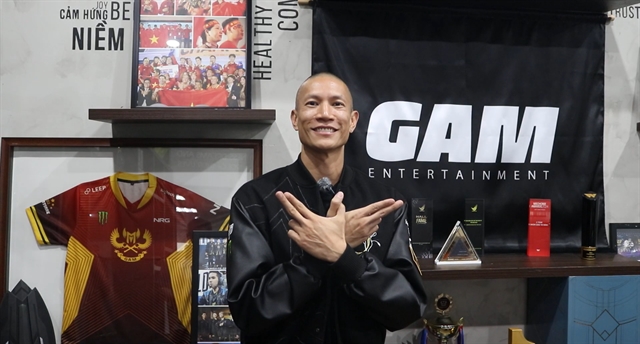 |
| TK Nguyễn, CEO of GAM Entertainment, owner of GAM Esports. VNS Photo Vương Linh |
Anh Đức, Vương Linh & Thu Ngân
Esports has been on the rise in Việt Nam over the past decade, with Vietnamese players and teams not only making regular appearances in international competitions, but also making cultural impressions on global fans.
In a business named as one of Việt Nam's 10 key cultural industries, TK Nguyễn, an Overseas Vietnamese entrepreneur with a passion for glory and a love for spreading Vietnamese values and culture, stands out as one of global esports' most recognisable faces. He is a pioneer and a key driver in establishing Việt Nam's premier esports team, GAM Esports. The charismatic and energetic businessman sat down with VNS for an interview on the prospects of the industry and his journey bringing Vietnamese esports to the global stage.
For readers new to esports and GAM, how would you describe the industry — and what makes GAM different?
Esports is video gaming at the highest level: people competing and representing their team and country at events like the upcoming Esports World Cup. It's a digital arena, but a global sport from the start. For me, it's not just the future of sport — it's the future of entertainment, because it lives in the digital world where the next generation already is. Việt Nam alone has 54 million gamers.
What makes GAM different is that it's always been about Việt Nam. I want to bring the best of the world to Việt Nam, and the best of Việt Nam to the world. We run on three Cs: championships, content and community. Championships are our north star — winning lets us create amazing content, and through that we build the GAMFAM, our family of fans.
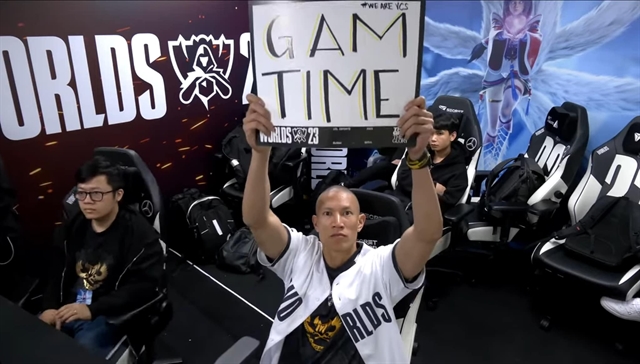 |
| TK Nguyễn displaying the famous 'GAM Time' sign at Worlds 2023 in Busan, South Korea. Photo courtesy of TK Nguyễn |
Your famous slogan, 'It’s GAM Time!' connected with fans all over the world. What does that global recognition mean for GAM as a brand, and how has it changed the organisation’s ambitions going forward?
GAM has been around for 10 years; I've been on the journey for five. We've represented Việt Nam at MSI and Worlds multiple times, competing against the biggest names — T1, Gen.G, G2. "GAM Time" is a play on words: game time is the moment you show up, ready to compete and represent. It just means, "We're here, and we're going to give you the best we've got."
The moment that stands out most was Worlds 2022. As a US-born American Vietnamese, coming back to play Madison Square Garden — and seeing GAM up in Times Square — made me proud. We beat Top Esports of China in a comeback that had the whole arena chanting "G-A-M! G-A-M!" Afterwards, fans chanted "Levi, Levi, Levi" for our captain Đỗ Duy Khánh. Those David-versus-Goliath moments are why we do this. I want kids at home watching to say, "We have a seat at the table. We can do that, too."
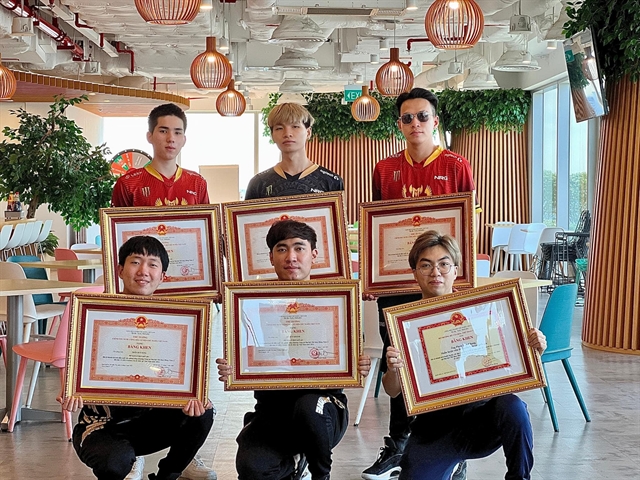 |
| GAM Esports' League of Legends players and their coach, who also won the 31st SEA Games gold medal as the Việt Nam national esports team, were honoured by the Prime Minister in 2022. Photo courtesy of GAM Esports |
GAM has been a talent pipeline for Vietnamese esports for years, with many of the country’s top players coming through your system. What’s the philosophy behind how GAM develops its players, and what do you want a young player joining GAM to take away from the experience?
Our world-champion formula is mindset times health, plus skills. In-game skill is a baseline — anyone at GAM is already a top player. What sets people apart is mindset and health. A best-of-five is five hours on stage, plus prep. If you don't take care of your body, you can't perform. I tell young players: see yourself as a world-class athlete, stay coachable, get one per cent better every day.
The team house is built around that. Players have personal trainers three times a week and wake up early together — discipline matters, and group habits beat solo willpower. The first thing they do is walk outside for 15-20 minutes to catch sunlight and fresh air, then breathe, stretch, and do a "one, two, three, GAM!" chant before going back in. They sit close to 10 hours a day, so I'm always reminding them to stand and move.
Hydration is a KPI: 1.5 litres a day, with a bottle next to every player. I run nutrition workshops because most don't know what to eat before a match. On match days they eat light — a full stomach makes you sleepy — and the day before, we carb-load like marathon runners.
Then there's focus. Young players dwell on mistakes until they're stuck. So I ask them three questions before they walk on stage: What is your outcome? How do I add more value? Who do I need to be to achieve that outcome? Better questions set better goals.
Energy ties it together. In nightlife and entertainment for over 15 years, I learned one rule: if the host isn't on, the room isn't on. That didn't change in esports. Energy is real, but it's also a leadership decision I make every day — and leaders don't get a day off.
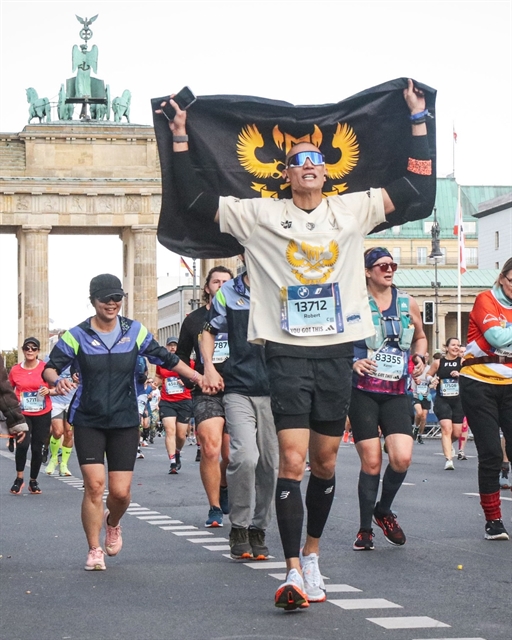 |
| TK Nguyễn competing in the 2024 Berlin Marathon. Photo courtesy of TK Nguyễn |
Can you tell us why you decided to come back to Việt Nam and pursue esports? What are the advantages and disadvantages of someone like you managing one of Việt Nam’s top esports teams?
I came back in 2014 to open Skylight, a rooftop beach club in Sài Gòn — my background is nightlife. When COVID shut everything down, I felt lost. Then my business partner Randy Dobson, GAM's chairman, who had invested in NRG, brought NRG Asia to Việt Nam. I became CEO, and we acquired GAM because we saw the chance to elevate a sport for Việt Nam.
Living in the US, the things I missed most were concerts and sporting events. Concerts here are improving, but mostly with local acts; in sports, beyond the national football team, few Vietnamese teams compete globally. Esports gave us a real seat at the table. Việt Nam has 100 million people, half under 32 — Southeast Asia is the next rising billion. You go where everybody is looking.
I played old-school shooters as a kid, not League of Legends or mobile games, so I won't out-skill our players. But esports is a high-performance sport, and high performance is mindset, health and skills. The skills change depending on the title — League, Arena of Valor, PUBG, Free Fire — but the other two are universal. Whether you're a player or a CEO, the questions are the same: How am I thinking? How do I overcome adversity? Am I taking care of my body? I'll let the coaches handle skills; I focus on mindset and health.
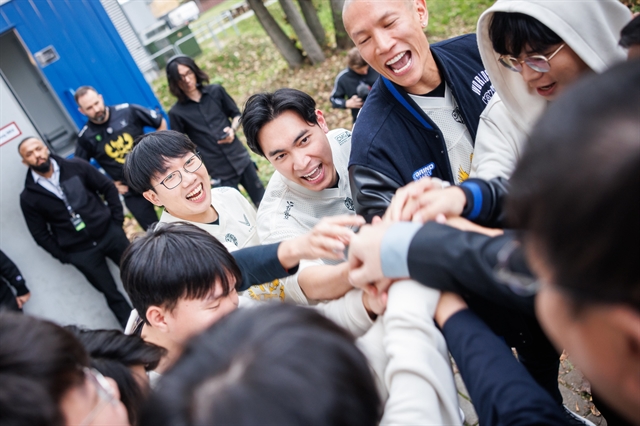 |
| GAM Esports getting ready for a match at Worlds 2024. Photo courtesy of GAM Esports |
When you started, Việt Nam wasn't on the international map. What was that early period like?
Credit where it's due: GAM at MSI 2017 is where the legacy started. That historic run put Việt Nam on the map. When I acquired the team, I wanted to add to that foundation. Việt Nam has always been the underdog globally, and we leaned into that. GAM became everyone's second-favourite team — not because we asked, but because of how the team showed up: fighting, aggressive, putting on a show win or lose. My energy on broadcast and the players' fearless League of Legends combined into something the world hadn't seen from Việt Nam.
People used to tell me my goals were crazy. We want to break top eight at Worlds. We've come close. We haven't done it yet, but we will. We won't win every match — we'll win every match we play. That's the GAM promise.
Looking back on the journey so far, what’s the hardest moment you’ve had as a leader in this industry, and what carried you through it?
Last year was the toughest. We joined the LCP, the new Tier 1 league based in Taipei, which meant moving the whole team to a new city — new culture, food, language. We had a strong roster and thought we'd dominate. CFO was on another level, and our rivals at PCS Talon pushed us in every series.
It was potentially Levi's last year as a pro. The LCP Grand Finals in Đà Nẵng was meant to be his homecoming send-off — our chance to play in front of Vietnamese fans after months in Taipei. FPT, our title sponsor, helped organise the event with Riot Games and VNG. We lost. We didn't even make the Grand Finals. We didn't get to come home. It broke my heart.
Afterwards we had to restructure, saying goodbye to people who'd been with us for years. Those calls are the hardest part of this job — people only see the trophies and the lights. That's why 2026 matters. GAM was just announced as an official Club Partner of the Esports World Cup 2026, the only Vietnamese organisation and one of just a few from Southeast Asia. It's a direct answer to what we lost in Đà Nẵng. Pioneers don't get maps — we make them.
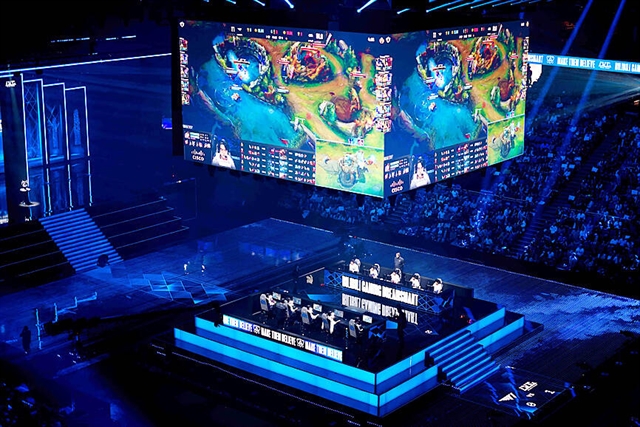 |
| South Korea’s T1 and China’s Bilibili Gaming compete during the 2024 League of Legends World Championship final at the O2 Arena in London. AFP/VNA Photo |
The market you helped build is now attracting major international investment. DRX, T1 and Gen.G have all made significant moves in Việt Nam recently. As a pioneer of this industry, how do you view this — as competition, validation or something more complicated?
Việt Nam has emerged. When the biggest names start placing real bets, that's a signal, not a trend. We have 54 million gamers, one of the most passionate fan bases in the world, and a new Tier 1 league. The rest of the world is catching up to what we already knew.
A foreign brand can open a Hà Nội office, sign a Vietnamese player, run a campaign. What they can't buy is 10 years of being Việt Nam's home team. International organisations are renting space in a market we helped build — that's a compliment. But trust isn't for sale.
"Rise As One" isn't just our team slogan; it's how I see the industry. Publishers, organisations, brands, media, fans — everyone has a role. So to DRX, T1, Gen.G and the rest: welcome. Việt Nam has room for all of us. A generational industry gets built by a movement, not one team.
What’s the hardest part of running an esports organisation in Việt Nam that people outside the industry simply don’t see? What do you wish more people understood about this business?
Three things. First, the people. We're not managing a team; we're managing humans aged 18 to 25, many living away from family for the first time, carrying a country's expectations. Mental health, nutrition, sleep, finances, relationships — that's the real job. You don't see it on broadcast; you see it at 2am when a player can't sleep before a big match.
Second, the economic opportunity. A lot of people still see gaming as kids playing games. Gaming is now a US$184 billion global industry — nearly double films and music combined. Việt Nam's gaming industry is projected to reach $1.66 billion in 2025 and $2.42 billion by 2029, and we rank third worldwide among top mobile game publishers, behind only China and the US.
Third, the change in public perception. For years, Vietnamese parents didn't believe esports was a real career. In November 2025, then-Prime Minister Phạm Minh Chính signed Decision 2486 approving Việt Nam's Cultural Industries Strategy to 2030. Software and Entertainment Games were named one of 10 key cultural industries — sitting alongside film, music and performing arts. That tells our players, staff, fans and parents: this is real.
If you could speak to a younger version of yourself starting out today, what would you say?
Younger TK, buckle up. Anything worth building is going to be hard — that's the price, not a sign of failure. Slow is fast: pick the few opportunities that matter and run them all the way through. Focus beats hustle. And it will take everything — energy, hours, comfort. Pay the cost and don't complain.
Five years in, with so many ups and downs, if I had to do it again, I would. Every day. Because I'm betting on Việt Nam, and Việt Nam is always worth the bet.
What do I hope he builds? Not just a winning team or trophies. A movement. A Vietnamese esports organisation that's still here in 20 years, still developing players, still bringing the best of Việt Nam to the world. The dream is the kid in a small province watching our match on a tiny screen, turning to his parents and saying, "I want to do that one day" — and 10 years from now, that kid is the one wearing the jersey and carrying the flag.
The trophy isn't the legacy. The next generation is. And Việt Nam's time has only just begun. — VNS
Sports
 Sports
 Sports
 Sports
 Sports
 Sports
 Sports
 Sports
 Sports
 Sports
 Sports
 Sports
 Sports
 Sports
 Sports
.jpeg)