 Society
Sơn La hit by two earthquakes within 30 minutes
1.
|
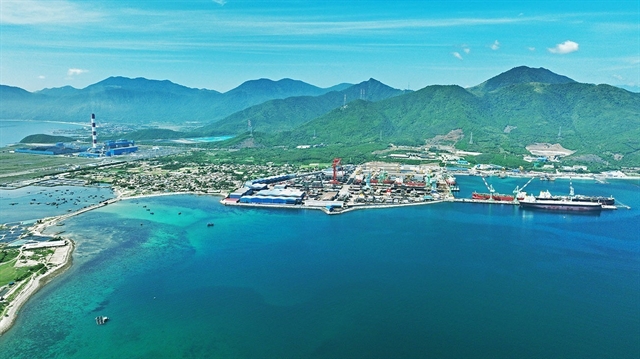
| The wharf at Hyundai–Vinashin Shipyard in the Nam Vân Phong Economic Zone is a specialised port serving the shipbuilding and ship repair industries in the south-central province of Khánh Hòa. VNA/VNS Photo Vũ Sinh |
Nguyễn Hằng
The Party's Resolution 20 on building and developing Việt Nam into a strong maritime nation has opened up significant opportunities for the country, while also setting out a substantial programme of action to turn that ambition into reality.
Issued on July 28, 2026, the resolution marks a shift in development thinking. The sea is no longer viewed merely as a source of natural resources or a space for individual economic sectors, but as a strategic area for expanding growth potential, enhancing competitiveness and strengthening the country's standing.
The overarching goal is to lay a solid foundation for Việt Nam to become a strong maritime nation, supported by a modern, unified and integrated national marine governance system based on science, technology and digital data.
It also calls for the effective management, exploitation and use of marine resources and space; the gradual development of capabilities to operate in offshore and deep-sea areas and other emerging maritime spaces; and the protection of the marine environment, alongside the conservation and restoration of marine ecosystems.
The resolution envisions a modern, highly competitive marine economy, improved living standards for coastal and island communities, and the preservation and promotion of maritime culture. It also emphasises safeguarding national defence, security, sovereignty, sovereign rights and jurisdiction at sea, while enhancing Việt Nam's position, reputation and role internationally.
By 2045, Việt Nam aims to become a strong maritime nation that derives prosperity from the sea.
Untapped potential
Cấn Văn Lực, a member of the National Financial and Monetary Policy Advisory Council, said the resolution identified eight key areas for developing a strong maritime nation.
"These include tourism and fisheries; the maritime economy; extractive industries; renewable energy; marine space; science, technology and data; environmental protection; and social issues related to the livelihoods of coastal communities," Lực said.
Lực added that Việt Nam had considerable advantages in developing its marine economy. The global marine economy contributes approximately 4 per cent of global GDP, while the figure for Việt Nam is at a similar level.
To become a strong maritime nation, Việt Nam's marine economy is expected to contribute around 10 per cent of the country's GDP, more than double its present level, indicating substantial room for growth, he said.
Nguyễn Quốc Toản, director of the Việt Nam Administration of Seas and Islands under the Ministry of Agriculture and Environment, said the resolution established major strategic orientations with a long-term vision, reflecting a new approach to maritime development.
Building on these strategic directions, the Government has issued a detailed action programme for implementation, assigning the ministry responsibility for coordinating implementation, monitoring progress, urging relevant agencies to act and compiling progress reports.
“This is a major responsibility, but also an opportunity to strengthen cooperation with other ministries, localities and international partners,” Toản said.
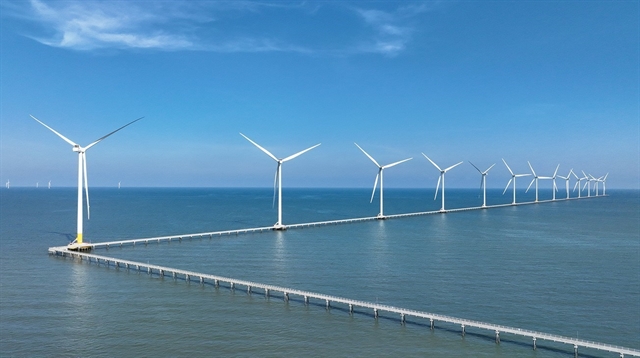
|
| Offshore wind turbines at the Hòa Bình 1 and 2 wind farms in Vĩnh Hậu Commune, Cà Mau Province. — VNA/VNS Photo Vũ Sinh |
Rear Admiral Phạm Minh Tuấn, deputy commander of the Việt Nam People's Navy, said the resolution views the sea as a space for survival and development, a gateway for international exchange and an integral part of the nation’s sacred sovereignty.
“Building a strong maritime nation is a strategic task for the entire Party, people, armed forces and political system,” he said.
This includes developing a modern, green and smart marine economy, protecting the environment, improving people's living standards and safeguarding sovereignty, sovereign rights, jurisdiction and national interests at sea, he said.
Turning vision into action
Lực outlined six key groups of recommendations to help the country realise its ambition of becoming a strong maritime nation.
First, the State must play an enabling role and provide seed capital to mobilise domestic and international resources. It must also fulfil its responsibility for comprehensive, zonal and detailed planning to give businesses and investors the confidence to commit to long-term development, he said.
Second, institutional and policy frameworks need to be completed more quickly, particularly the legal frameworks governing maritime activities.
Third, Việt Nam should accelerate the development of connectivity and energy infrastructure while increasing investment in research and development, science and technology.
“The State should also be prepared to share risks under public-private partnership models, an issue of considerable concern to investors considering projects in Việt Nam,” said Lực.
Fourth, an interconnected database should be established, with standardised data that can be shared and used to develop a marine economic ecosystem.
Fifth, Việt Nam should develop maritime economic corridors linking value chains and maritime supply chains, rather than pursuing isolated projects.
A maritime economic zone, for example, should bring together seaports, logistics, industry, maritime services, coastal industrial cities, research and development, education and healthcare, creating an integrated development ecosystem.
Sixth, Việt Nam should promote new financing models and mobilise medium- and long-term capital from domestic and international sources. These efforts should encompass green, transition and climate finance as well as carbon markets.
“Part of the revenue generated from the sea should be reinvested in maritime development, drawing on Norway's experience,” Lực said.
He also stressed that science and technology, together with clean, reliable and shareable data, should be treated as essential infrastructure for the marine economy.
“Mobilising resources for maritime development means more than raising money; it also requires drawing on knowledge, technology and highly skilled human resources,” he added.
From the Ministry of Agriculture and Environment's perspective, Toản said the ministry had drawn up specific plans for the 2026–30 period, focusing on key international cooperation programmes and projects to strengthen marine governance and marine spatial planning.
Under the Government's direction, the ministry would focus in 2027 on reviewing, adjusting and supplementing the Marine Spatial Plan approved by the National Assembly in 2024.
It would also prioritise marine and ocean surveys, monitoring and database development; the promotion of a green ocean economy and emerging marine industries; the conservation and restoration of marine ecosystems; and responses to climate change, he said.
The ministry would also seek to strengthen cooperation, train specialist personnel and participate in regional marine governance mechanisms.
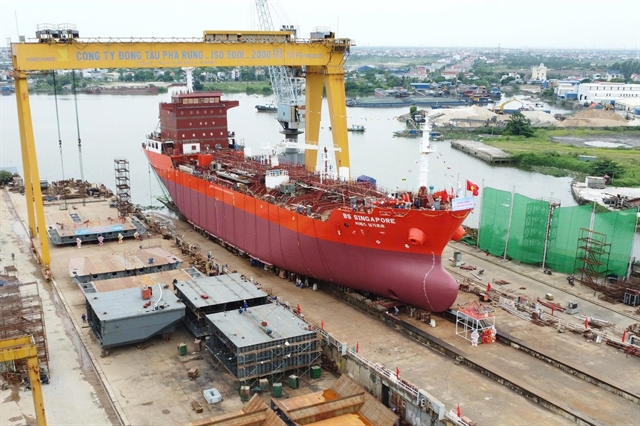
|
| A vessel is ready for launching at Phà Rừng Shipbuilding Co Ltd in Hải Phòng. VNA/VNS Photo Hoàng Ngọc |
Safeguarding maritime interests
From a national defence perspective, Tuấn proposed three priority areas for the 2026–30 period.
The first is to strengthen Việt Nam's capacity to manage and protect its maritime areas. This requires continued development of an all-people national defence posture integrated with the people's security posture and the support of people at sea. National defence, security, foreign affairs and marine economic development must be closely coordinated.
Resources should be prioritised for developing economic and defence zones at sea, along the coast and on islands.
“All investment, exploitation and use of marine space must comply with overall planning, protect the country's long-term interests and avoid undermining maritime and island defence capabilities,” he said.
A key priority is to build regular, elite, professional and modern forces responsible for maritime management, protection and law enforcement.
Coordination mechanisms with State management agencies, coastal localities and businesses should also be improved to ensure a unified, timely and accurate response to maritime incidents, underpinned by secure and reliable information and data sharing.
These measures would strengthen the capacity to detect, assess and promptly address threats to sovereign rights, security, maritime safety, economic activities and the marine environment.
Tuấn also called for more effective maritime law enforcement, protection for fishermen and support for businesses, fishing vessels and other economic activities operating in compliance with Vietnamese and international law. Illegal, unreported and unregulated fishing must also be resolutely tackled, he said.
The second priority is to develop self-reliance in science and technology and promote technological applications in the marine economy.
“A strong maritime nation is measured not only by the length of its coastline or the size of its maritime territory, but also by its ability to master the sea, technology and data,” he said.
Việt Nam should develop marine products, technologies and services, with particular attention to maritime defence technology, shipbuilding, maritime industries and technical services, with the aim of achieving greater autonomy, efficiency and sustainability.
The third priority is to put people at the centre of development while proactively strengthening international cooperation and integration. Marine economic development programmes must be accompanied by measures to ensure social welfare and essential safety for coastal and island communities.
Education, healthcare, communications and access to essential services should be improved, alongside efforts to raise fishermen's awareness of the law, strengthen their safety skills and enhance their capacity to participate in marine governance.
“People must be both the central actors and active partners in building and safeguarding the homeland from the sea,” Tuấn said. VNS
Society
 Society
 Society
 Society
 Society
 Society
 Society
 Society
 Society
 Society
 Society
 Society
 Society
 Society
 Society