 Society
Sơn La hit by two earthquakes within 30 minutes
1.
|
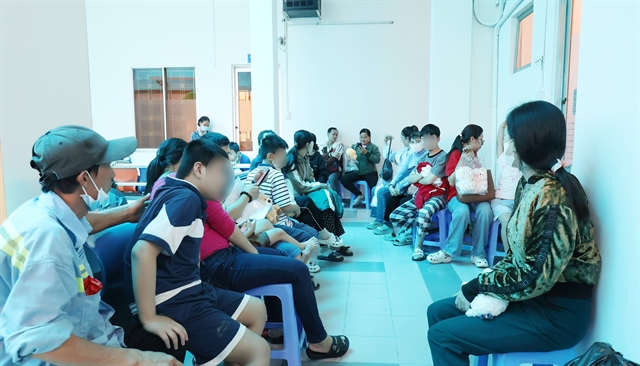
| Parents and young patients wait their turn at the Department of Child Psychology and Psychiatry of HCM City Psychiatric Hospital. The department sees between 300 and 500 children a day. — VNA/VNS Photo |
HÀ NỘI — For most of the year, the girl was home alone. Her parents worked long hours to keep the family afloat, and in their absence, the 10-year-old found company in the one thing that was always there: a smartphone.
It became, in effect, her only friend. By the time her family realised something was wrong, the changes were plain to see. Her speech had badly deteriorated. Her gaze had turned dull and vacant. She had lost touch with the friends she once had.
Doctors at Children’s Hospital 2 in HCM City describe her as a stark example of a problem they are seeing more often. She is among a growing number of children being brought to psychological and psychiatric clinics, a trend physicians in Việt Nam’s largest city now call alarming.
At HCM City Psychiatric Hospital, the Department of Child Psychology and Psychiatry now sees between 300 and 500 children a day. Not long ago, the figure was closer to 200.
Chu Thị Dung, the hospital’s deputy director, puts the increase at roughly one and a half times. The children who come through its doors present with a wide range of conditions: attention deficit hyperactivity disorder (ADHD), pervasive developmental disorders, behavioural problems, depression, stress disorders, epilepsy and intellectual disabilities.
Dung sees several forces converging. Children today are squeezed from every direction: by schoolwork, by family expectations and by the general strain of modern life. The explosion of social media has added something new and potent to the mix.
“A lot of children now are hooked on games, on their phones, on social media,” she says. “They sink into a virtual world and drift away from real life, and that leads to sleep problems, behavioural disorders, depression and anxiety.”
The same pattern is playing out at the city’s major paediatric hospitals. Children’s Hospital 1, Children’s Hospital 2 and City Children’s Hospital have all reported rising numbers of young patients needing psychological care.
Nguyễn Thanh Sang, who heads the Department of Clinical Psychology, Rehabilitation and Traditional Medicine at Children’s Hospital 2, says many of the children he sees, from toddlers to teenagers, have emotional and psychological problems associated with excessive phone use.
One was a 14-year-old boy, identified only as N., who was gaming for five hours or more every day. When his family banned gaming and confiscated his devices, he became irritable and destructive. He smashed things, lashed out violently at relatives and spiralled into a state of panic.
Lasting impacts
Part of the problem, Sang suggests, lies with the adults. Many parents have come to treat the phone as a digital nanny — a dependable way to keep a restless child seated and compliant.
|
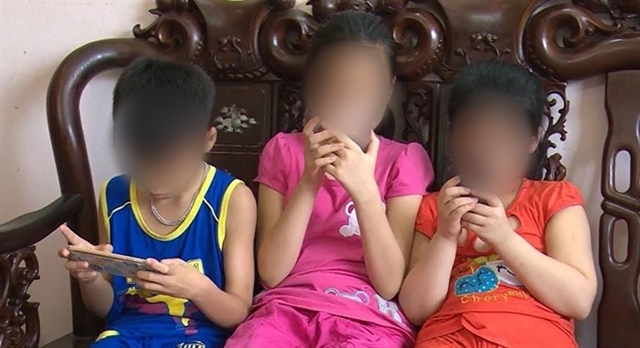
| Three children look at their phones. Doctors warn that excessive screen use could affect children's mental health and learning. — Photo courtesy of vovgiaothong.vn |
The habit runs in both directions: 56 per cent of parents, he notes, are themselves regularly glued to their phones while spending time with their children. In many homes, devices sit in children’s bedrooms, leaving late-night use all but unchecked.
The cost is not only immediate. Doctors warn that dependence on televisions and smartphones can have lasting effects on a child’s mental health and capacity to learn. Children who spend much of their day in front of a screen may interact less with the people around them, potentially affecting their language development.
Many struggle to sleep or concentrate, take in less in class and fall behind at school. Some develop behavioural problems after a childhood in which a device was handed over whenever they wanted one.
What HCM City’s clinics are seeing reflects a national picture. UNICEF in Việt Nam, drawing on national and international research, lists ADHD, anxiety, depression and behavioural disorders among the most common psychological conditions among children and adolescents.
Other problems are also on the rise, including eating disorders, social isolation, stress-related conditions following the pandemic and the effects of social media.
Between 12 and 30 per cent of Vietnamese children and adolescents are estimated to experience mental health problems. Only a small fraction receive timely help. Low awareness, social stigma and overstretched services mean many young people go without treatment or professional counselling at precisely the moment they need it most.
Even for families who are paying attention, the signs can be hard to read. Many behaviours that may point to a disorder are also an ordinary part of growing up: shyness, worry, changes in eating habits, or a quick temper.
That makes it difficult for parents to tell when something has crossed a line. Some parents simply cannot accept that their child might have a mental disorder and put off seeking help.
Knock-on effects
The delay matters. A disorder identified late tends to be more severe and takes longer to treat, with knock-on effects on a child’s quality of life and relationships. Doctors are calling for closer attention and routine screening. They want parents, caregivers, teachers and school health staff trained to recognise the earliest warning signs.
Those signs can be physical: fatigue, loss of appetite, a sudden lack of energy or reluctance to move. They can also be emotional: persistent low mood, unusual sensitivity, panic, agitation, angry outbursts, constant anxiety, or sleeping too little or too much.
A child may lose focus, become forgetful or struggle to express themselves as well as others their age. Some withdraw from the people around them, while others harm themselves or turn to drugs and other substances.
“As soon as parents notice these signs, they should take their child to a specialist paediatric facility or a psychology clinic so the child can be assessed early and get help in time,” Sang says.
Recognition and swift action from parents, doctors argue, backed by schools and the wider community, are what ultimately help determine how well a child recovers.
For one father, the moment of recognition came slowly. P. B. C., who lives in HCM City, had watched his four-year-old son hit other children, refuse to sit still and tear around with seemingly limitless energy.
“I used to think he was just livelier and naughtier than other kids,” he says. “But as time went on, I could see it was more than that, and I got very worried.”
He took the boy to the psychiatric hospital, where doctors diagnosed ADHD. The treatment they set out combines behavioural therapy with support from the family.
The clinic can guide him, but much of the work will happen at home. For many of the children filling these waiting rooms, recovery may start the same way: with a parent who chose to look twice. — VNS
Society
 Society
 Society
 Society
 Society
 Society
 Society
 Society
 Society
 Society
 Society
 Society
 Society
 Society
 Society