 Society
Sơn La hit by two earthquakes within 30 minutes
1.
|
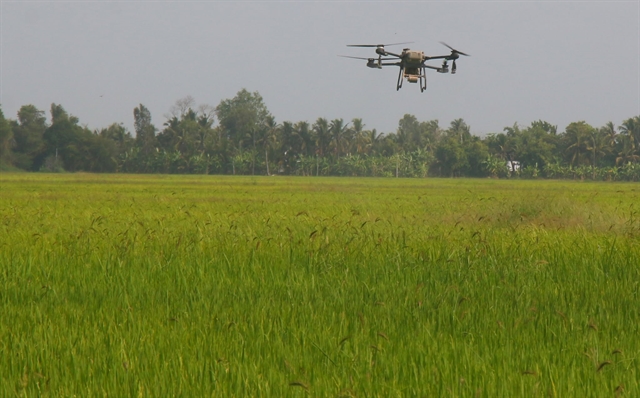
| A drone applies fertiliser to rice fields in Vĩnh Viễn Commune, Cần Thơ City. VNA/VNS Photo |
Hoàng Hà
From Israeli drip irrigation systems to Japanese agricultural robots and AI-powered farming technologies, international partnerships are helping Việt Nam reshape the way it grows food. As the country seeks to modernise its agricultural sector, the challenge is no longer simply gaining access to advanced technology, but finding solutions that work for Vietnamese farmers and their budgets.
Nguyễn Trí Ngọc, PhD, permanent vice president and secretary-general of the Việt Nam General Association of Agriculture and Rural Development, told Việt Nam News that Việt Nam has been applying high technology in agriculture for many years.
The country recognises that science and technology must be considered essential to accelerating agricultural development and making the sector more efficient and resilient, Ngọc said.
To this end, Việt Nam has been cooperating with countries with strengths in high-tech agriculture, adopting and applying technologies from Israel, Chinese Taipei, South Korea, Japan, India, China and the Philippines.
One example is Israel’s drip irrigation technology. “Việt Nam has applied and made very effective use of Israel’s drip irrigation technology,” Ngọc said. "Water-saving irrigation solutions have been applied in agricultural production across various regions of Việt Nam, alongside greenhouse and net-house farming models."
Water-saving irrigation technologies, combined with controlled-environment farming models, could improve water-use efficiency and support the development of production systems suited to different ecological conditions, including areas where farming is particularly challenging.
“Based on the principles of Israel’s drip irrigation technology, Việt Nam has gradually applied, improved and developed equipment suited to domestic production conditions, meeting technical requirements and coming at prices compatible with producers’ investment capacity," Ngọc said.
"This is an example of how the adoption of international technology goes beyond imports, moving towards the ability to master and localise technology and improve its effectiveness in Việt Nam."
Biotechnology and microbial technology are also areas in which Việt Nam has adopted international advances, according to Ngọc.
Applications include microbial and biological preparations, as well as microorganisms used in crop production and animal husbandry, environmental management and the development of more sustainable plant protection solutions.
In the seed sector, Việt Nam has adopted advances in the production of food crop seeds, fruit varieties and livestock breeds from various countries such as India, China and the Philippines.
Japan is a potential partner for Việt Nam in smart agriculture, automation, biotechnology and low-emission production, according to Prof. Trần Đăng Xuân of the Institute of Environmental Rehabilitation and Conservation at Hiroshima University.
“Japan can support Việt Nam through technology transfer, the development of pilot models and human resource training,” Xuân said.
“Technologies that could be introduced include AI, the Internet of Things (IoT), sensors, unmanned aerial vehicles, agricultural robots and smart irrigation systems to reduce fertiliser use and emissions.”
According to Xuân, pilot projects are necessary to adapt Japanese technologies to Việt Nam’s climate, rice-growing conditions and smallholder farming systems.
Cooperation could also involve sending Japanese experts to Việt Nam, training Vietnamese officials, engineers, lecturers and farmers in Japan and establishing train-the-trainer programmes to expand knowledge transfer.
Universities, research institutes and businesses in both countries could also work together on research and development, technology testing and commercialisation.
Affordable strategies
For small and medium-sized enterprises and cooperatives, Xuân suggested considering equipment leasing and shared agricultural services rather than requiring producers to make large upfront investments in expensive machinery.
He said the biggest challenge was not a lack of technology in Japan or a lack of demand in Việt Nam, but identifying technologies that genuinely suited domestic production conditions and could be adopted at an affordable cost.
Technology selection should be based on practical economic performance, including purchase prices, operational requirements, maintenance costs and suitability for smallholders.
Vietnamese businesses also need up-to-date information on Japan’s agricultural market, policies and high-tech sector. According to Xuân, accurate information on market demand, policy frameworks and channels for approaching Japanese partners is just as important as technology transfer.
Japan has strengths in robotics, AI, IoT, sensors, automated agricultural machinery, biotechnology, crop varieties, post-harvest technology and quality management.
Việt Nam, meanwhile, has a large agricultural production base, diverse ecological conditions, a young workforce and a developing market. These factors create opportunities for the two countries to jointly test, adapt and scale up technologies suited to production conditions in Việt Nam and across South-east Asia.
“The two sides could prioritise cooperation in smart agriculture and automation; biotechnology and climate change adaptation; and green, low-carbon agriculture,” Xuân said.
|
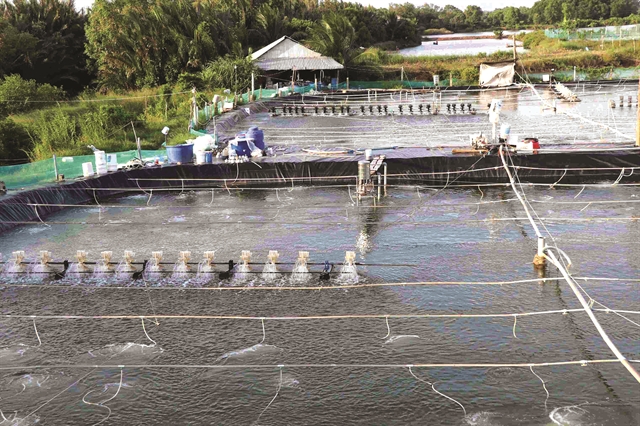
| A high-tech shrimp farm in Ngũ Lạc Commune, Vĩnh Long Province. VNA/VNS Photo |
Meanwhile, according to Vietnamese experts working at the Asian Institute of Technology (AIT), Việt Nam and Thailand have opportunities to expand cooperation in smart agriculture, digital transformation, biotechnology, post-harvest technology, disease management and climate change adaptation.
Assoc. Prof. Dr. Đồng Thanh Hà of AIT’s Faculty of Food, Agriculture, and Natural Resources in Thailand said vaccines and alternatives to antibiotics in livestock farming and aquaculture offered considerable potential for joint research and practical applications.
Hà said cooperation should move beyond experience-sharing towards joint research, development and commercialisation. Such an approach would enable the two countries to make better use of their respective strengths while developing products and technologies capable of competing in regional and international markets.
Assoc. Prof. Dr. Nguyễn Thị Phước Lai from AIT said Việt Nam and Thailand could cooperate in AI, IoT, unmanned aerial vehicles, precision agriculture, land and water management, climate forecasting and agricultural data.
She stressed that technological innovation needed to be accompanied by policies enabling farmers to access and use new technologies, including credit, digital skills training, agricultural extension services, data-sharing mechanisms and public-private partnerships.
Thailand’s relatively accessible, long-term datasets on climate, weather and production conditions are another advantage. These provide a foundation for precision agriculture, forecasting and AI applications.
According to Lai, Việt Nam and Thailand could strengthen cooperation not only in data-sharing but also in analytical methods and the development of applications that meet farmers’ practical needs.
Universities, research institutes and businesses in both countries could also collaborate on research and pilot projects, with AIT potentially serving as a bridge for cooperation in technology, research and policy.
One proposed area of cooperation is the joint research and testing of smart farming solutions for rice production and climate change adaptation in the Mekong Delta, involving research partners in the region.
Access to technology
According to Lai, financial constraints, farmers’ digital skills and data quality are significant challenges in the transition to high-tech agriculture.
For small-scale farming operations, the initial costs of equipment, software, sensors and machinery can exceed household budgets. Limited digital skills can also make it difficult for farmers to access and use data to inform production decisions.
The transition therefore needs to be accompanied by financial support, digital skills training and stronger agricultural extension services.
Lai said the goal of high-tech agriculture should not be limited to raising productivity. It should also improve farmers’ incomes, strengthen their resilience to risks and shocks, and promote more efficient and sustainable resource use.
Germany is another potential partner for Việt Nam in high-tech agriculture, digitalisation, automation and climate change adaptation, according to Heinrich Gerd-Witte, chairman of the Committee on Agriculture and Food at the German Federal Association for Economic Development and Foreign Trade.
He said that the objective should not be to introduce as much foreign technology into Vietnamese agriculture as possible, but to jointly identify and develop solutions suited to domestic conditions that could deliver lasting benefits for people, the economy and the environment.
Việt Nam has a substantial agricultural production base and a dynamic economy, but faces mounting pressures from climate change, water resources, urbanisation and increasingly stringent requirements for safe and sustainable food. These challenges are driving demand for new technological solutions.
Germany has strengths in AI-assisted systems, autonomous driving technology, connected machinery, digitalisation, automation, the circular economy and climate adaptation solutions.
According to Gerd-Witte, bilateral cooperation should not only support agricultural development and improve local livelihoods but also help Vietnamese agricultural products gain better access to international markets, particularly in Europe, thereby promoting two-way trade.
|
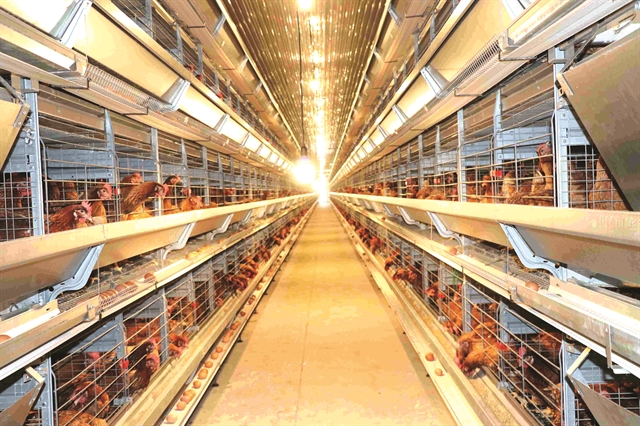
| A modern egg production farm operated by 168 High-Tech Livestock Co Ltd in Tam Ngãi Commune, Vĩnh Long Province. — VNA/VNS Photo |
“Regarding future orientations and policies to attract international cooperation and promote high-tech agriculture, we have reason to expect positive changes from the major policies of the Party and State,” Ngọc said.
For example, the Party's Resolution 57 provides an impetus for the development of science and technology, innovation and digital transformation. These are particularly important to agricultural modernisation, creating conditions for businesses to access, adopt and apply advanced scientific and technological developments from around the world.
The Party's Resolution 68, meanwhile, is important for the development of the private sector. This is particularly relevant to agriculture, where many businesses remain small and have limited financial capacity and access to new technologies.
Without appropriate policies to encourage and support investment, these businesses may struggle to upgrade their technology, improve competitiveness and participate more deeply in agricultural value chains.
As innovation and entrepreneurship receive greater attention, these policy directions create opportunities for agricultural businesses to take a more proactive role, increase investment in research, adopt new technologies and expand cooperation with international partners.
These measures could help Việt Nam accelerate the adoption of high-tech solutions, improve production efficiency and gradually build a modern, sustainable agricultural sector with stronger international competitiveness. VNS
Society
 Society
 Society
 Society
 Society
 Society
 Society
 Society
 Society
 Society
 Society
 Society
 Society
 Society
 Society