 Society

Drive to Great: BAIC FOTON Africa Partners Conference Set to Open
1.
|
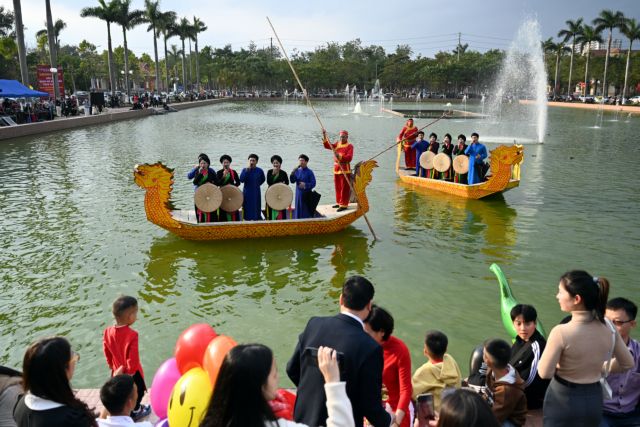
| Quan họ singing on a boat at the Nguyên Phi Ỷ Lan Lake, Kinh Bắc Ward, Bắc Ninh City. — Photos courtesy of Bắc Ninh City |
BẮC NINH — Agencies in Bắc Ninh City have been asked to properly assess the potential, advantages and limitations of the local tourism sector in order to devise systematic, long-term solutions that bring about substantive change.
The directive was issued by Nguyễn Hồng Thái, Secretary of the Bắc Ninh City Party Committee.
Relevant units are required to conduct surveys and comprehensively assess existing tourism products, clearly identifying those suitable for upgrading and those requiring adjustment.
They must also review and select key tourism projects capable of creating distinctive attractions for focused implementation and attracting capable investors. Priority should be given to products such as “Bắc Ninh – The Land of Quan họ” and heritage tours of the Kinh Bắc region, while attention should also be paid to ecotourism, resorts, entertainment, services and the night-time economy.
These efforts aim to create new spaces that encourage visitors to stay longer, spend more and gain richer experiences in Bắc Ninh.
|
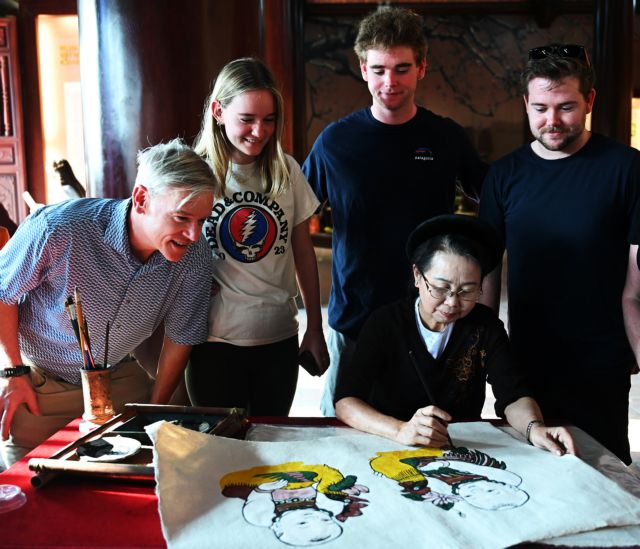
| The traditional Đông Hồ folk painting craft of Bắc Ninh City. |
In addition to harnessing internal resources, Bắc Ninh’s tourism sector needs to strengthen links with other localities and promote tourism across domestic and international markets.
It should enhance exchanges and cooperation between Bắc Ninh’s tourism businesses and domestic and international partners, thereby expanding markets and bringing the city’s tourism products to more international visitors.
Đỗ Tuấn Khoa, Deputy Director of the Bắc Ninh City Department of Culture, Sports and Tourism, said the city enjoyed many favourable conditions for tourism development, as it lies within the socio-economic development space of the Capital Region and the Hà Nội-Hải Phòng-Quảng Ninh growth triangle.
The city’s transport system is becoming increasingly comprehensive, offering convenient connections to Hà Nội, Nội Bài International Airport and Gia Bình International Airport, which is expected to commence operations next year.
Notably, following its expansion and elevation to a centrally administered city, Bắc Ninh possesses abundant natural, cultural and human resources for tourism development.
The Kinh Bắc cultural space, Bắc Ninh quan họ folk singing, historical and cultural relics, festivals, craft villages, cuisine and many other distinctive cultural values provide an important foundation for developing tourism products with unique identities.
The city currently has eight elements of cultural heritage inscribed or recognised by UNESCO; more than 3,100 classified and inventoried relics; 25 national treasures or groups of national treasures; 28 national intangible cultural heritages; 246 artisans honoured with State-awarded titles; and more than 1,300 traditional festivals.
These form a major resource base for developing cultural, heritage, spiritual, craft-village, community-based and experiential tourism.
Building on this foundation, Bắc Ninh has gradually developed several product groups, including cultural and quan họ tourism; heritage, cultural and spiritual tourism; craft-village and handicraft experiences; ecotourism, community-based, agricultural and rural tourism; rail tourism on the Hà Nội-Bắc Ninh route; and tourism combined with conferences, exhibitions, cultural and sporting events. The city has also begun to develop night-time economy activities.
|
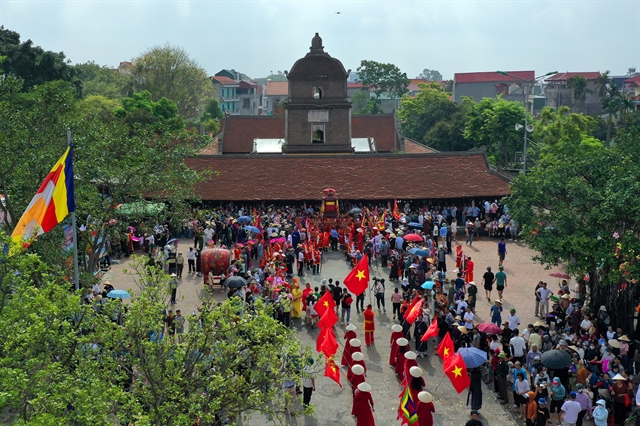
| The Dâu Pagoda Festival in Trí Quả Ward, Bắc Ninh City. |
Last year, Bắc Ninh welcomed 6.3 million visitors, including more than 350,000 international arrivals, generating tourism revenue of approximately VNĐ5.5 trillion (US$211.2 million).
In the first nine months of this year, the city received around 5.8 million visitors, up 7 per cent year-on-year. — VNS
Society
 Society
.jpg) Society
Society
 Society
 Society
 Society
 Society
 Society
 Society
 Society
 Society
 Society
 Society
 Society
 Society