 Economy


HKSTP Showcases 24 Greentech Companies at Eco Expo Asia 2026
1.
|
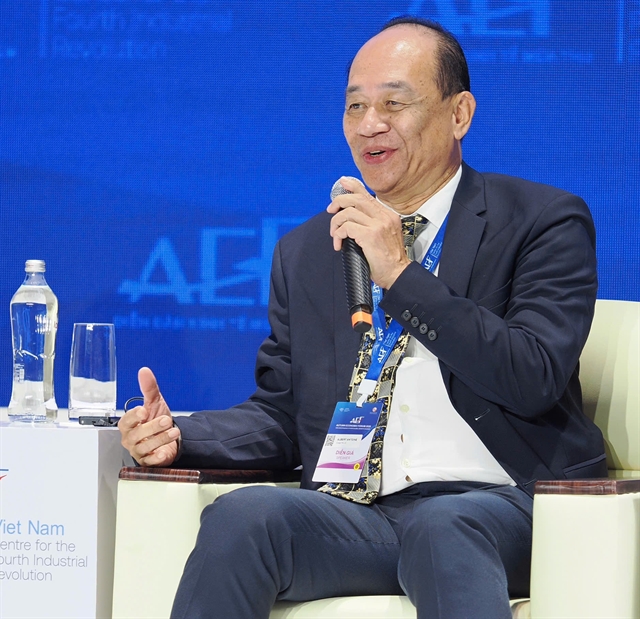
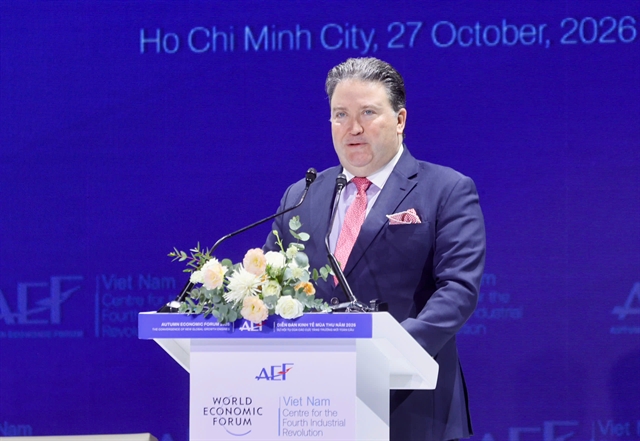
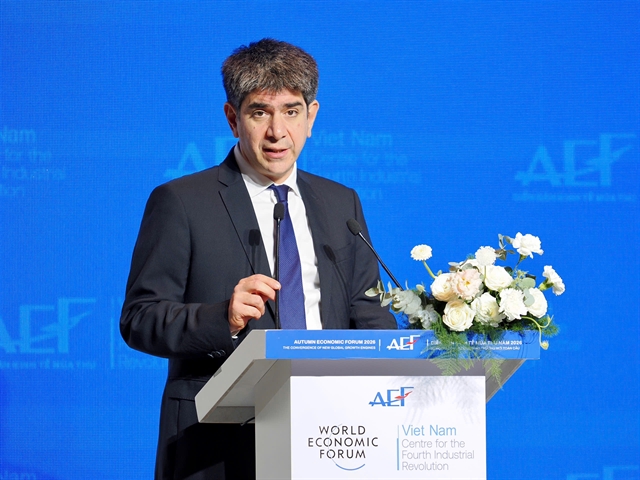
| Albert Antoine, a speaker at the Autumn Economic Forum 2026, shares his insights during a discussion at the event. — VNS Photo Văn Châu |
HCM CITY — HCM City is looking to strengthen its economic competitiveness by developing new growth drivers, improving workforce capabilities and enhancing international cooperation amid the rapid transformation of global value chains and the growing influence of artificial intelligence (AI).
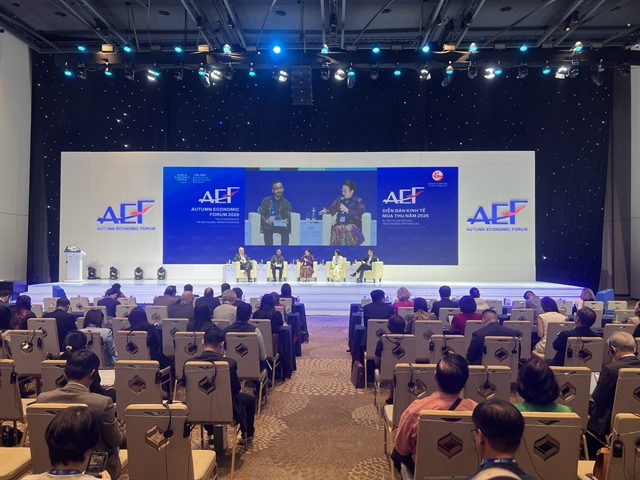
These priorities were highlighted at a thematic session on global economic transformation and economic restructuring experiences of countries and megacities, held on October 27 as part of the Autumn Economic Forum 2026 in HCM City.
Nguyễn Công Vinh, vice chairman of the municipal People's Committee, said the forum's theme, “Spirit of Cooperation in a New Era”, reflected profound changes in the global economy, where established value chains were being reorganised and traditional growth drivers were facing diminishing room for expansion.
The challenge, he said, was no longer simply to identify new sources of growth for individual economies, but also to develop practical cooperation models capable of delivering shared benefits across countries and regions at different stages of development.
AI has emerged as a major force transforming production, governance and economic organisation, requiring governments and businesses to reconsider how they build competitive advantages and prepare for future challenges.
Citing the World Economic Forum's Future of Jobs Report 2025, Vinh said approximately 170 million new jobs were expected to be created globally by 2030, while 92 million jobs could be displaced.
Meanwhile, 39 per cent of workers' existing skills were expected to become outdated or undergo transformation.
These projections underline the urgency of investing in people and strengthening institutional capacity to ensure that technological advances translate into sustainable economic growth.
“The value in the new economy will belong to those localities that can prepare their people, institutions and data infrastructure quickly enough to adapt,” Vinh said, stressing the importance of developing these capabilities in tandem.
According to Vinh, three considerations should guide efforts to develop a new growth model.
First, uncertainty has become a defining feature of the global economy rather than an exceptional condition.
The ability to adapt, rather than economic scale alone, will increasingly determine which economies can maintain their competitiveness and achieve long-term growth.
Second, no economy can independently develop every resource required for sustainable development.
Data, technology, capital and human resources increasingly depend on connections across national borders and industries.
Third, megacities are emerging as important actors in international cooperation alongside national governments.
With their concentration of people, businesses, knowledge and innovation resources, they are well positioned to connect economic partners and help shape new development models.
For HCM City, these considerations highlight the importance of moving beyond traditional growth drivers and strengthening its capacity to participate in international production networks, technological development and knowledge exchange.
The forum's thematic programme addressed five key areas: repositioning Việt Nam and ASEAN in global value chains; environmental, social and governance (ESG) practices and the circular economy; AI adoption and workforce preparation for manufacturing; AI applications in megacity and industrial governance; and AI sovereignty.
Discussions examined how regional economies could improve their positions in global production networks, increase domestic value creation and strengthen resilience against external shocks.
ASEAN's growing role in regional manufacturing networks also presents opportunities for economies to complement one another through closer cooperation in production, technology and supply chains.
Improving infrastructure, ensuring reliable data, developing skilled workers and strengthening links between regional businesses were identified as important conditions for deeper integration.
Governments and multinational corporations also have a role to play in helping domestic suppliers, particularly small and medium-sized enterprises, improve their technological capabilities and participate more extensively in global value chains.
For HCM City, the forum is expected to provide a platform for connecting international partners, exchanging development experiences and turning policy discussions into practical cooperation initiatives.
Vinh expressed the hope that ideas shared at the event would lead to new partnerships and projects that generate mutual benefits and support sustainable growth.
Singapore's lessons
Sharing his perspectives at the session, Albert Antoine, strategy director and co-founder of Avaiga, said AI was reshaping the economic landscape and intensifying competition among global technology centres.
The emergence of China's DeepSeek AI model in early 2025 demonstrated how advances in AI could challenge established technology leaders by delivering competitive performance at lower development and operating costs.
Meanwhile, the Stargate project in the US, announced with an investment ambition of up to US$500 billion, illustrated the scale of investment being mobilised to expand computing capacity and data centre infrastructure.
These developments reflect the increasingly strategic importance of computing power and AI capabilities in determining the competitiveness of businesses and national economies.
However, Antoine warned that the AI boom also presented significant challenges for labour markets.
While technological advances could create new industries and occupations, they could also displace existing jobs and increase pressure on social protection systems.
Although measures such as universal basic income had attracted attention as possible responses to technological disruption, he argued that income support alone could not replace the need to equip workers with the skills required to adapt.
Drawing on nearly four decades of experience in Singapore, Antoine highlighted the importance of lifelong learning, retraining and continuous skills development.
Singapore's SkillsFuture programme, which encourages individuals to upgrade their skills throughout their working lives, offers a useful example of how governments can help workers respond to changing economic and technological conditions.
He said investment in education, human resources, manufacturing and technology should be treated as a strategic priority for Việt Nam and HCM City as they seek to strengthen their economic foundations.
Việt Nam could also leverage its abundant intellectual resources and workforce to establish mutually beneficial partnerships with leading global technology companies, enabling domestic businesses to gain access to expertise and participate more deeply in emerging technology value chains.
Such cooperation, however, requires a supportive policy environment and a clear understanding of the value that each partner can contribute.
|
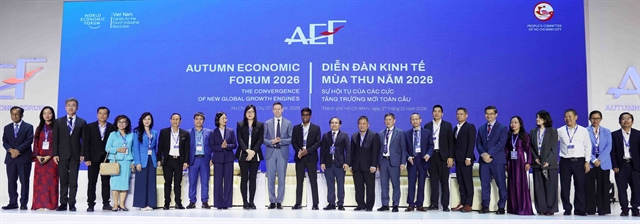
| Delegates pose for a group photo at the Autumn Economic Forum 2026 in HCM City on October 27.— VNS Photo Văn Châu |
Government as enabler
Antoine also emphasised the role of government in creating conditions for technological innovation and private-sector investment.
He cited Singapore's GovTech, which promotes the use of technology in public services, and the Infocomm Media Development Authority (IMDA), which supports the development of the country's digital and technology sectors.
These institutions illustrate how specialised public agencies can help coordinate digital transformation, support businesses and facilitate the adoption of emerging technologies.
Governments can also establish regulatory sandboxes and suitable testing environments to allow companies to experiment with new solutions while managing potential risks.
Such mechanisms are particularly important in emerging fields such as AI, where high initial costs, technological uncertainty and commercial risks may discourage private enterprises from investing.
Antoine suggested that public authorities should provide appropriate institutional frameworks and practical support to encourage innovation and create opportunities for businesses to develop new technological capabilities.
For HCM City, these lessons reinforce the need to align investment in human resources with institutional reform, technological infrastructure and international partnerships.
As global value chains continue to evolve, the city's ability to attract investment and generate new sources of growth will depend increasingly on how effectively it connects these elements.
The Autumn Economic Forum 2026 aims to strengthen dialogue among policymakers, experts and businesses while promoting cooperation between economies facing similar challenges.
By combining technological adoption with workforce development, institutional innovation and international cooperation, HCM City hopes to improve its adaptability and establish a more sustainable foundation for economic growth in the AI era. — VNS
Economy
 Economy
 Economy
 Economy
 Economy
 Economy
 Economy
 Economy
 Economy
 Economy
 Economy
 Economy
 Economy
 Economy
 Economy



