 Economy


Drive to Great: BAIC FOTON Africa Partners Conference Set to Open
1.
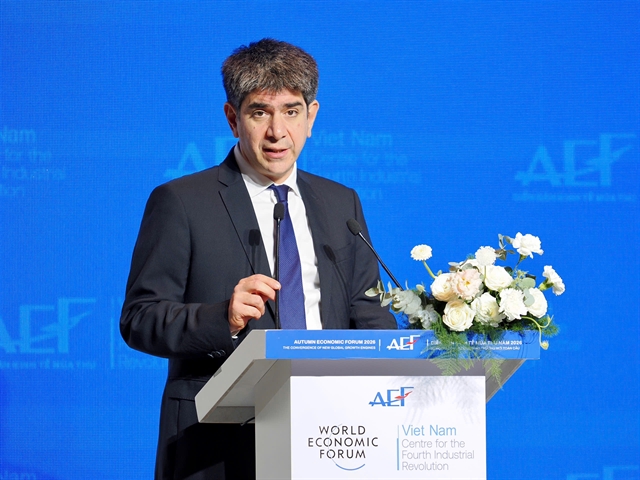 |
| Kyriakos Triantafyllidis, head of Growth and Strategy at the World Economic Forum’s Centre for Advanced Manufacturing and Supply Chains, speaks at a session on advanced manufacturing and the competitiveness of Vietnamese enterprises in HCM City on October 27. — Photo courtesy of the organisers |
HCM CITY — Vietnamese enterprises need to strengthen digital capabilities, improve technical expertise and innovation, and build closer partnerships with multinational corporations to capture more value from global manufacturing networks, experts said at a discussion on advanced manufacturing and the competitiveness of Vietnamese enterprises in HCM City on October 27, as part of the Autumn Economic Forum.
Although Việt Nam has attracted substantial foreign direct investment and become an important manufacturing base, domestic firms remain limited in their participation in higher-value activities, particularly in high-tech industries, they said.
Việt Nam’s exports reached US$475 billion in 2025, with foreign-invested enterprises accounting for 77 per cent of the total.
According to Kyriakos Triantafyllidis, head of Growth and Strategy at the World Economic Forum’s Centre for Advanced Manufacturing and Supply Chains, since 2018, the World Economic Forum’s Global Lighthouse Network has recognised factories and value chains that have adopted advanced manufacturing technologies at scale. It now includes 252 facilities across more than 30 countries, with artificial intelligence (AI), robotics and advanced analytics among the technologies used.
The results are impressive. One recent cohort of lighthouses achieved an average 40 per cent increase in labour productivity and a 48 per cent reduction in lead times.
Other cohorts recorded significant energy savings, alongside substantial improvements in quality and efficiency.
AI is playing an increasingly important role, with analytical AI embedded in approximately six out of 10 leading use cases across the network, Triantafyllidis said.
Việt Nam is already represented in the network. Foxconn’s Industrial Internet Factory in Bắc Ninh became the country’s first lighthouse in 2024 and received Sustainability Lighthouse recognition in 2026.
He said digital readiness was becoming a competitive advantage and an increasingly important requirement for suppliers, as global manufacturers demanded reliable information on production, quality, delivery, traceability and sustainability.
To capture more value, Vietnamese businesses need to move beyond manufacturing and assembly into product development, design and innovation. This could mean helping design components rather than simply producing them, or developing more efficient manufacturing processes.
He also stressed the importance of collaboration among international manufacturers, domestic suppliers, government agencies and training institutions in building stronger industrial ecosystems.
“The lighthouse in Bắc Ninh shows the world that world-class advanced manufacturing is already here,” he said, expressing hope that Việt Nam’s next lighthouse would be a Vietnamese enterprise.
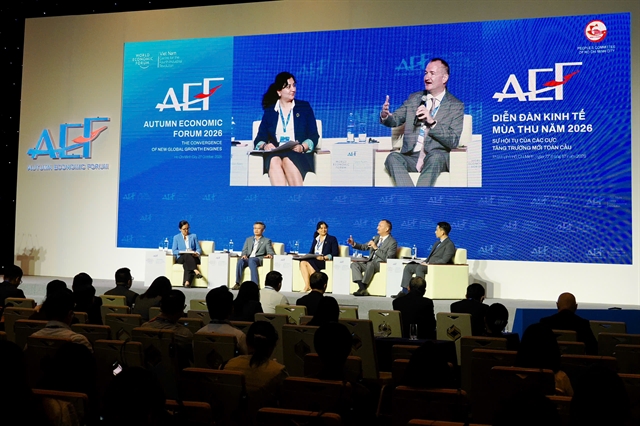 |
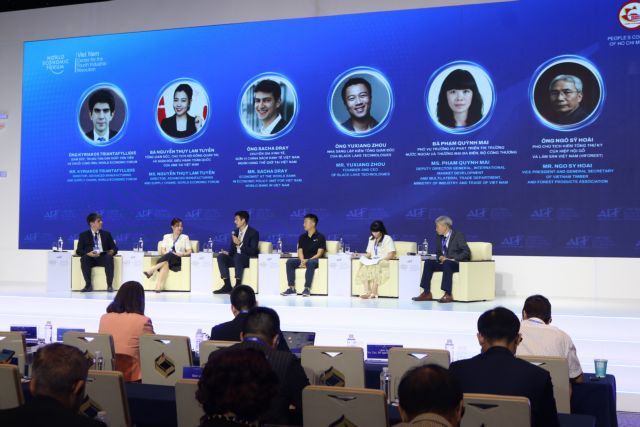
| Panelists discuss advanced manufacturing and the competitiveness of Vietnamese enterprises at a session of the Economic Forum in HCM City on October 27. — Photo courtesy of the organisers |
In a panel discussion, experts stressed that moving up the value chain does not necessarily mean abandoning traditional industries in favour of fashionable sectors such as semiconductors and artificial intelligence (AI).
Đỗ Thiên Anh Tuấn, a lecturer at the Fulbright School of Public Policy and Management at Fulbright University Vietnam, said research by his school found that Vietnamese-owned enterprises generated only around 3–5 per cent of domestic value added in high-tech products.
He urged Việt Nam to upgrade existing competitive industries, including textiles and garments, footwear, food processing and furniture, rather than shifting its focus entirely to sectors such as semiconductors and AI.
Businesses could adopt advanced manufacturing technologies, improve production processes and expand into higher-value activities such as product design, sales and branding.
He also called for investment in foundational capabilities that could support multiple industries, including precision engineering, automation, systems management and technical optimisation. AI should be prioritised for practical applications that improve production and automation.
Ishita Dhamani, partner, consulting - supply chains at EY Singapore, agreed that Việt Nam should build on the foundations established over the past 40 years while continuing to develop its key industries.
Khuất Quang Hưng, director of Corporate Affairs and Sustainability at Nestlé Vietnam, said traceability, environmental, social and governance (ESG) standards and data transparency were essential for suppliers to remain in global supply chains. Moving into higher-value activities also required innovation, problem-solving, lower resource use and reduced emissions.
Citing the Vietnam Chamber of Commerce and Industry statistics, Hưng said around 5,000 businesses directly participated in foreign supply chains, out of more than one million operating enterprises. Only around 300 were Tier 1 suppliers, with a target of approximately 500–1,000 by 2030.
He said local firms often wanted confirmed orders before investing in technology and production lines, while multinational corporations required evidence of suppliers’ capabilities before assigning them more work.
He called for greater mutual trust, with Vietnamese suppliers investing in continuous improvement and foreign companies giving local partners opportunities to undertake higher-value production activities. — VNS
Economy
 Economy
 Economy
 Economy
 Economy
 Economy
 Economy
 Economy
 Economy
 Economy
 Economy
 Economy
 Economy
 Economy
 Economy




