 Economy


Fitch upgrades Techcombank’s rating, boosting global market position
1.
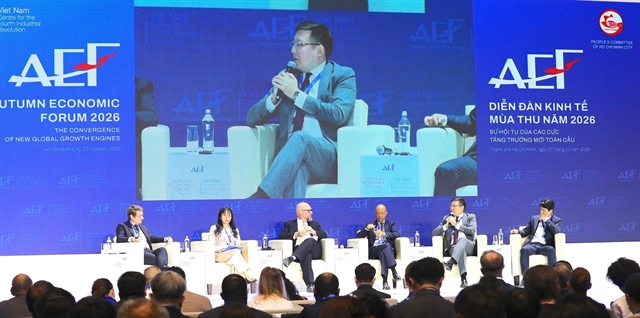 |
| A panel discussion on how the Việt Nam International Financial Centre can effectively draw in foreign capital was held in HCM City on October 27. — VNA/VNS Photo |
HCM CITY — The ability to attract international capital of the Việt Nam International Financial Centre (VIFC) not only depends of its legal foundation, but also how it can inspire trust from international investors, according to a panel discussion as part of HCM City’s Autumn Economic Forum on October 27.
Cấn Văn Lực, a member of the National Financial and Monetary Policy Advisory Council and chief economist at BIDV, said that to meet its growth targets by 2030, Việt Nam needs to maintain total investment at approximately 35-40 per cent of its GDP, equivalent to US$280–300 billion annually.
Capital mobilisation currently relies heavily on banks. Bank credit accounts for approximately 51 per cent of the total capital supplied to the economy, while capital raised through stocks and corporate bonds accounts for only about 13–14 per cent.
VIFC will help tackle this issue, he said, adding that Việt Nam should also focus more on green finance, international capital inflows, stock market upgrade and the improvement of its sovereign credit rating, as well as emerging markets such as digital assets and carbon credits.
Trương Minh Huy Vũ, deputy chairman of HCM City People’s Committee, said: “To date, the legal framework for VIFC has been finalised, and the first 10 members, comprising various businesses and organisations, have been admitted.”
“The next two key areas of focus are investment funds and fund management operations. In November, VIFC will issue the procedures and regulations for the admission of investment funds.”
The city aims to learn from international experience and select methods that align with its specific development needs.
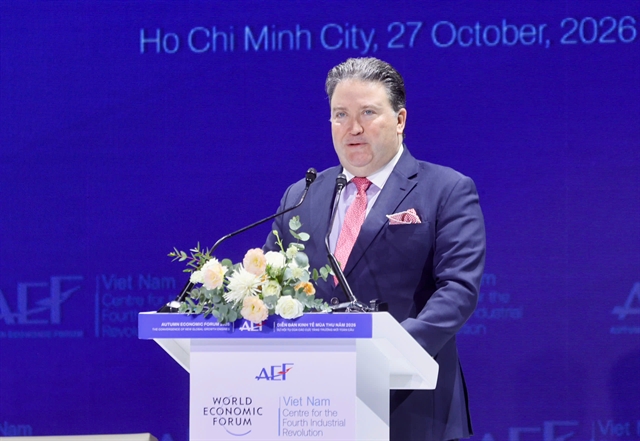 |
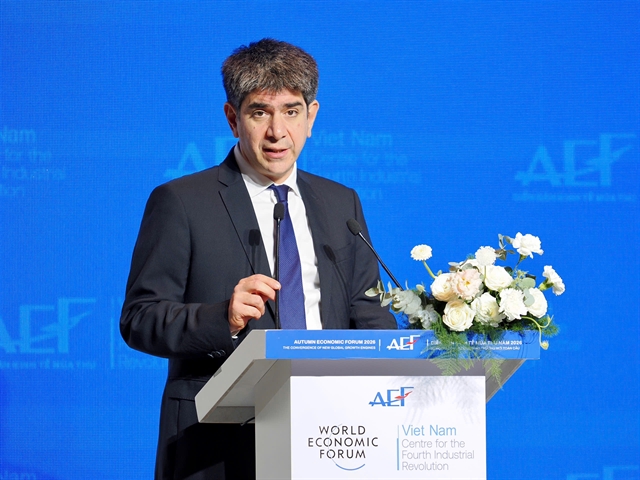
| Marc Knapper, former US Ambassador to Việt Nam and member of the Advisory Board for VIFC. — Photo courtesy of the organiser |
Marc Knapper, former US Ambassador to Việt Nam and member of the Advisory Board for VIFC, commended Việt Nam’s remarkable progress in establishing the legal foundation to support the development of its IFC, including a specialised court that can hear cases in English and an international arbitration centre.
Leading institutions, including major banks in Việt Nam, have also stepped forward as founding members, he said.
“Capital goes to where it is trusted, where rules are clear and stable, where disputes are resolved fairly, where money can move freely, and where talented people want to live and work.”
“Places like London, New York, Singapore, and Tokyo each have earned that trust over many years, and VIFC now has the chance to earn it faster because Việt Nam has studied the lessons of its predecessors.”
In September, Việt Nam's stock market was upgraded by FTSE Russell from frontier status to emerging market status, he said, adding that “the world is paying attention to what's happening here.”
VIFC is looking for institutions that are committed to building a dedicated presence to VIFC; adhere to Việt Nam’s high quality standards in terms of finance, governance and reputation; and willing to become Việt Nam’s partners in its development, including financing the energy, infrastructure, and innovation that the country needs.
Knapper added that global investors are looking for talented workforce, clear rules, and consistency in policy implementation, as well as connection to Việt Nam’s markets, the region and other financial centres around the world.
The VIFC also needs to be able to link international capital to projects that Việt Nam needs, through instruments such as green and infrastructure bonds, so that money raised there can be funneled into roads, power grids and important industries.
Oscar Njuguna, senior advisor at VIFC Đà Nẵng, also stressed that trust must be guaranteed by institutions, emphasising the role of transparent governance and effective, binding dispute resolution mechanisms in building investor confidence.
Investors prioritise policy predictability and a stable legal environment over short-term tax incentives, he said. — VNS
Economy
 Economy
 Economy
 Economy
 Economy
 Economy
 Economy
 Economy
 Economy
 Economy
 Economy
 Economy
 Economy
 Economy
 Economy