 Society

Drive to Great: BAIC FOTON Africa Partners Conference Set to Open
1.
|
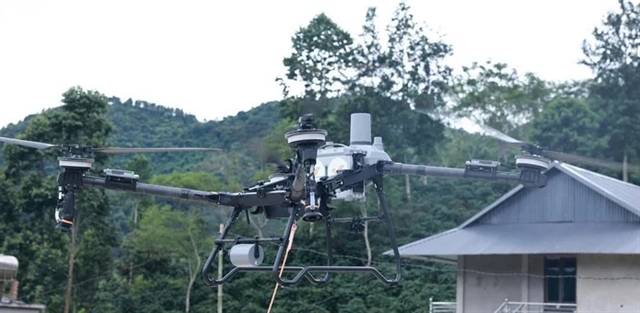
| By 2030, Việt Nam aims to put three national-level flight testing zones for unmanned aerial vehicles into operation. — Photos courtesy of MOST |
HÀ NỘI — Low-altitude airspace is emerging as a new resource for Việt Nam’s development, with the potential to support a growing range of economic and technological activities.
The Politburo’s Conclusion 99-KL/TW issued on September 28 on the exploitation, management and protection of low-altitude airspace in the new era sets a target for the low-altitude economy to become an important economic and technical sector by 2045, with high regional competitiveness and a contribution of about 1.5 per cent to national GDP.
The conclusion defines low-altitude airspace as a “national resource, a new development space for the country and a special sovereign space”. The approach expands the task from managing flight activities to organising the exploitation of a new development resource, while linking it with the protection of airspace sovereignty, data sovereignty and cybersecurity.
By 2030, Việt Nam aims to put three national-level flight testing zones for unmanned aerial vehicles (UAVs) into operation, representing different types of terrain, and establish at least one national research and testing centre for them.
From aircraft to a technology value chain
The low-altitude economy covers much more than the manufacture and operation of UAVs. Combined with AI, sensors, telecommunications, positioning technology, automation and digital platforms, UAVs can form an ecosystem stretching from research, design and production to infrastructure, data and specialised services.
Priority applications include logistics, agriculture, resource management, environmental protection, infrastructure monitoring, disaster prevention and response, search and rescue, emergency medical services and smart cities.
The value of these technologies lies in their ability to address practical needs. They can help reduce transport costs, improve productivity, shorten emergency response times, detect disaster risks early and improve infrastructure management. Demand for such services can in turn create markets for technology businesses and service operators.
The development direction therefore links wider applications with stronger domestic industrial capacity. The localisation rate for key UAV lines serving production is targeted at more than 30–40 per cent by 2030 and over 85 per cent by 2045.
These targets point to the need to gradually master technologies, develop domestic supply chains and strengthen self-reliance in infrastructure and strategic data. Application demand and production capacity need to develop together, while businesses need clear outlets for their technologies and domestic demand can provide a basis for long-term investment.
|
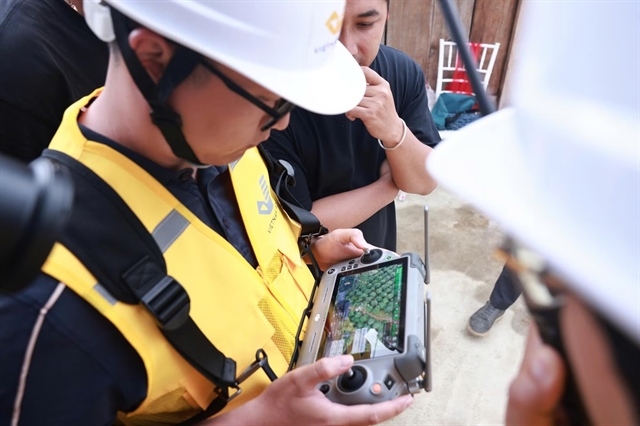
| The low-altitude economy goes beyond the manufacture and operation of UAVs. |
Creating a market through public procurement
For an emerging sector in which products, services and business models are still taking shape, the initial market has an important role to play.
The conclusion identifies the State as guiding and leading this market through public procurement, pilot projects and applications in the public sector. The State will focus on creating the legal framework, management system, standards, technical regulations and essential infrastructure.
Businesses are expected to play the central role in research, development, production and commercialisation, with the participation of research institutes and universities.
Under this approach, technology investment must be linked to specific user needs. Pilot programmes need to demonstrate both operational capacity and socio-economic effectiveness, creating a basis for developing services and expanding the market.
Localities will also need to turn this direction into applications suited to their own conditions. The exploitation, management and protection of low-altitude airspace is to be incorporated into socio-economic development plans and master plans, with local authorities selecting tasks based on the problems they need to solve.
A mountain province, for example, could prioritise transport, healthcare, agriculture and search and rescue. An industrial locality could focus on logistics, infrastructure monitoring and industrial parks, while a major city could choose applications in urban and traffic management.
Opening the market while strengthening management
Turning low-altitude airspace into a new development space also brings a broader management challenge. Authorities will need to manage not only aircraft and flight activities, but also the data associated with them.
The conclusion calls for a unified and modern national management model based on digital platforms and risk management. Activities will be managed according to operating areas, altitude levels, types of operation and levels of risk.
The management process will cover registration, identification, licensing, operation, monitoring, inspection and the handling of violations.
For new technologies, products, services and business models, controlled testing mechanisms will allow them to be tested within defined scopes and timeframes. Each trial must have evaluation criteria, monitoring mechanisms and conditions for termination or expansion.
This approach can help bring new technologies into practice while identifying risks before wider deployment. At the same time, the exploitation of low-altitude airspace must ensure sovereignty, national defence, security and safety, as well as the legitimate rights and interests of the people.
The target of contributing about 1.5 per cent to GDP by 2045 ultimately requires Việt Nam to turn technological potential into production and business capacity.
The three national flight testing zones, the research and testing centre and commissioned projects will help lay the necessary foundation. The final outcome will depend on the development of businesses, products and services with viable markets, safe operations and long-term value. — VNS
Society
 Society
.jpg) Society
Society
 Society
 Society
 Society
 Society
 Society
 Society
 Society
 Society
 Society
 Society
 Society
 Society