 Society
Panama’s export processing zones offer opportunities for Vietnamese firms
1.
|
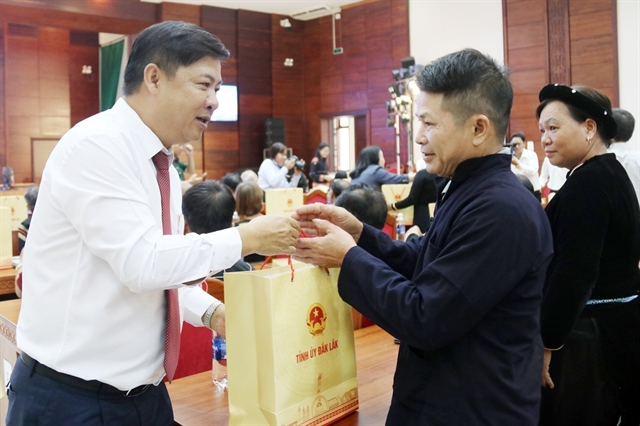
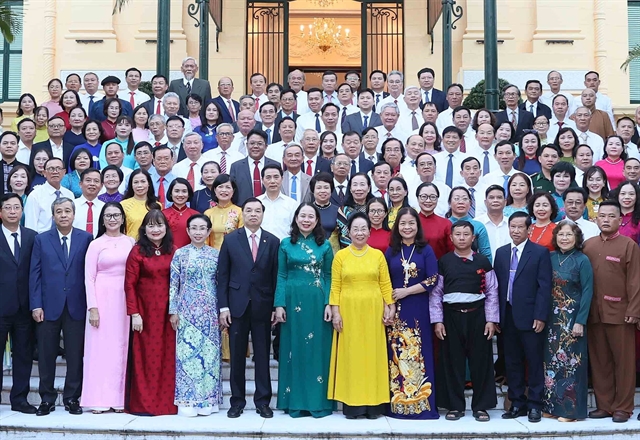
| Party secretary of Đắk Lắk Province Lương Minh Triết presents a gift to a resident for his contribution to the community. VNA/VNS Photo |
ĐẮK LẮK — Đắk Lắk Province is a vivid symbol of the great national unity bloc, home to 45 ethnic groups, with ethnic minority people accounting for more than 25 per cent of its population.
In the province’s development process, village elders, village heads and prestigious people are likened to “great trees” standing tall amid the vast Central Highlands.
They serve as key figures in inspiring self-reliance and self-strengthening, taking the lead in preserving cultural identity and eliminating backward customs, while actively mediating conflicts and helping strengthen the “people’s security posture” at the grassroots level.
Exemplary role models
H’Yam Bkrông, an Ê Đê ethnic woman, has been recognised as a prestigious person in Tơng Jú Village, Ea Kao Ward, since 2015.
She has consistently taken the lead in patriotic emulation movements mobilising local people to participate in the “All People Protecting National Security” movement and participating in mediation and the settlement of disputes and conflicts.
As director of the Tơng Bông Brocade Weaving Cooperative, H’Yam used her family’s assets to contribute capital to the cooperative and worked with its management board to learn from other places and improve members’ skills.
The cooperative now has stable markets, providing its members with an average monthly income of VNĐ6 million (US$240).
In the border commune of Ia Rvê, Nông Văn Gióng, a Nùng ethnic man and head of Hamlet 13 as well as a prestigious person in the community, is an exemplary figure in the border area.
He has actively joined border guards in patrols along border markers, encouraged local residents to raise their vigilance and helped build a strong people-based national defence and security posture.
In economic development, Gióng took the lead in improving infertile land and applying technical methods to sugarcane cultivation, earning more than VNĐ120 million ($4,700) a year.
Rather than keeping his experience to himself, he directly provides technical guidance, seeds and interest-free loans to six poor households in the hamlet.
In Phú Mỡ Commune, village elder Lơ Mo Tư is a respected person among the Ba Na ethnic community.
From the early years of the resistance war against the US, he joined the revolution and worked to mobilise local residents to maintain solidarity and remain committed to the Party.
After peace was restored, he took the lead in labour and production development, pioneering the reclamation of rice fields and encouraging households with large areas of land to share them with families in need.
His family has donated more than four hectares of land and lent two hectares of farmland to poor households for wet-rice cultivation, cassava growing and livestock raising.
The elder has also set an example in building a cultured way of life, encouraging residents to join the new-style rural development programme and preserve traditional occupations and cultural practices, including brocade weaving, gong performances, xoang dancing and T’rưng playing, as well as spring and new-rice festivals.
Bringing policies into everyday life
Recognising the important role played by village elders, village heads and prestigious people, Đắk Lắk organises annual conferences to provide them with information on current affairs, ethnic minority policies and local security and order.
The province also organises training courses on mediation skills, legal dissemination and education, and digital transformation, while arranging three to four delegations of exemplary prestigious people to visit other localities to learn about poverty reduction and mass mobilisation.
They serve as a two-way “bridge”, bringing the Party’s guidelines to the people while conveying people’s aspirations and concerns objectively to Party committees and local authorities.
Phạm Văn Bảy, vice chairman of the Việt Nam Fatherland Front Committee of Đắk Lắk Province, said that for Đắk Lắk, a strategically important locality, strengthening the great national unity bloc and maintaining security and order at the grassroots level were crucial to sustainable development.
Through creative models and approaches such as “Cultural – Safe – Solidarity and Development Villages”, “Village Elders and Prestigious People Taking the Lead in Building New-style Rural Areas”, and “Self-managed Villages and Hamlets for Border Lines and Markers”, village elders, village heads and prestigious people have truly become role models who “say what they do and do what they say”.
“They not only set examples in developing their own household economies but also directly participate in mediating and resolving conflicts among local residents at the grassroots level,” Bảy said.
“They encourage people to abandon backward customs and preserve and promote traditional cultural heritage, thereby contributing to strengthening the great national unity bloc, building consensus among residents and maintaining security and order,” he said.
Their quiet yet persistent contributions had created endogenous strength for Đắk Lắk to develop rapidly and sustainably, maintain security and order, and further consolidate the great national unity bloc, he said. — VNS
Society
 Society
 Society
 Society
 Society
 Society
 Society
 Society
 Society
 Society
 Society
 Society
 Society
 Society
 Society