 Society
Seven Vietnamese export product groups at risk of trade remedy investigations
1.
|
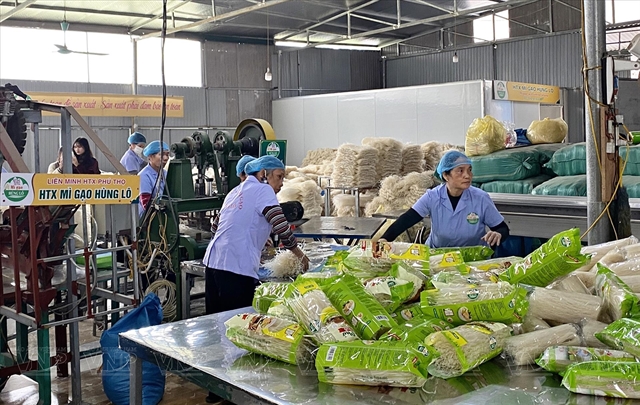
| Workers on rice noodle processing line at Hùng Lô Rice Noodle Cooperative. — VNA/VNS Photo |
By Trần Như
HÀ NỘI — Traditional specialties and agricultural products in Phú Thọ Province are finding new markets as producers upgrade quality, packaging and processing under the One Commune, One Product (OCOP) programme.
The scheme has helped local producers turn familiar village products into branded goods while creating links with supermarkets, distributors and overseas buyers.
For Hùng Lô Rice Noodle Cooperative, joining OCOP in 2019 marked a turning point. Its two noodle products have both received five-star OCOP ratings.
Cao Đăng Duy, director of the cooperative, said product values had risen by 1.5 to two times since joining the programme.
Standardised production, better packaging and tighter food-safety controls have helped build consumer confidence and opened opportunities to enter larger distribution networks, he said.
OCOP has also given traditional foods a commercial boost without severing their links to local culture.
Thịt chua (fermented pork), a specialty associated with the Mường community in Thanh Sơn Commune, was once mainly prepared for family consumption. It is now sold under a brand at trade fairs, tourist destinations and resorts.
Another producer, Tân Đại Dương Vĩnh Phúc Co., Ltd. in Tam Dương Bắc Commune, has taken a different route by investing in high-value tea products.
Its four-star OCOP yellow camellia flowers is now exported to Japan, the United States, Germany, Australia and Belgium, with the company seeking five-star recognition.
The company works with farmers on a nearly 10-hectare growing area following VietGAP standards. It has also developed freeze-dried tea and tea bags to extend the product range and retain the flower's colour and flavour.
Nguyễn Văn Đại, a company member, said about 10 kilogrammes of fresh flowers are needed to produce one kilogram of dried tea, which can fetch up to VNĐ24 million (US$ 920).
The product's value has roughly doubled since receiving OCOP certification, he said.
The cultivation, processing and marketing chain generates average annual revenue of more than VNĐ1 billion per hectare in Tam Dương Bắc and provides regular employment for dozens of local workers.
From certification to consumers
For producers, obtaining an OCOP rating is only the first step. Finding customers and maintaining demand have become equally important.
Dương Thị Duyên, director of Thành Nam Tea Cooperative in Thanh Sơn Commune, said the cooperative has six OCOP products, including two three-star and four four-star products.
Trade fairs and promotional events inside and outside the province have helped the cooperative sell tea while introducing visitors to the tea-growing area and the story behind its products, she said.
The events also provide opportunities to meet distributors and seek new markets.
.png)
|
| Local OCOP products on display at a shop in Phú Thọ Province. — Photo courtesy of Provincial Department of Culture, Sports and Tourism |
The Provincial Department of Agriculture and Environment works with other agencies and localities to select products, support producers at exhibitions and connect them with buyers.
Digital sales are also becoming part of the strategy, with producers encouraged to use e-commerce platforms such as Giaothuong.net.vn and nongsanphutho.com.vn.
The province has 696 OCOP products rated three stars or higher, providing stable job for more than 5,000 rural workers, with average monthly incomes of VNĐ5 million to VNĐ10 million.
But expanding sales also brings pressure to maintain quality and supply.
The provincial Department of Agriculture and Environment is strengthening the re-evaluation of OCOP products and helping producers maintain standards, improve technology, packaging and labelling, and develop stronger market links.
Authorities are also increasing checks on counterfeit and substandard goods to protect local brands.
Around 256 OCOP products, or 42 per cent of the total, are linked to value chains. They include honey, soy sauce, rice noodles, vegetables, rice, thịt chua and green tea, with food-safety certification, labelling, barcodes and traceability systems.
Phú Thọ plans to upgrade existing products and recognise 282 new OCOP products.
The province also aims to connect OCOP with ecotourism and cultural tourism, giving local specialties more ways to reach consumers. — VNS
Society
 Society
 Society
 Society
 Society
 Society
 Society
 Society
 Society
 Society
 Society
 Society
 Society
 Society
 Society