 Society

Visit Vietnam app to showcase AI-powered platform at ITB Asia 2026
1.
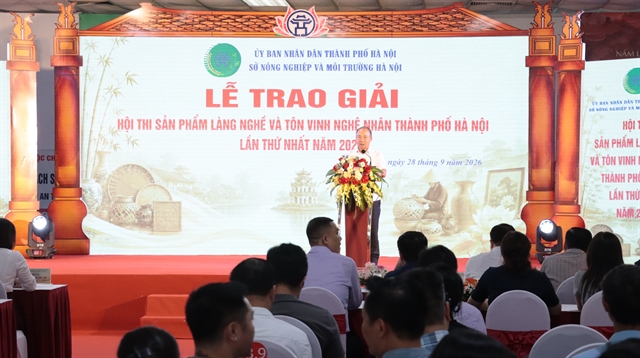 |
| Nguyễn Đình Hoa, Deputy Director of the Hà Nội Department of Agriculture and Environment, speaks at the award ceremony. Photos courtesy of Hà Nội Department of Agriculture and Environment. |
The first Hanoi Craft Village Products Competition and Artisan Honouring Ceremony in 2026 not only recognises outstanding handicraft products, but also pays tribute to the artisans who preserve traditional techniques, pass down their skills and seek new creative approaches to help Hà Nội’s craft heritage adapt to the modern market.
Preserving heritage through the hands of artisans
Hà Nội, a city with a history spanning more than a thousand years, is known not only for its historical sites, architectural landmarks and rich heritage, but also for its diverse network of traditional craft villages that have developed through generations. Each handicraft product reflects a combination of techniques handed down from previous generations and the creativity of today’s artisans, creating values that are rooted in tradition while meeting contemporary needs.
On September 28, the Hà Nội Department of Agriculture and Environment held the award ceremony for the first Hanoi Craft Village Products Competition and Artisan Honouring Ceremony in 2026. The competition attracted 183 entrants with 298 products and product sets across five craft groups. Among the participants were 28 artisans and 155 skilled craftspeople. The oldest participant was 75, while the youngest was just 16.
The nearly six-decade age gap among the contestants demonstrates the continuity of Hà Nội’s traditional crafts across generations. Experienced artisans continue to preserve and practise traditional techniques, while younger craftspeople are finding ways to incorporate these values into new products while embracing modern approaches to promotion and market development.
The entries were judged not only on creativity, aesthetics and traditional values, but also on environmental friendliness and commercial potential. This reflects the changing role of traditional handicrafts, which are increasingly positioned at the intersection of cultural preservation and economic development, as well as between heritage values and market demand.
Nguyễn Đình Hoa, Deputy Director of the Hà Nội Department of Agriculture and Environment, said: “The competition aims to encourage artisans and skilled craftspeople to continue innovating and creating products that embody the distinctive identity of Hà Nội’s craft villages while meeting market demand, expanding sales and moving toward export markets.”
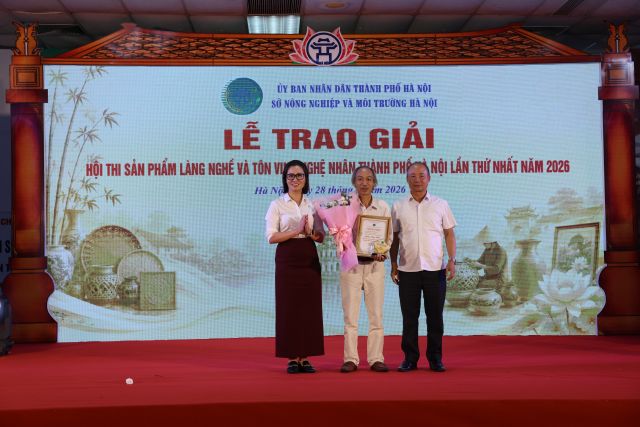 |
| The Organizing Committee presents the Special Prize to Nguyễn Văn Dũng from Chuyên Mỹ Commune, Hà Nội, for his work “Bách Nhi Inlaid Box”. |
The Special Prize went to Bách Nhi Inlaid Box, created by artisan Nguyễn Văn Dũng from Chuyễn Mỹ Commune. For Dũng, the idea behind the work stemmed from his passion for the craft and his desire to preserve the techniques, images and stories handed down by previous generations.
“Throughout my career, I have always wondered how to prevent the techniques, images and stories of the past from being lost,” Dũng said.
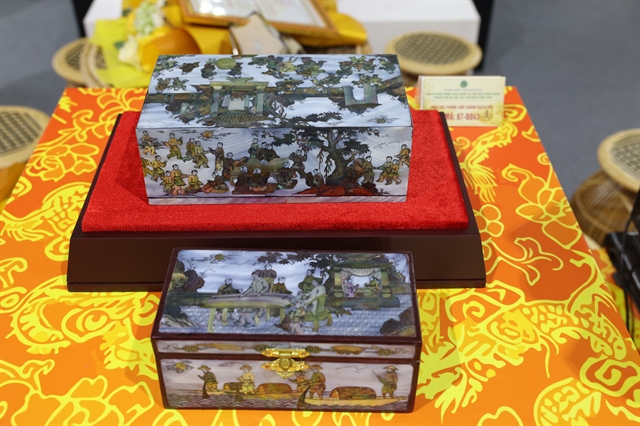 |
| “Bach Nhi Inlaid Box”, winner of the Special Prize. |
Inspired by this concern, he adopted a traditional approach involving numerous stages, including shaping, painting, lacquering and dyeing. At the same time, he researched ways to treat the surface and colors so that the work could retain its traditional beauty while achieving greater durability and suitability for contemporary use.
For Dũng, the competition was not simply a contest among handicraft products, but also an opportunity for experienced artisans to inspire younger generations.
“We are the older generation of artisans. Competitions like this can give young people greater motivation to be creative and help bring craft village products to a new level,” Dũng said.
His reflections highlight an important characteristic of traditional crafts: preservation does not necessarily mean keeping products unchanged in their old forms. Traditional values can only continue to exist when they are practiced, passed on and creatively adapted to contemporary life.
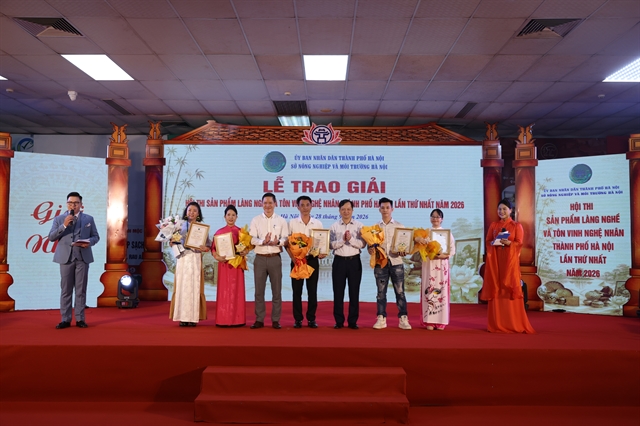 |
| The Organizing Committee presents First Prizes to the winning authors and their works. |
When traditional crafts meet new creative thinking
Many of the award-winning entries demonstrated a clear combination of traditional techniques and creative thinking. The five First Prizes went to Nom Furniture Set by Nghiêm Thị Sang; Fulfilled Conjugal Happiness by Đào Đình Sáng; Old Vietnamese Village Life by Phạm Văn Nguyên; Aristocratic Highland Woman by Nguyễn Thị Thủy; and Blooming Lotus by Phạm Thu Thủy.
Among them, Fulfilled Conjugal Happiness by Đào Đình Sáng, from the traditional woodcraft village of Thiết Ứng in Thư Lâm Commune, clearly reflects the aspiration to bring traditional handicrafts to broader markets.
Coming from a family with a long-standing craft tradition, Sáng said his passion for the craft began in childhood. One of the works he presented at the competition was inspired by his own family experience, expressing his wish for harmony between husband and wife, a thriving family and a fulfilling life.
“I create my works first and foremost out of passion, but I also want to convey a message about family happiness. After the work was recognised, I became even more hopeful that this message could reach more people, because family happiness is something almost everyone wishes for,” Sáng said.
For younger artisans like Sáng, preserving traditional crafts is increasingly accompanied by a stronger understanding of the market. He has gradually introduced his products through online channels, expanded his customer base nationwide and reached several markets in Southeast Asia.
He said: “In the coming time, I want to invest more in designs, quality, promotion and market development so that Vietnamese handicraft products can reach farther and be known and appreciated by more international customers.”
One of the handicraft products he introduced was made from hoang dan wood, combined with a wooden base shaped like a lingzhi mushroom, with every detail crafted by hand. If a single artisan handles the entire process, it can take two to three months to complete. The product is estimated to be worth around VNĐ200 million, a value that reflects not only the materials used but also the craftsmanship, labor time and intricate details involved.
Stories like those of Nguyễn Văn Dũng and Đào Đình Sáng show that the development of Hà Nội’s traditional crafts is moving beyond the preservation of techniques to place greater emphasis on design, quality, branding and market development. Artisans still need to retain skills handed down through generations, while also finding ways to create products that respond to new consumer needs and tastes.
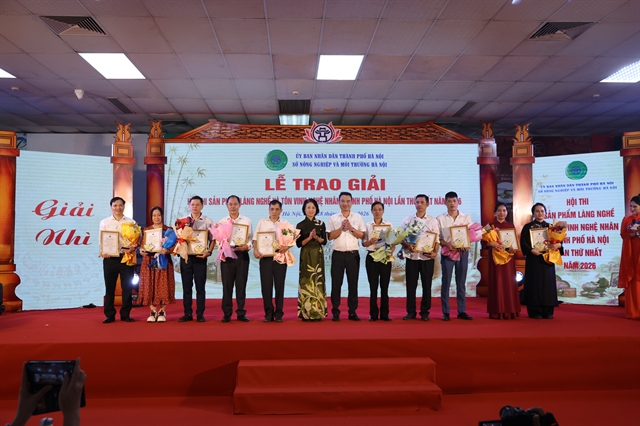 |
| The Organising Committee presents Second Prizes to the winning authors and their works. |
Following two days of evaluation and classification on September 18 and 19, an 11-member Jury selected the works for award recognition. The competition presented a total of 71 prizes, including one Special Prize, five First Prizes, 10 Second Prizes, 14 Third Prizes, 20 Consolation Prizes and 21 supplementary prizes across the five product groups. All participating entrants received certificates from the Organising Committee. In addition, the committee proposed certificates of merit for 18 outstanding artisans.
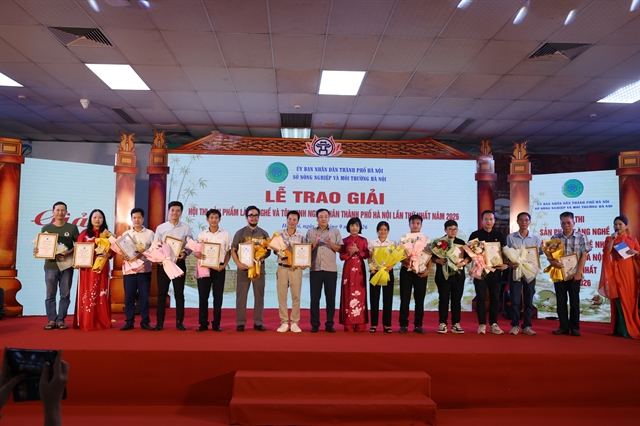 |
| The Organising Committee presents Third Prizes to the winning authors and their works. |
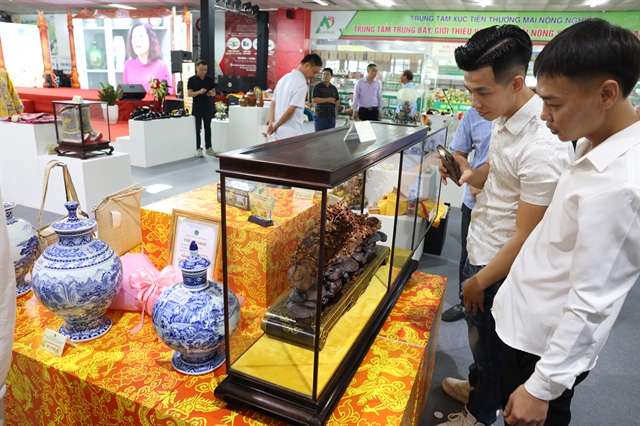 |
| Đào Đình Sáng, First Prize winner (front, from left to right), introduces his award-winning work “Fulfilled Conjugal Happiness” to visitors at the competition exhibition. |
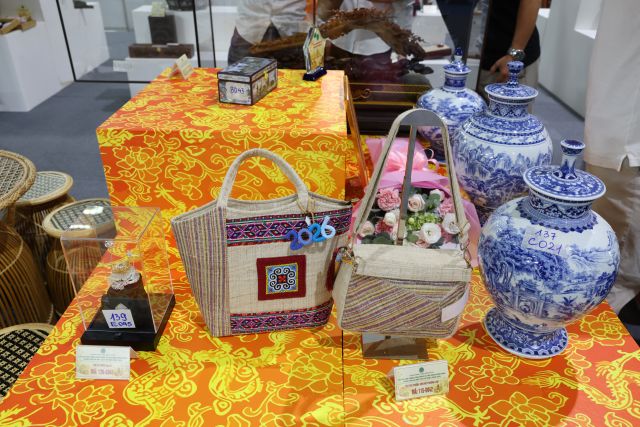 |
| “Aristocratic Highland Woman”, a handbag that won a First Prize. |
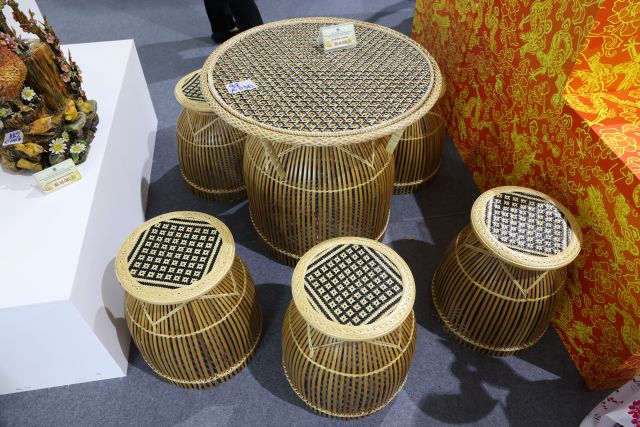 |
| “Nom Furniture Set”, winner of a First Prize. |
The award-winning works will subsequently be showcased at the 2026 Global Festival for the Preservation and Development of Craft Villages, scheduled to take place from November 13 to 16 at the Thăng Long Imperial Citadel. The event will provide an opportunity for Hà Nội’s outstanding handicraft products to reach a wider audience, both in Việt Nam and abroad.
Through the first citywide competition of its kind, Hà Nội’s traditional crafts are being recognised not only as part of cultural preservation, but also as a field closely linked to innovation and market development. Each product made by the hands of artisans therefore tells more than the story of a craft or a village. It also contributes to telling the story of Hà Nội’s culture and the creativity of Vietnamese people today.
More importantly, honouring artisans and skilled craftspeople helps create motivation for younger generations to learn, preserve and develop traditional crafts. When traditional skills are passed down alongside new creative thinking, the heritage of Hà Nội’s craft villages has greater opportunities to remain relevant in modern life and gradually reach audiences around the world. VNS
This article was produced in cooperation with the Hà Nội Department of Agriculture and Environment.
Society
 Society
 Society
 Society
 Society
 Society
 Society
 Society
 Society
 Society
 Society
 Society
 Society
 Society
 Society