 Society
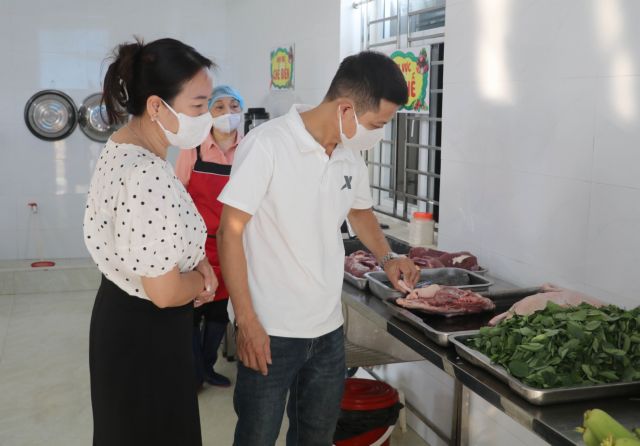
Việt Nam to revise food safety law with risk-based, supply-chain approach
1.
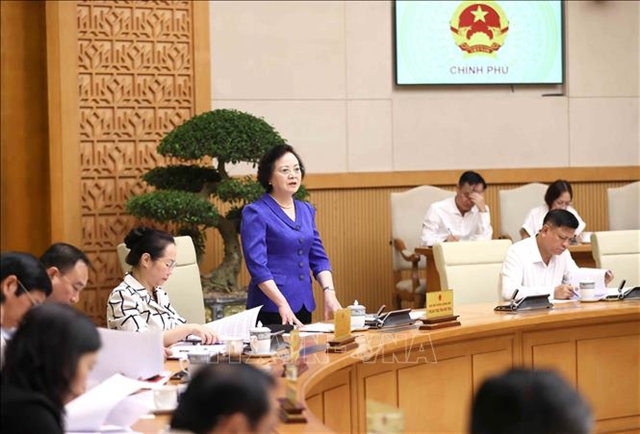 |
| Deputy Prime Minister Phạm Thị Thanh Trà gives instructions at the meeting. — VNA/VNS Photo An Đăng |
HÀ NỘI — Deputy Prime Minister Phạm Thị Thanh Trà has called for solutions to realise the Politburo's Resolution 26 on developing tourism into a spearhead economic sector in the new era.
She gave the order on Monday morning while chairing the State Steering Committee on Tourism’s meeting to review task implementation during the first nine months of the year, assign duties for the fourth quarter and discuss measures to carry out Resolution 26-NQ/TW.
According to the deputy PM, Resolution 26 reflects a broad and comprehensive vision and strategic thinking, creating an important political foundation for the rapid and sustainable development of tourism in association with socio-economic development, the safeguarding of national defence and security, and achieving double-digit economic growth.
Resolution 26's implementation must not be scattered or generic, nor stop at words such as 'strengthening' or 'consolidating' without clearly defining tasks, timelines and deliverables.
“Each task must clearly identify who is responsible for carrying it out, the deadline for completion, the specific deliverable and how that deliverable will affect tourism development,” the deputy PM said.
The Ministry of Culture, Sports and Tourism (MCST) has studied plans to amend several laws, including the Law on Tourism. Trà said that amending the Law on Tourism alone would not be enough to remove bottlenecks, as tourism is a multi-sectoral economic industry involving fields such as industry and trade, agriculture and the environment, construction, foreign affairs, public security, national defence, healthcare and finance.
Issues that cannot be incorporated into the Law on Tourism thus need to be studied, with a specialised or special-purpose regulation proposed to carry out Resolution 26.
The deputy PM asked the MCST to take the lead, in coordination with ministries and sectors, in conducting a comprehensive review of all groups of tasks and solutions set out in Resolution 26, compiling a detailed list and clearly assigning responsibilities and authority.
Alongside the completion of the institutional framework, the Việt Nam Tourism Development Strategy to 2035 must be finalised by the end of this year to provide consistent direction for the implementation of Resolution 26.
Signature tourism products
Within the tourism development space, three tourism growth poles – Hà Nội, HCM City and Đà Nẵng – must be clearly identified, together with 10 key tourism centres, 20 national tourist areas and 15 groups and businesses with national and international competitiveness, to establish mechanisms for coordination, support and the removal of difficulties.
The growth poles, tourism centres and national tourist areas must be clearly positioned in terms of their advantages, flagship products and annual tasks and targets for 2030, creating leading and spillover growth drivers.
Each locality must develop at least one distinctive, representative and outstanding tourism product based on its own strengths, while identifying products that can be renewed, developed into brands and contribute to the common objectives.
Localities must be assigned specific targets, tasks and product orientations for next year, linked to measurable deliverables for substantive monitoring and evaluation.
At the same time, the operations of the State Steering Committee on Tourism must be renewed to clearly identify responsible parties, tasks and results.
The deputy PM also asked the MCST to urgently review and complete the national tourism database and digital platform serving tourism management, promotion and product development.
The database must be accurate, complete and capable of connectivity, serving State management agencies, businesses, localities and tourists alike.
It will also provide a foundation for applying technology and connecting tourism with the arts, cuisine, cultural heritage and other economic sectors, while improving access to information and the quality of tourists’ experiences.
APEC as a driving force
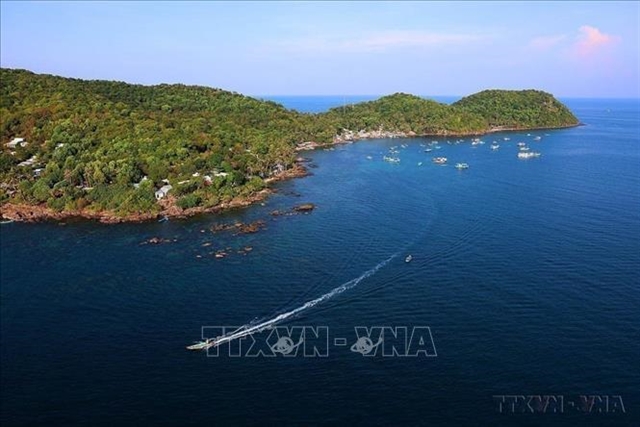 |
| Phú Quốc Special Zone is developing into a national and international hub for high-quality services, ecotourism and marine and island tourism, connected to major economic centres in the region and around the world. — VNA/VNS Photo Dương Giang |
Regarding preparations for APEC Việt Nam 2027, Trà said that tourism could play a role in leading efforts, thus contributing to the success of the event.
APEC will provide an opportunity to showcase Việt Nam as a friendly, hospitable, safe and beautiful country, while promoting distinctive tourism products capable of competing regionally and internationally.
The deputy PM requested the development of a detailed plan for communications, promotion, product connectivity and tour routes to serve APEC, with particular attention paid to Phú Quốc.
Relevant authorities must inspect accommodation facilities, infrastructure, tourism products, the environment, service standards and visitor safety. Products linking Phú Quốc with HCM City, Hà Nội, Đà Nẵng and other localities must also be carefully studied, designed and inspected.
By November 15 at the latest, the MCST must complete all tourism-related preparations for APEC, clarifying the relevant facilities, projects, products, service capacity and inspection and supervision plans.
Aligning training with practical needs
Trà also called for stronger training and professional development for workers in tourism.
The Ministry of Education and Training must conduct a comprehensive review of universities and colleges offering tourism-related courses, assessing training scale, the number of graduates and the employment rate over the past three years.
Training must closely link the State, educational institutions and businesses, ensuring that curricula meet market demand and improving learners’ skills and ability to respond to practical requirements.
Regarding resources, the Ministry of Finance must immediately coordinate with the MCST to review the requirements necessary for carrying out Resolution 26, particularly those to be included in the 2027 budget estimate.
According to a report by the MCST, Việt Nam welcomed 15.9 million international visitors in the first eight months of this year, up 14.5 per cent year on year and equivalent to 63.6 per cent of the full-year target of 25 million visitors.
Several key destinations continued to record high growth rates, including HCM City, Hà Nội, An Giang, Lâm Đồng and Khánh Hòa.
The growth rate in international arrivals to Việt Nam was higher than the growth rates recorded by global tourism and tourism in the Asia-Pacific region, according to the MCST. — VNS
 |
| A panoramic view of the terraced rice fields in the northern province of Điện Biên, winding along the hillsides amid the mountainous highland landscape. — VNA/VNS Photo Xuân Tư |
Society
 Society
 Society
 Society
 Society
 Society
 Society
 Society
 Society
 Society
 Society
 Society
 Society
 Society
 Society