 Society
84 individuals investigated for transnational online frauds
1.
|
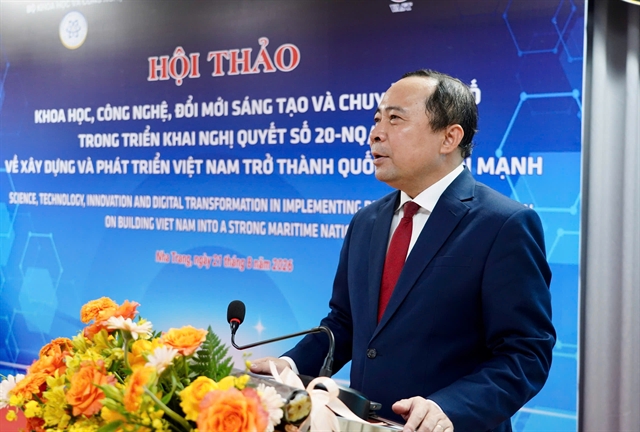
| Minister of Science and Technology Vũ Hải Quân speaks at the workshop in Khánh Hòa on August 21. — Photo vast.gov.vn |
KHÁNH HÒA — Building Việt Nam into a strong maritime nation requires science, technology, innovation and digital transformation to move from supporting development to driving it, officials and scientists said at a national workshop held in the central coastal province of Khánh Hòa on Friday.
The workshop, titled “Science, Technology, Innovation and Digital Transformation in Implementing Resolution No. 20-NQ/TW on Building and Developing Việt Nam into a Strong Maritime Nation”, was jointly organised by the Ministry of Science and Technology and the Việt Nam Academy of Science and Technology (VAST).
Addressing the event, Minister of Science and Technology Vũ Hải Quân said Resolution No. 20-NQ/TW, adopted by the Party Central Committee on July 28, 2026, set out new requirements for the country's science and technology sector.
“Việt Nam must not only study and exploit the sea but also gradually master it through knowledge, data, technology and innovation,” he said.
For the 2026–30 period, the minister highlighted priorities including strengthening national marine research capacity, treating marine data as strategic national infrastructure, developing domestic technological capabilities, promoting the role of businesses and coastal localities in the marine innovation ecosystem, and reforming the organisation of marine science and technology programmes.
Speaking at the workshop, VAST Vice President Trần Tuấn Anh stressed that becoming a strong maritime nation depended not solely on coastal industries or government agencies, but fundamentally on building a robust, interdisciplinary scientific and technological foundation capable of addressing complex national challenges related to the sea.
He noted that Resolution No. 20-NQ/TW identified science, technology, innovation and digital transformation as the principal drivers of Việt Nam's maritime development, reflecting the growing role of science not only as a supporting tool but also as a direct productive force.
According to Anh, implementation of the resolution should also be aligned with Politburo Resolution No. 57-NQ/TW on breakthroughs in science, technology, innovation and national digital transformation.
“A strong maritime nation is not simply one with more ports, more vessels or a larger marine economy,” he said.
“More importantly, it is a nation that understands the sea, can forecast marine changes, effectively manages marine resources, exploits them sustainably and gradually masters advanced marine technologies.”
Four priorities for strengthening marine science
The VAST Vice President proposed four strategic priorities to enhance Việt Nam's national marine science capacity.
The first is to transform the organisation of marine research by adopting an interdisciplinary approach.
Given the complexity of marine systems, which encompass natural, economic and social dimensions, no single scientific discipline can adequately address the country's major marine challenges.
Second, he called for a shift from fragmented research projects to large-scale programmes designed to address national strategic challenges and generate practical outcomes with long-term value.
Third, Anh emphasised the importance of developing marine data as strategic national infrastructure.
Việt Nam has accumulated extensive datasets from geological and geophysical surveys, oceanographic and meteorological research, environmental monitoring, biodiversity studies, remote sensing and marine resource investigations.
However, he said their value could only be fully realised through standardisation, integration, data sharing and the application of advanced digital technologies.
He proposed establishing a national marine data ecosystem that integrates information from research vessels, satellites, ocean buoys, coastal radar systems, underwater robots and specialised databases, as well as socio-economic data.
Such an ecosystem would provide the foundation for developing artificial intelligence applications to support ocean management, digital mapping and predictive modelling, as well as the development of a Digital Ocean platform and, ultimately, a Digital Twin Ocean.
The fourth priority is to develop a national marine research ecosystem bringing together research institutes, universities, government agencies, maritime forces, coastal provinces, businesses and international partners.
|
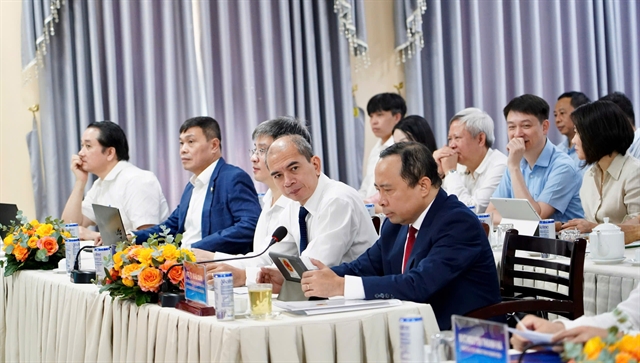
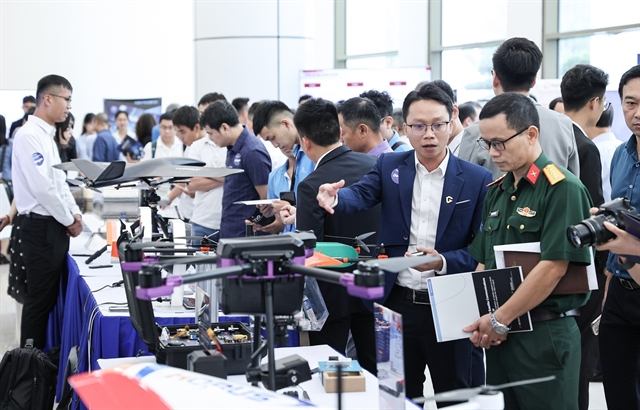
| Delegates attend the workshop in Khánh Hòa on August 21.— Photo vast.gov.vn |
Leveraging interdisciplinary strengths
Within this ecosystem, Anh highlighted VAST's unique interdisciplinary capabilities.
The academy's research strengths span earth sciences, marine science and technology, biology, chemistry, materials science, information technology, artificial intelligence, electronics and automation, space technology, environmental science and other fundamental disciplines, providing favourable conditions for implementing large-scale interdisciplinary marine research programmes.
He said VAST would continue to strengthen its role as one of the country's leading interdisciplinary scientific institutions by connecting research capabilities and contributing solutions to major national marine challenges.
Anh also proposed four major transformations to advance Việt Nam's marine science agenda: moving from single-discipline to interdisciplinary research; from isolated projects to national strategic programmes; from fragmented datasets to an integrated marine data infrastructure supporting data-driven governance; and from technology adoption to the mastery of strategic marine technologies.
These transitions, he said, were essential to making science, technology, innovation and digital transformation the driving forces behind Việt Nam's goal of becoming a strong maritime nation. They would also help strengthen national marine science capacity through closer collaboration among research organisations, universities, businesses, government agencies and coastal localities.
The workshop also featured discussions on marine aquaculture technologies, dual-use marine science and technology, high-quality marine human resources, national marine data infrastructure, technological applications in offshore oil and gas exploration, and strategies for developing Khánh Hòa into a major marine economic hub.
Participants also visited the Institute of Oceanography, a VAST-affiliated institution, to learn about its research activities, facilities and scientific achievements in marine science. VNS
Society
 Society
 Society
 Society
 Society
 Society
 Society
 Society
 Society
 Society
 Society
 Society
 Society
 Society
 Society