 Society
84 individuals investigated for transnational online frauds
1.
|
| Artificial Intelligence recorded a perfect admission score for the first time |
HÀ NỘI — Việt Nam's 2026 university admissions season has highlighted a growing divide between technology-related and social science programmes, with some AI and technology programmes recording unprecedented entry scores while several social science disciplines have seen sharp declines. As students weigh their options, education experts say long-term prospects depend on more than simply choosing a popular degree.
A record score, a shift in choices
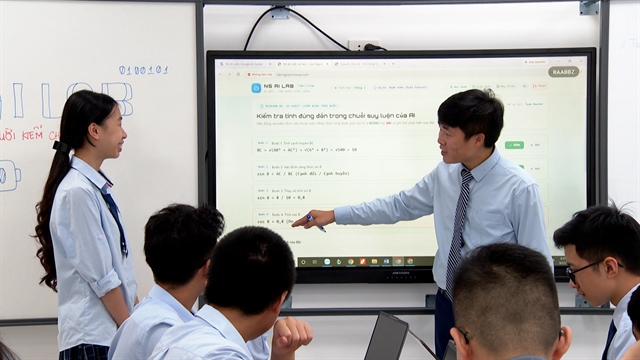
Admission figures released by universities since August 9 show some of the widest gaps in entry scores seen in recent years. Artificial intelligence (AI) at a leading public university in southern Việt Nam reached 100 out of 100 under its composite admissions system, equivalent to a perfect score of 30 after conversion. It was the first time the programme had reached the maximum possible score.
Data Science followed with 91.7 points, while Integrated Circuit Design, Information Security and Computer Science recorded 90.5, 88.7 and 88.5 points, respectively.
The picture was markedly different in the social sciences. Journalism programmes at several leading universities in northern Việt Nam saw entry scores fall by three to more than six points from last year's highs. Similar declines were recorded in a number of other social science programmes.
The figures point to a broader shift in how families view future career prospects. Many Vietnamese parents and students appear to be increasingly attracted to technology and AI-related fields, viewing them as areas with strong employment potential.
But is following the trend necessarily the safest choice?
The risks of chasing a popular degree
One factor is easy to overlook: time. A student entering university in September 2026 is likely to graduate around 2030. By then, the technology sector, and AI in particular, could look very different. AI is already reshaping its own field, including by automating parts of software development that were once considered highly specialised skills.
As more students choose the same disciplines, competition among graduates could intensify. Skills that are in short supply today could become much more common by the time today's entrants graduate.
|
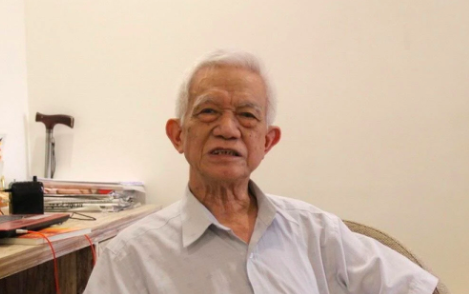
| Assoc. Prof. Dr Đặng Quốc Bảo, former Rector of the School of Education Management and Training and now associated with the Academy of Education Management. |
Assoc. Prof. Dr Đặng Quốc Bảo, former rector of the School of Education Management and Training, argues that the name of a degree is not what ultimately determines a graduate's prospects.
“The essence of higher education is to develop people. A programme is meaningful when it enables students to learn independently, think for themselves and adapt to changes in the labour market,” he says.
The question, therefore, is shifting from “What should I study?” to “Which learning environment will prepare me to adapt?” This is a question that many families may not be considering carefully enough.
Closing the gap between university and industry
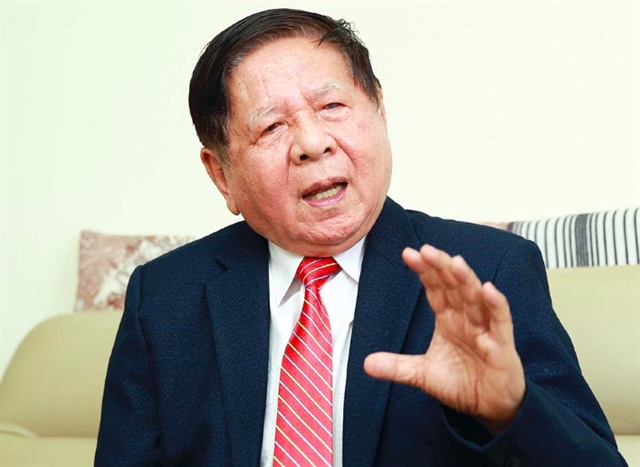
Assoc. Prof. Dr Trần Xuân Nhĩ, former Deputy Minister of Education and Training, points to a long-standing weakness in Vietnamese higher education: the gap between classroom learning and the workplace.
“Vietnamese higher education still lags behind that of many advanced countries in the region and around the world. Curricula remain relatively theory-heavy, while practical training has not received the same level of attention,” he says.
The consequence is straightforward, he adds: “Without close cooperation between universities and businesses, graduates may need further training before they are ready to meet employers' requirements.”
|
| Assoc. Prof. Dr Trần Xuân Nhĩ, former Deputy Minister of Education and Training |
For technology-related fields, where skills and tools can change within a matter of years, that gap can be particularly costly. What students learn in their first year may no longer be fully relevant by their final year unless universities regularly update their curricula in line with industry needs.
Dr Lê Viết Khuyến, former Deputy Director of the Department of Higher Education under the Ministry of Education and Training, says accreditation provides an important means of assessing quality.
“Quality should be judged against independent and reputable accreditation standards. An international university cannot demonstrate its quality simply through its brand or its own claims. Its quality needs to be assessed against internationally recognised standards. Accreditation is the most objective measure.”
Although the experts approach higher education from different angles, their conclusions converge on one point: a university's value is determined by the quality of education it provides and how well it prepares students for change, rather than simply by the popularity of a degree or its entry score.
Assessing university quality
Dr Khuyến says a university's value is not determined simply by the language in which its programmes are taught or the country awarding its degrees. More important is whether it maintains a comprehensive quality assurance system in line with the standards it has committed to upholding.
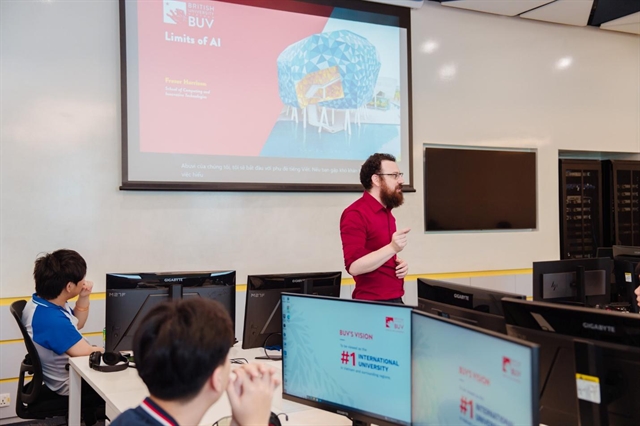
He points to British University Vietnam (BUV) as an example. The university offers UK degree programmes in fields including Computer Science, Data Science and Artificial Intelligence.
According to the university, its academic quality and operations are assessed by the UK's Quality Assurance Agency for Higher Education (QAA) and Việt Nam's Ministry of Education and Training. It also holds a five-star QS Stars rating, while its degrees are awarded directly by UK universities.
Such independent quality credentials are among the factors that parents should consider when choosing a university, Dr Khuyến says.
|
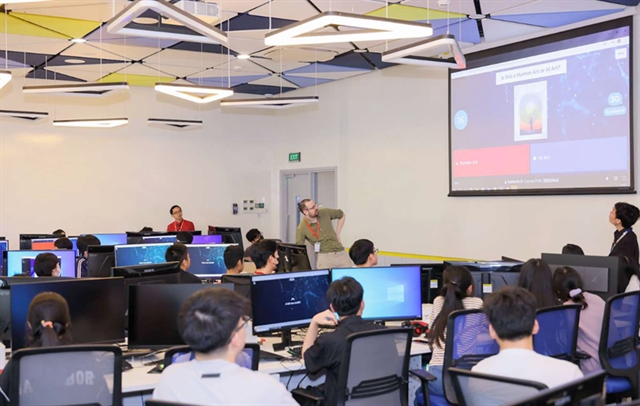
| BUV offers technology and AI programmes under UK degree programmes |
On the question of adaptability, Assoc. Prof. Dr Đặng Quốc Bảo sees BUV's Personal and Social Growth (PSG) programme as an example of the educational approach he advocates. The programme develops critical thinking, communication, collaboration, problem-solving and initiative, the very capabilities he believes “technology will find difficult to replace”.
BUV's partnerships with more than 500 companies extend beyond providing internship opportunities. Businesses are also involved in assessing students' capabilities and helping the university adjust its programmes to reflect workplace requirements.
“This is a model that should be encouraged because it helps narrow the gap between education and the practical needs of the labour market,” he says.
According to BUV, many of its graduates secure employment with major companies, in some cases before graduation, or pursue further study within three months of completing their degrees.
Looking beyond this year's entry scores
For students still considering their options in the final days before confirming their university places, this year's entry scores should not be the only factor shaping their decisions.
“A university worth choosing must create genuine value for its students. It should equip them with the ability to adapt to change, the confidence to engage with the world without losing their identity, and the readiness to enter the global labour market,” Assoc. Prof. Dr Đặng Quốc Bảo says.
Assoc. Prof. Dr Trần Xuân Nhĩ shares this view, arguing that the priority should be to give students better choices while ensuring businesses have access to higher-quality talent.
“When universities compete on genuine quality rather than simply enrolment numbers or brand recognition, Việt Nam's higher education system will develop on a healthier footing,” he says.
The perfect admission score for an AI programme this year is a notable milestone, reflecting the strong appeal of technology-related fields. But it also serves as a reminder: when everyone moves in the same direction, the real competitive advantage may belong to those equipped to keep learning, adapt and create new value, regardless of the field they choose. VNS
Society
 Society
 Society
 Society
 Society
 Society
 Society
 Society
 Society
 Society
 Society
 Society
 Society
 Society
 Society