 Society

Đắkrông Nature Reserve records 35 new bird species
1.
HÀ NỘI — As labour mobility within ASEAN grows, ensuring that qualifications and skills obtained in one country are understood and recognised in another has become increasingly important. For Vietnamese workers seeking employment in the region, differences in national education and training systems can make it difficult for employers and authorities to assess their qualifications and competencies.
The ASEAN Qualifications Reference Framework (AQRF) provides a common regional reference point for comparing qualifications across ASEAN member states. By building greater transparency, mutual trust and a shared understanding of education and skills standards, the framework is intended to support qualifications recognition, lifelong learning and the mobility of students and workers across the region.
A key step in connecting national systems with the AQRF is the development of a referencing report, which explains how a country's national qualifications framework corresponds to the regional framework and provides a basis for comparison and recognition.

|
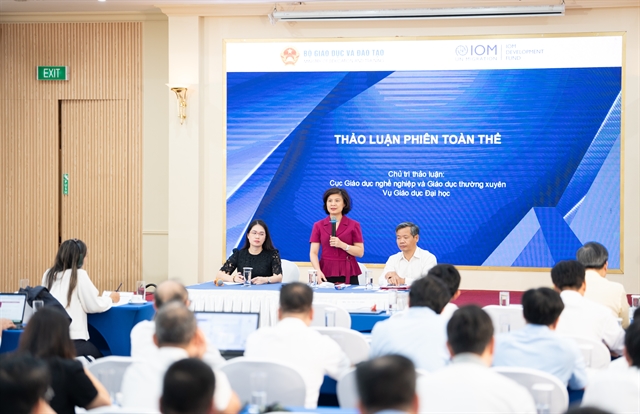
| More than 80 delegates and experts from ministries, agencies, 34 provincial and municipal Departments of Education and Training, universities, vocational education institutions, enterprises and business associations attend the workshop. — Photo IOM Việt Nam |
On August 21, the International Organization for Migration (IOM), in cooperation with the Department of Vocational and Continuing Education under the Ministry of Education and Training, held a national workshop in Hà Nội to discuss the implementation of the AQRF and introduce Việt Nam's AQRF Referencing Report and post-referencing action plan.
The workshop brought together more than 80 representatives and experts from ministries and government agencies, Departments of Education and Training from all 34 provinces and cities, universities, vocational education institutions, enterprises and business associations.
|
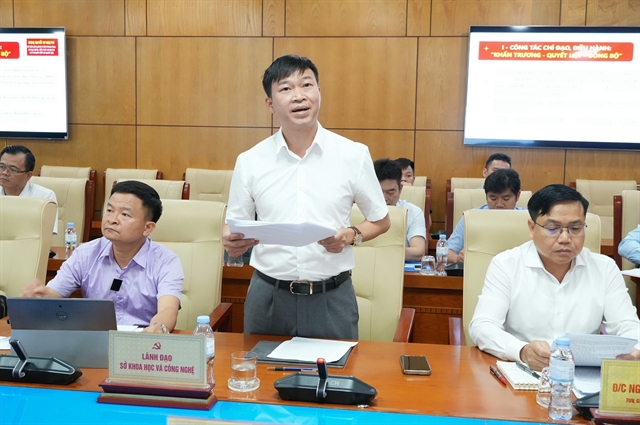
| Vũ Thị Tú Anh, Deputy Director General of the Department of Vocational and Continuing Education under the Ministry of Education and Training, speaks during the workshop’s discussion session. — Photo: IOM Việt Nam |
The Viet Nam AQRF Referencing Report, endorsed by the AQRF Committee in October 2025 and published by the Ministry of Education and Training in December 2025, marks an important step towards making Vietnamese qualifications more transparent, comparable and trusted across ASEAN and internationally. It is also expected to provide a foundation for qualifications recognition, labour mobility and safe, regular and skills-based migration.
Speaking at the workshop, Deputy Director General Vũ Thị Tú Anh of the Department of Vocational and Continuing Education, said the referencing results would help ASEAN countries better understand Việt Nam's qualifications system and provide a common basis for comparing qualifications.
However, she stressed that referencing alone would not automatically lead to recognition. “To make recognition meaningful and effective, we need to continue reviewing our education and training system, curricula and learning outcomes, assessment methods, quality assurance, and consistency in the awarding of diplomas and certificates,” she said.
The workshop therefore focused not only on the referencing report but also on what needs to happen after referencing. Participants discussed Việt Nam's post-referencing action plan, shared experiences from other ASEAN countries and proposed measures to strengthen comparability between Việt Nam's education and training system and those of other countries in the region.
The discussions also highlighted the need for closer coordination among the education and training sector, labour migration authorities and businesses. Participants considered linking the AQRF referencing results with the assessment and certification of occupational competencies under the ASEAN Guiding Principles (AGP). This would help move beyond transparency and comparability towards greater trust in skills standards, assessment, certification and quality assurance.
Experiences from other ASEAN countries show how the framework can be translated into practical measures. In Thailand, the AQRF has been integrated into quality assurance and workforce skills verification systems, helping authorities and employers assess the competencies of skilled migrant workers. The Philippines has used the AQRF to strengthen recognition of workers' skills and educational qualifications, facilitating study and employment within ASEAN.
For Việt Nam, such recognition could have direct implications for workers seeking employment abroad.
Better recognition of Vietnamese qualifications and skills could improve job matching, labour migration outcomes and worker protection. For workers returning to Việt Nam, Recognition of Prior Learning (RPL) could also help them reintegrate into the domestic labour market, access suitable employment and continue their education and training.
|
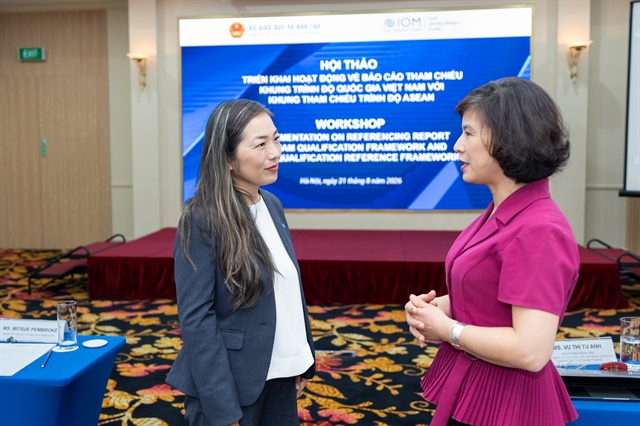
| Vu Thi Tu Anh talks with Mitsue Pembroke, Officer-in-Charge of IOM Việt Nam. — Photo: IOM Việt Nam |
Mitsue Pembroke, Officer-in-Charge of IOM Viet Nam, said workers' skills and qualifications needed to be recognised, transferable and aligned with labour market needs for labour mobility to deliver sustainable benefits. "Effectively referencing Việt Nam’s Qualification Framework with the AQRF can help Vietnamese migrant workers access decent jobs that better reflect their competencies and offer equal benefits, while reinforcing the Government’s efforts to develop high-quality human resources that match industry requirements at home and abroad," she said.
The issue is particularly relevant as Việt Nam seeks to improve the quality and international competitiveness of its workforce. The country has more than 53 million people in its labour force, but fewer than one-third hold formal training certificates. Around 150,000 Vietnamese workers leave the country under labour contracts each year, while Việt Nam aims to increase the proportion of skilled workers among them to 40 per cent by 2030.
Making Vietnamese qualifications more portable could therefore give workers greater confidence in their skills, improve access to jobs matching their competencies and help them meet qualification requirements in destination countries. At the same time, recognition of skills and experience gained overseas could help returning workers reintegrate into the domestic labour market and put their acquired skills to use in Việt Nam.
The next challenge is to translate the referencing exercise into practical changes across the education and training system. IOM said it would continue working with the Ministry of Education and Training, the Ministry of Home affairs, government agencies, education and training institutions, employers and development partners to support the implementation of Việt Nam's AQRF referencing and promote safe, fair and skills-based labour mobility within ASEAN and beyond. — VNS
Society
 Society
 Society
 Society
 Society
 Society
 Society
 Society
 Society
 Society
 Society
 Society
 Society
 Society
 Society
.jpg)