 Society

Capital market development critical to unlock investment resources
1.
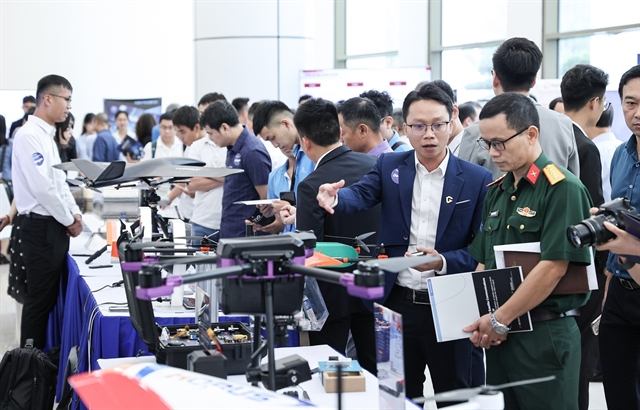 |
| Delegates visit exhibition booths at the launch ceremony for three innovation networks in strategic technology sectors in Hà Nội in August. |
HÀ NỘI — Deputy Prime Minister Hồ Quốc Dũng has signed Decision No. 1493/QĐ-TTg approving the National Special Programme on Science, Technology and Innovation for Strategic Technologies.
The programme aims to master, develop, improve and commercialise highly competitive strategic technology products, enabling Việt Nam to gradually participate in global value chains. It will also promote the development of strategic technologies, particularly core technologies.
Through the programme, a strategic technology ecosystem will be established, bringing together the State, businesses and science and technology organisations. This is expected to strengthen Việt Nam’s technological self-reliance and national competitiveness.
During the 2026-30 period, Việt Nam aims to master at least four technologies included in the list of strategic technologies issued by the Prime Minister and develop and commercialise at least 15 strategic technology products.
Of these, at least five products are expected to reach regional or international markets, contributing to higher localisation rates and Việt Nam’s participation in global value chains. Commercialised strategic technology products are expected to achieve a localisation rate of around 40 per cent.
The programme also aims to develop at least 20 enterprises capable of mastering strategic technologies and products by leading or participating in its projects. At least five of these enterprises are expected to have products included in global value chains.
During the 2031-35 period, the targets will increase to mastering six strategic technologies and developing and commercialising at least 25 strategic technology products.
At least 15 products are expected to reach regional or international markets, with a minimum localisation rate of 40 per cent. At least 30 enterprises will be developed to master strategic technologies and products, including at least 10 participating in global value chains.
To achieve these targets, the programme sets out five groups of tasks and solutions: improving mechanisms and policies; researching and developing products; supporting commercialisation and market development; developing human resources and international cooperation; and monitoring, evaluating and coordinating implementation. VNS
Society
 Society
 Society
 Society
 Society
 Society
 Society
 Society
 Society
 Society
 Society
 Society
 Society
 Society
 Society