 Society

Việt Nam, US seek to promote financial cooperation
1.
|
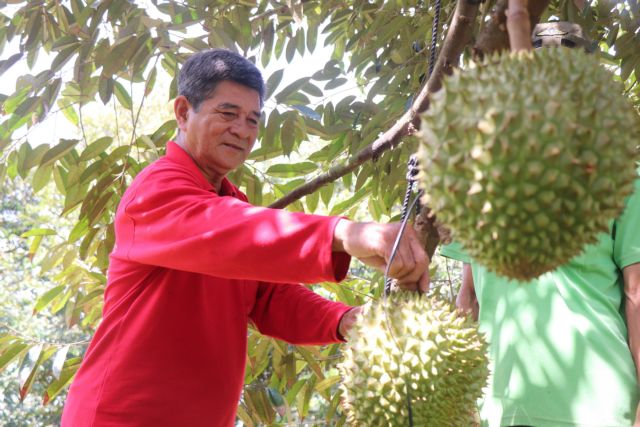
| A durian orchard of Trường Khương A Co-operative in Trường Long Commune, Cần Thơ. The co-operative applies advanced farming techniques and links with businesses, ensuring stable prices for its durians. — VNA/VNS Photo Thu Hiền |
CẦN THƠ — Cần Thơ aims to have 30 per cent of collective economic organisations participate in value-chain linkages by 2027 while strengthening co-operatives through technology and digital transformation.
The Cửu Long (Mekong) Delta city also plans to establish five to 10 new agricultural co-operatives producing products recognised under the country’s “One Commune – One Product” (OCOP) programme and more than 70 agricultural co-operatives applying high technology to production.
The targets are part of efforts to improve the quality, efficiency and autonomy of co-operatives in line with the Politburo’s Resolution No. 57, issued in December 2024, on breakthroughs in science, technology, innovation and national digital transformation.
By the end of this year, the city is expected to have 3,810 co-operative groups, 930 co-operatives with total charter capital of more than VNĐ1.69 trillion (US$64.7 million), and 10 co-operative unions.
Agricultural co-operatives account for 691, or 74.3 per cent, of the total.
About 30–35 per cent of agricultural co-operatives have maintained stable links with more than 50 businesses to sell their products.
According to Trần Chí Hùng, Vice Chairman of the Cần Thơ People’s Committee, the city should focus less on the number of co-operatives and more on improving their quality, efficiency, independence, management skills and ability to organise production and business.
Many co-operatives remain small in scale and have limited financial and management capacity. They also face difficulties in developing storage, preliminary processing and processing facilities and accessing credit.
The city plans to allocate about VNĐ18.2 billion ($695,000) from the State budget and other lawful sources, focusing on areas where the collective economic sector remains weak, Hùng said.
The funding will prioritise management, financial and accounting training, development of production and business plans, and support for personnel with university qualifications to work at co-operatives.
The city will also promote digital transformation and innovation by supporting technology applications in production management, product traceability, e-commerce, brand building, intellectual property protection and OCOP product development.
Infrastructure for agricultural production, particularly storage, preliminary processing and processing facilities, will also be improved.
Hùng said the administrative restructuring in July 2025 has expanded the city’s development space, economic scale and regional connectivity, creating opportunities to expand raw-material areas and strengthen co-operation between co-operatives and businesses. — VNS
Society
 Society
 Society
 Society
 Society
 Society
 Society
 Society
 Society
 Society
 Society
.png) Society
Society
 Society
 Society
 Society