 Society

Việt Nam fosters comprehensive cooperation with Uruguay
1.
HÀ NỘI — Improving labour productivity is one of Việt Nam’s key priorities in its new phase of development, with science and technology, innovation, digital transformation and artificial intelligence identified as important drivers of productivity growth, higher-quality growth and greater economic competitiveness.
An urgent requirement
Labour productivity is a decisive factor in improving the competitiveness of the economy and individual businesses and plays an important role in promoting long-term economic growth. Raising labour productivity is a central goal for countries worldwide as they seek to overcome underdevelopment and become modern industrial economies.
The importance of productivity growth to economic expansion becomes even greater as inputs such as capital, land and natural resources become increasingly scarce, while the labour supply is expected to be constrained by population ageing.
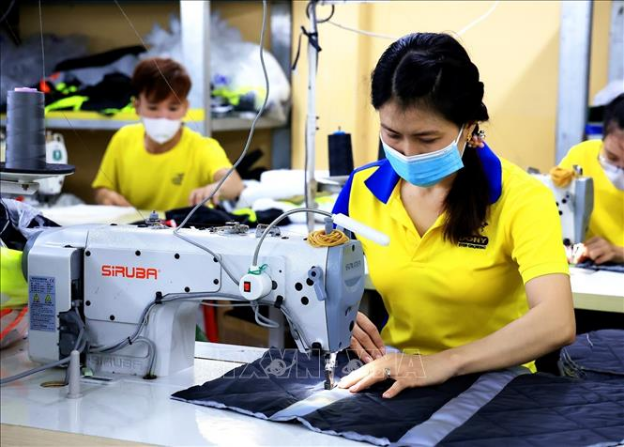 |
| Việt Nam’s labour productivity remains significantly lower than that of many countries in the region. VNA/VNA Photos |
However, Việt Nam’s labour productivity remains low, with a significant gap compared with other countries in the region. According to the National Statistics Office, measured at 2017 purchasing power parity (PPP), Việt Nam’s labour productivity stood at US$18,400 in 2020, equivalent to just 11.3 per cent of Singapore’s, 23 per cent of the Republic of Korea’s, 24.4 per cent of Japan’s, 33.1 per cent of Malaysia’s, 59.1 per cent of Thailand’s, 60.3 per cent of China’s, 77 per cent of Indonesia’s and 86.5 per cent of the Philippines’.
Improving labour productivity is therefore a core issue for Việt Nam’s economy and a prerequisite for narrowing the development gap with countries in the region, adapting to global trends and strengthening resilience to external shocks.
Productivity growth as a central task
Speaking at the 2026 National Quality and Productivity Forum, held in HCM City on August 14 and organised by the Ministry of Science and Technology in coordination with the Central Policy and Strategy Commission and the Asian Productivity Organisation (APO), Deputy Prime Minister Hồ Quốc Dũng said that after 40 years of Đổi mới (Renewal), Việt Nam’s economic potential had increased significantly.
However, the country’s growth model still relied heavily on expanding resources rather than improving the efficiency with which existing resources were used, he said.
According to the Deputy PM, international experience shows that to overcome the middle-income trap, countries need to make a strong shift towards higher productivity.
In the new context, productivity is not simply about working faster using traditional methods, but about creating new value based on technology, data and modern management practices while meeting quality and environmental requirements, he said.
The Deputy PM stressed that improving productivity should not be treated as a campaign or as a task solely for the science and technology sector. Instead, it should become a central task for the entire political system during the 2026–30 period.
 |
| Deputy Prime Minister Hồ Quốc Dũng speaks at the 2026 National Quality and Productivity Forum. |
Productivity improvement should shift from campaign-style implementation towards substantive, targeted and measurable action, with productivity serving as a key indicator in policymaking and administration, he said.
Echoing this view, Deputy Minister of Science and Technology Lê Xuân Định said Việt Nam was entering a new phase of development that required rapid and sustainable growth.
As room for expanding input factors becomes increasingly limited, productivity needs to become an important source of long-term growth, he said.
According to the Deputy Minister, a breakthrough in productivity does not simply mean producing more goods but, more importantly, creating greater value from the same amount of resources.
“Productivity creates efficiency, while quality builds trust and facilitates market access,” he said, stressing that both need to be improved simultaneously to enable businesses to compete based on value and technology.
Science and technology drive new productivity
Deputy PM Hồ Quốc Dũng stressed that science and technology, innovation and digital transformation must become sources of new productivity, while quality and standards should provide the foundation for Vietnamese goods to access and compete in international markets.
According to the Deputy PM, digital transformation and artificial intelligence need to be integrated into production lines, management processes and business operations, rather than being limited to office management software.
Alongside technology adoption, Việt Nam needs to strengthen domestic businesses’ capacity to absorb, master and utilise technology, particularly among small and medium-sized enterprises.
The Deputy PM also called for the accelerated modernisation and digitalisation of the national quality infrastructure to support businesses in meeting increasingly stringent standards in major markets.
Experts said productivity improvement also required coordinated participation from State-owned enterprises, private businesses and public agencies.
Accordingly, support policies should shift from broad, untargeted assistance towards more focused measures, with actual productivity gains serving as one of the criteria for assessing policy effectiveness.
In the public sector, the operation of the two-tier local government system requires continued improvements to administrative procedures, lower compliance costs and better-quality services for people and businesses, thereby helping reduce costs across the economy.
The Deputy PM assigned the Ministry of Science and Technology to urgently conduct a mid-term review of the implementation of the Master Plan on improving productivity based on science, technology and innovation for the 2021–30 period.
Based on the review, the ministry is to study and submit to the Prime Minister a National Productivity Enhancement Plan for the new period, with completion scheduled for the third quarter of 2026.
“Improving productivity is a long-term journey. But in the current context, we have no choice but to accelerate,” the Deputy PM stressed. VNS
Society
 Society
 Society
 Society
 Society
 Society
 Society
 Society
 Society
 Society
 Society
 Society
 Society
 Society
 Society