 Society

LANDMARK Launches ‘Destination CENTRAL’: A District-Wide Invitation to Explore the Dynamism, Luxury, and Soul of Central
1.
|
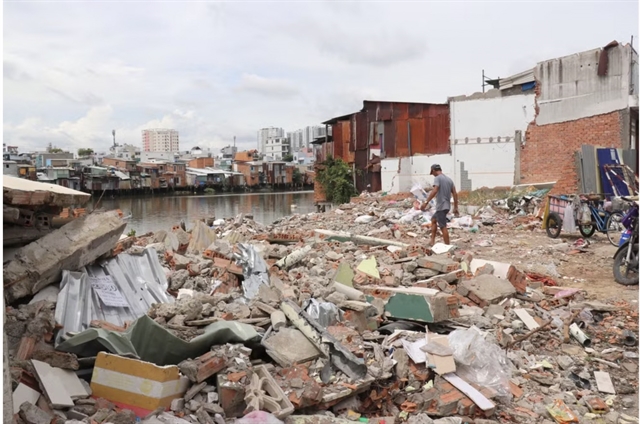
| The project of renovating Đôi Canal is underway. VNA/VNS Photo |
HCM CITY — HCM City has been pushing up the implementation of urban renovation projects, improving the environment and enhancing the quality of urban infrastructure.
The projects have been carried out with the target of removing more than 41,500 houses on and along the city’s canals in the 2026-2030 period.
The project to renovate the north bank of Đôi Canal with a total investment of more than VNĐ7.3 trillion (US$287 million) is being accelerated, contributing to realising the goal of restoring water surface space, promoting the value of the river system and canals, and at the same time creating motivation to expand urban development space in a green and sustainable direction.
Đôi Canal is one of the most important waterways connecting the city’s southwestern region to the city centre. However, for many decades, the rapid urbanisation process has created thousands of houses along the canal that cause a reduction in water surface area, direct discharge of domestic wastewater and accumulation of waste, while dredging is hampered by encroachment from houses.
The situation has not only reduced the water environment quality but also affected the canal's drainage capacity and increased the risk of flooding in the area during heavy rains or high tides.
To gradually resolve the problem, since last year, the city started a project to dredge, build infrastructure and improve the environment on the North bank of the Đôi Canal with a total investment from the city budget.
The project has a length of about 4.3km, including embankment construction items, canal dredging, expanding Nguyễn Duy and Hoài Thanh roads, building an extended Nguyễn Duy route and a synchronous technical infrastructure system.
According to the city’s Urban Infrastructure Construction Investment Project Management Board, the project is divided into three packages to be implemented simultaneously.
After nearly a year of construction, many sections of the embankment have been formed, dredging, reinforcing the banks and expanding the road are being accelerated.
Some bidding packages are expected to be completed in 2026, while site clearance work continues to be carried out to ensure the overall progress of the project.
A notable point is that more than 75 per cent of the project's total investment is spent on compensation, support and resettlement.
This shows that the city's goal is not simply to build infrastructure but also to fundamentally solve the situation of housing encroaching on canals - the cause that has degraded the quality of the urban environment for many years.
According to Võ Văn Minh, chairman of the city People's Council, renovating housing areas on and along rivers and canals is not just a task of construction or infrastructure development but also a major programme on social security, improving the environment, improving people's quality of life and creating new development momentum for the city.
Projects need to be implemented synchronously, ensuring progress, while proactively removing bottlenecks in mechanisms, procedures and resources to create clear changes in urban beautification, Minh said.
The relocation of encroaching structures to return the protection corridors of rivers and canals has long-term significance for urban development.
When the water surface space is expanded, the flow is cleared and the wastewater collection system is gradually invested synchronously, the quality of the water environment will be improved, contributing to improving water drainage capacity, reducing the risk of pollution and creating conditions for the formation of green routes, walkways and public spaces along the canal.
Along the project in Đôi Canal, other projects in Nhiêu Lộc-Thị Nghè, Tân Hóa-Lò Gốm và Tàu Hủ-Bến Nghé canals show that, when the flow is cleared and the environment is improved, the urban appearance also changes positively, and more public spaces are formed to serve people.
“Resettlement needs to prioritise the use of housing funds near the areas where people have to be relocated to stabilise their lives, livelihoods and limit disturbances after handing over the premises,” Minh said.
“This is considered an important factor to create consensus among the people, contributing to speeding up the implementation of projects.” VNS
Society
 Society
 Society
 Society
 Society
 Society
 Society
 Society
 Society
 Society
 Society
 Society
 Society
 Society
 Society