 Society

Sơn La holds second coffee festival, targeting stronger businesses in future
1.
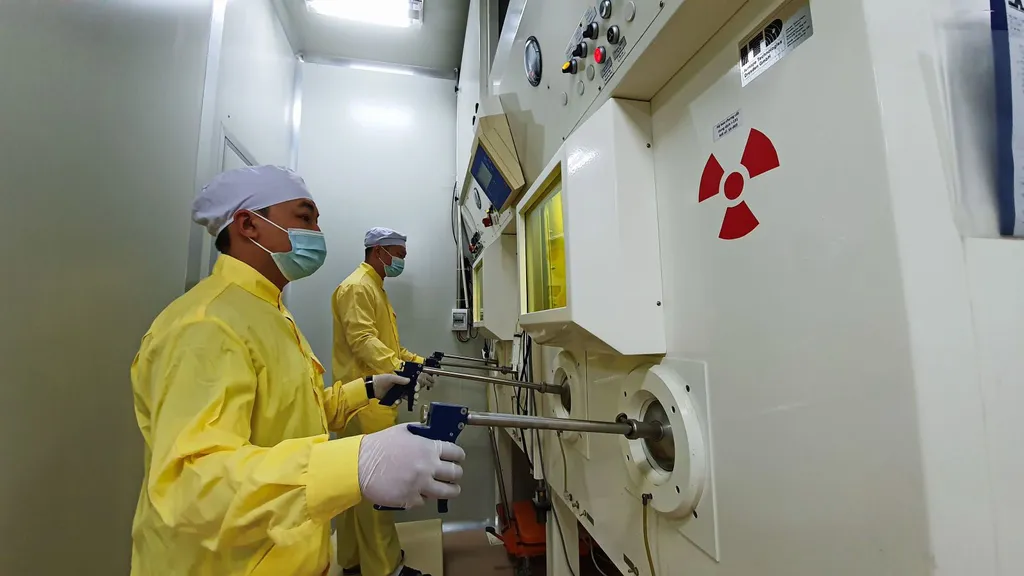 |
| The expertise needed to build and operate a nuclear industry cannot be created overnight. Photo Courtesy of Đà Lạt Nuclear Research Institute |
Thu Vân
HÀ NỘI Building a nuclear power plant may take more than a decade. Yet the most critical part of the journey is not designing the reactor, constructing the plant or installing the equipment. It is preparing the people who will operate it.
However advanced the technology, no nuclear power plant can operate safely without a workforce that is highly skilled, rigorously trained and deeply committed to a culture of safety.
As Việt Nam revives its nuclear power programme, public attention has largely focused on technology, regulation, safety and financing. Experts, however, argue that developing the workforce must begin long before construction starts, because the expertise needed to build and operate a nuclear industry cannot be created overnight.
The fundamental question is not only what technology Việt Nam will adopt, but who will operate, manage and ultimately master it.
The answer, experts say, lies not simply in producing more engineering graduates, but in building a core workforce capable of conducting research, regulating the sector, operating nuclear facilities and supporting the industry's long-term development.
Planning ahead for the workforce
According to the Project on Training and Developing Human Resources for Nuclear Power Development through 2035, approved under Decision No. 1020/QĐ-TTg, Việt Nam plans to train nuclear professionals both at home and abroad to meet the staffing requirements of the Ninh Thuận 1 and Ninh Thuận 2 nuclear power plants.
By 2030, the project aims to develop a workforce of 3,900 university and college graduates for the two plants, including 670 who will receive overseas training. Beyond that, future training plans will be adjusted according to actual demand.
Those figures reflect the scale of the workforce needed to sustain a nuclear power programme.
Dr Trần Chí Thành, Director of the Việt Nam Atomic Energy Institute (VINATOM), estimated that a conventional 1,000MW Russian-designed reactor requires around 1,000 professionally trained personnel.
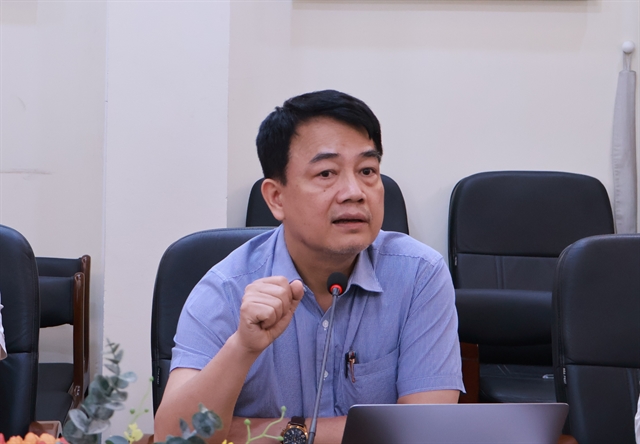 |
| Dr Trần Chí Thành, Director of the Việt Nam Atomic Energy Institute (VINATOM). Photos Courtesy of VINATOM |
"Of these, around 200 to 300 form the core operating team, while the rest are engineers, technicians and staff responsible for systems that are not directly involved in reactor operations," he said.
If Ninh Thuận 1 proceeds as planned with two reactors, the plant alone will require roughly 2,000 personnel.
The exact staffing requirement varies depending on reactor technology.
"Western designs generally require fewer people because of differences in technology, but even then each reactor still needs around 600 to 700 personnel," Thành said.
Building an industry, not just a workforce
Professor Nikolai Rogalev, rector of the Moscow Power Engineering Institute (MPEI), said that while responsibility is essential in every profession, nuclear power demands a far higher standard than most other industries.
"Nuclear power requires a greater sense of responsibility than other forms of energy because the technology inside a nuclear power plant is exceptionally sophisticated and complex," he said.
For Thành, developing human resources for nuclear power is about far more than producing enough plant operators. It means laying the foundations for one of the world's most technologically advanced and safety-critical industries.
Developing a core team capable of operating a nuclear power plant typically takes at least a decade of education, specialised training and practical experience.
Future specialists must master a broad range of disciplines, including nuclear and reactor physics, electrical engineering, automation, materials science, thermodynamics, chemistry, reactor design, plant operation and even the economics of nuclear power generation.
"To operate a nuclear power plant, an engineer must understand virtually every system in the facility," Thành said.
That includes the reactor, turbines, pumps, electrical and control systems, as well as all safety-related equipment.
Lê Văn Hồng, former deputy director of the Việt Nam Atomic Energy Institute and one of the first Vietnamese graduates of the Moscow Power Engineering Institute, said nuclear power is inherently interdisciplinary, requiring specialists across a wide range of technical fields.
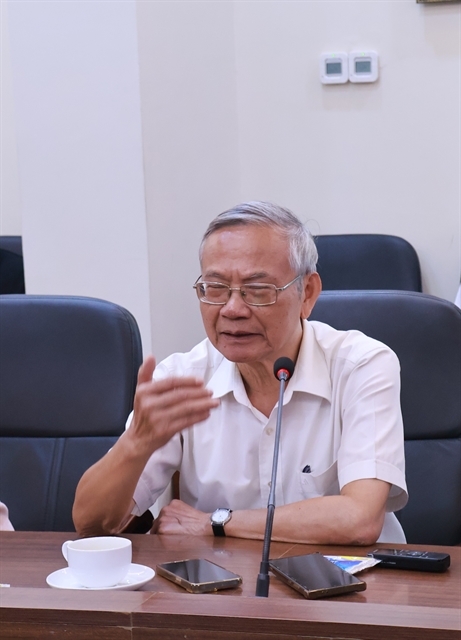 |
| Lê Văn Hồng, former deputy director of the Việt Nam Atomic Energy Institute |
"There are hundreds of positions that demand in-depth expertise in areas such as nuclear physics, reactor engineering, thermal hydraulics, nuclear safety, mechanical engineering, chemistry, automation, electrical systems, information technology, radiation protection and radioactive waste management," Hồng said.
Among these, the most critical positions are those responsible for reactor operation and control.
"In a nuclear power plant, the reactor is the heart of the facility," he said.
Personnel working in these positions account for only around 30 to 40 per cent of the total workforce and are primarily based in the control room.
According to Hồng, their role demands exceptional situational awareness and systems thinking.
"They must understand how the entire plant operates, particularly the reactor. They need to anticipate how even the smallest change at one moment could affect every other system in the plant."
Training does not end with a university or postgraduate degree.
Even after completing formal education, nuclear engineers must undergo advanced specialised training, obtain professional certification and complete extensive practical placements before they are qualified to assume operational responsibilities.
During nuclear engineering programmes in the former Soviet Union, students completed several placements at thermal and nuclear power plants before graduation. Even after entering the workforce, they typically required another two to three years of supervised experience before receiving licences to work at nuclear power plants.
The United States, France, Japan and many other countries follow similarly rigorous approaches, Thành said.
He pointed to South Korea's training of operators for the Barakah Nuclear Power Plant in the United Arab Emirates as another example.
"They followed essentially the same model, and it took more than ten years," he said.
Not every employee at a nuclear power plant follows the same career path.
Although each reactor may require close to 1,000 personnel, the level of expertise varies depending on the role.
"It is entirely possible to recruit graduates from universities and colleges in relevant disciplines, provide additional specialised training and require them to obtain the necessary professional certificates," Thành said.
Even engineers and technicians who are not expected to master reactor kinetics in depth must still understand the fundamental principles of nuclear safety, radiation protection and radiation safety, he added.
Preparing early by identifying the skills and professions future nuclear power plants will require enables project developers to establish long-term workforce plans well before the plants begin operation.
Unlike most other power-generation facilities, a Generation III+ nuclear power plant has an operating life of around 60 years and can potentially remain in service for as long as a century.
Countries pursuing nuclear power therefore need to cultivate a multi-generational workforce capable of operating, maintaining and renewing expertise throughout the plant's lifetime.
Beyond technical expertise
Technical knowledge alone is not enough to operate a nuclear power plant safely.
The qualities required of nuclear professionals extend well beyond what can be learned in lecture halls or acquired through practical training, said Dr Lê Chí Dũng, former deputy director of the Agency for Radiation and Nuclear Safety (VARANS).
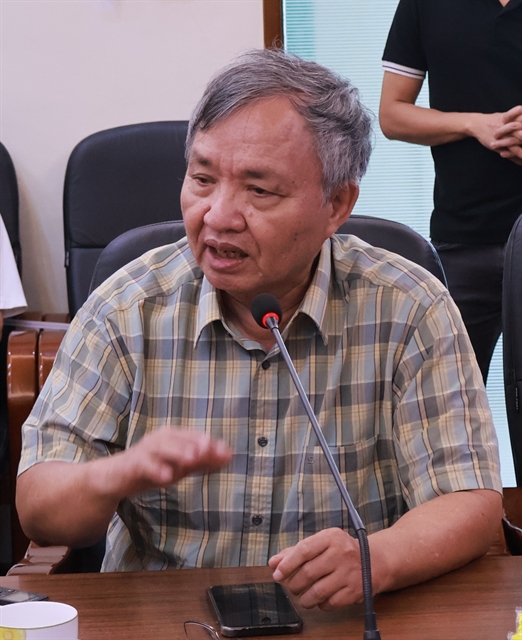 |
| Dr Lê Chí Dũng, former deputy director of the Agency for Radiation and Nuclear Safety (VARANS) |
"A nuclear power plant needs people who can work effectively as part of a team," Dũng said.
Personnel work in rotating shifts and multidisciplinary teams to keep the plant operating safely around the clock. Because every system within a nuclear power plant is closely interconnected, employees must understand not only their own responsibilities but also how their work affects the performance and safety of the entire facility.
Above all, however, Dũng said the defining characteristic of a safe nuclear power programme is a strong safety culture.
"Every major nuclear accident in the world has ultimately been caused by shortcomings in safety culture," he said. "Without a strong safety culture, nuclear power can fail almost immediately."
Closely linked to safety culture is another indispensable quality: a profound sense of responsibility.
Every process and every position within a nuclear power plant carries safety implications. Maintaining safe operations is therefore not solely the responsibility of reactor operators, but of everyone working at the facility, from frontline support staff to senior managers.
"Ensuring the safety of a nuclear power plant is also a test of a country's governance," said Dr Đặng Thanh Lương, former deputy director of VARANS. "It is not only a test for us, but one that the international community will also judge us by."
Rebuilding Việt Nam's nuclear talent pipeline
Developing such a workforce remains one of Việt Nam's greatest challenges.
Formal education programmes established under earlier initiatives, including Project 158, were discontinued after the country's nuclear power programme was suspended in 2016. Although the Ministry of Education and Training is reviewing those programmes, experts say there is still no clear roadmap for rebuilding them, and many of the country's leading nuclear specialists have yet to be fully involved in the process.
Several recent policy documents, including Decisions No. 1012, 176, 893 and 1050, set numerical targets for future training, with some estimating a workforce of around 4,000 people.
Experts, however, argue that these policies focus largely on numbers while offering limited guidance on what kinds of specialists are needed, which disciplines should be prioritised or how training should be structured.
More fundamentally, they say, Việt Nam has never established a university programme specifically designed to prepare engineers for commercial nuclear power plants.
Existing nuclear physics and nuclear engineering programmes focus primarily on the peaceful applications of atomic energy in medicine, agriculture and industry rather than nuclear power generation.
Although Việt Nam introduced national curriculum standards for undergraduate nuclear power engineering programmes this year, experts believe the proposed framework still falls short of international practice.
Compared with programmes offered by universities such as North Carolina State University in the United States, they say the Vietnamese curriculum lacks essential subjects including neutron physics, reactor engineering, reactor theory, reactor kinetics, reactor control, radiation protection and nuclear safety. Even mathematics, a cornerstone of engineering education, is absent.
For Trần Chí Thành, this gap must be addressed before Việt Nam can realistically build the workforce needed for a nuclear power programme.
"If these engineers are expected to operate nuclear power plants and take responsibility for the country's nuclear safety, they must be trained through a proper nuclear engineering programme."
"There is nothing particularly difficult about doing that," he said. "We can send students abroad, or work with international partners to develop a high-quality curriculum. It's entirely achievable."
He noted that dedicated Nuclear Engineering degrees are typically offered only at a small number of each country's leading engineering universities.
"Nuclear power is an interdisciplinary field involving more than 20 major disciplines. To train a nuclear engineer with a broad understanding of the technology, you need to teach a wide range of subjects. That's why these programmes are usually based at universities with strong engineering foundations."
Building the right ecosystem
Designing a curriculum is only the beginning.
Experts say Việt Nam must also build the academic ecosystem needed to sustain nuclear education over the coming decades.
That includes translating and standardising core textbooks, investing in laboratories and simulation facilities, establishing practical training programmes that combine Việt Nam's existing research infrastructure with placements at overseas nuclear power plants, and developing a qualified teaching workforce.
"At present, universities simply do not have enough lecturers specialising in nuclear engineering, nuclear physics and other core disciplines," Thành said.
He believes this gap can be bridged by drawing on expertise already available within VINATOM.
"For nuclear safety, the institute already has the expertise. We are ready to contribute. VINATOM has more than 90 PhDs specialising in nuclear science and technology."
International experts should also be invited to teach, whether in person or remotely, he added.
"Today's online technologies make that entirely possible."
Some highly specialised training will inevitably continue to take place overseas.
"But nuclear power plants are designed to operate for decades, even a century," Thành said. "We cannot keep sending people abroad for the next hundred years."
As Việt Nam expands beyond its first reactors and potentially develops small modular reactors in the future, the country will need to build its own long-term educational capacity.
"We need our own nuclear engineering programmes and, above all, our own expertise in nuclear safety. That is a national capability."
Developing domestic programmes would also create a permanent pool of lecturers, educational resources and institutional expertise capable of supporting the industry's long-term development.
Quality over quantity
Experts caution against equating workforce development with simply producing more graduates.
Unlike many other industries, nuclear power depends on cultivating a relatively small group of highly capable specialists capable of leading research, regulation, plant operation and technology development.
Dr Lê Văn Hồng believes workforce development should follow a pyramid model.
Rather than training large numbers from the outset, Việt Nam should identify outstanding students in engineering and the natural sciences, provide them with intensive nuclear education and gradually develop them into future leaders.
"We should proceed step by step and focus on developing people capable of leading research groups and major implementation projects," Hồng said.
He also argues that specialised nuclear engineering should be concentrated at one or two leading engineering universities, allowing faculty, research capacity and resources to be consolidated rather than spread too thinly.
Internationally recognised curricula from institutions such as MEPhI, Purdue University and India's BARC, together with guidance from the IAEA, should provide the benchmark.
Experts also distinguish between two very different workforce needs.
Training operators for individual nuclear power plants can largely be undertaken by technology suppliers through plant-specific instruction and overseas placements.
Building a national nuclear programme, however, requires a much broader talent base spanning research, regulation, safety oversight, engineering design and technology development, demanding sustained investment over decades.
To support that effort, experts call for competitive salaries, clearer career pathways and stronger incentives to attract and retain top talent, while ensuring experienced nuclear scientists play a central role in policymaking, curriculum design and programme implementation.
Nuclear power is often seen as a story of reactors, technology and infrastructure. In reality, it is ultimately a story of people.
Long after the concrete has been poured, the turbines begin to turn and the reactors come online, the safety of every nuclear power plant will depend on the judgment, discipline and sense of responsibility of the people operating it.
For Việt Nam, building that workforce may prove to be the country's most important investment in nuclear power. VNS
Society
 Society
 Society
 Society
 Society
 Society
 Society
 Society
 Society
.jpg) Society
Society
 Society
 Society
 Society
 Society
 Society