 Society

Việt Nam, EU and Belgium seek deeper, practical cooperation
1.
|
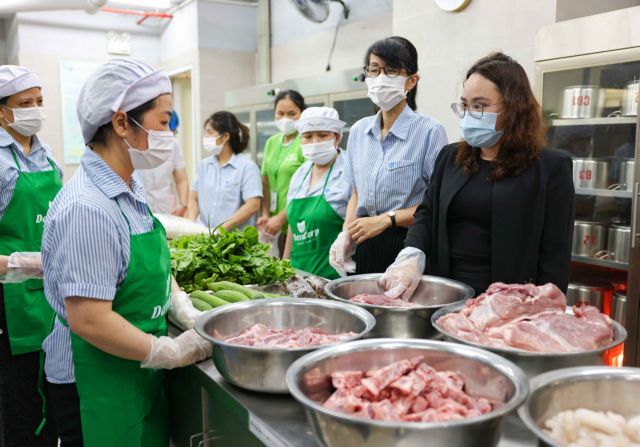
| Officials from Hà Nội's Cửa Nam Ward inspected the food preparation process at a number of schools in the area in April. — VNA/VNS Photo Thanh Tùng |
HÀ NỘI — The Hà Nội Department of Education and Training has instructed educational institutions under its jurisdiction to strengthen food safety measures during the summer.
The instructions were issued this week, following a order from Deputy Prime Minister Phạm Thị Thanh Trà to prevent food poisoning at schools nationwide that was delivered at a Tuesday meeting of the Central Steering Committee for Food Safety in the capital city.
Trà gave the order after a report from the Ministry of Health revealed that 12 incidents of food poisoning occurred in school kitchens nationwide, affecting 741 students in the first six months of the year.
This marks an increase of nine incidents and 686 students affected, compared to the same period last year.
According to instructions from Hà Nội’s education department, schools are only allowed to offer boarding services – including meals – when there is a genuine need from students, and only when the institutions fully meet the required conditions for facilities, equipment, personnel, water sources, environmental hygiene and food safety.
The principal or head of the institution is fully responsible for the services and cannot delegate all responsibility to the meal provider.
Schools must strictly control food sources, only using food, meal portions, milk and drinking water with complete source documentation, invoices and traceability.
They are not allowed to change suppliers, food sources or processing locations without assessing safety conditions, and must carry out a three-step food inspection process in accordance with the Ministry of Health’s instructions. They must also retain food samples and maintain records as required.
Menus suitable for the hot summer weather must be carefully developed, prioritising fresh food and limiting cold, undercooked and high-risk foods.
The food must be stored, transported and processed according to proper procedures. Prolonged exposure to ambient temperature and reuse of leftovers must be avoided.
Kitchens must maintain a one-way flow, ensuring hygiene, pest control and use of water from safe sources for cooking.
Educational institutions are also required to publicly disclose menus, suppliers and food sources, give parents the opportunity to monitor the cooking process and identify students with food allergies or special dietary needs to arrange meals accordingly.
In cases of suspected or detected food poisoning, they must immediately stop using the food in question, provide first aid and take students to medical facilities.
Samples of the potentially contaminated food must be preserved and promptly reported to relevant authorities, health agencies and the education department for coordinated action.
Schools must also strengthen self-inspections and promptly address any food safety deficiencies.
The People's Committees of communes and wards are tasked with inspecting schools that offer boarding services during the summer, food service providers and food businesses around school gates, and strictly handle violations according to regulations. — VNS
Society
 Society
 Society
 Society
 Society
 Society
 Society
 Society
 Society
 Society
 Society
 Society
 Society
 Society
 Society