 Society
Interest rates on certificates of deposit keep rising
1.
|
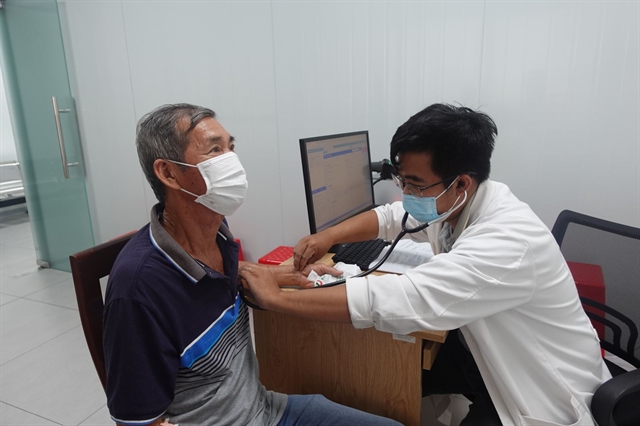
| HCM City’s integrated health network now manages comprehensive care for more than 14 million people, spanning urban hubs and rural and island communes. — VNA/VNS Photo |
HCM CITY — High-tech and super-speciality hospitals in HCM City are set to expand their role beyond medical treatment to become practical training centres, scientific research hubs, and technical transfer platforms for primary healthcare facilities.
The new strategy was revealed by Associate Professor Nguyễn Anh Dũng, deputy director of the city Department of Health, at the 2026 Annual Scientific Conference hosted by Nhân Dân Gia Định Hospital last Saturday.
He said the city is shifting its strategic focus from expanding individual hospitals to developing an integrated, whole-system healthcare ecosystem.
Tăng Chí Thượng, the director of the department, said while individual tertiary hospitals have achieved regional-level excellence in complex fields such as organ transplantation, cardiac intervention, and fetal medicine, a few strong hospitals do not automatically mean a strong overall system.
Overcrowding at top-tier facilities persists while primary and gateway healthcare providers remain underutilised.
Following last year’s reorganisation of provinces and cities, the city’s health network now serves 14 million people living in an area of 6,800sq.km.
Concentrating high-tech medical resources exclusively in the city centre is no longer sustainable.
Under a multi-tiered, multi-centre, and multi-polar framework, tertiary specialist hospitals will act as knowledge engines.
They will deliver advanced care while continuously training medical staff and transferring technology to lower-level facilities.
This will ensure people can access high-quality medical services close to home, particularly those in suburban and outlying areas.
To support this strategic vision, the hospital is rapidly scaling up its capacity.
Associate Professor Nguyễn Hoàng Hải, Director of Nhân Dân Gia Định Hospital, said following the launch of its second facility (Sài Gòn branch) earlier this year, the hospital would commission a new 15-storey inpatient building at its main campus next month.
Besides, plans are underway for an 800-bed third campus (Phú Mỹ branch) to meet the region's growing healthcare demands.
Dũng called on the hospital to consolidate its internal resources, accelerate digital transformation, adopt advanced technologies such as artificial intelligence and personalised medicine, and progressively reach international standards.
The conference, which had the theme "Connecting Knowledge – International Integration – Creating Clinical Value", was attended by over 2,500 experts, scientists, and medical professionals from Việt Nam and abroad.
A highlight this year was a dedicated symposium on living-donor liver transplantation organised in partnership with experts from Severance Hospital, Yonsei University, South Korea.
The event also prioritised young medical practitioners.
Prior to the main conference, academic competitions featuring poster presentations and oral reports in English were organised, providing early-career doctors with vital exposure to international academic standards. — VNS
Society
 Society
 Society
 Society
 Society
 Society
 Society
 Society
 Society
 Society
 Society
 Society
 Society
 Society
 Society