 Society

Việt Nam, China seek stronger substantive parliamentary cooperation
1.
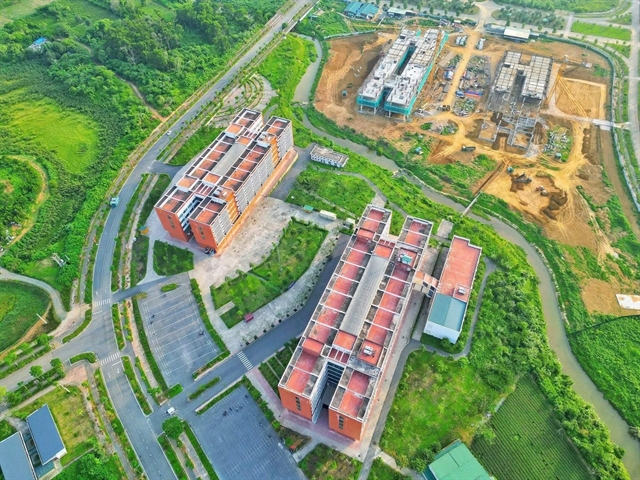 |
| The Hòa Lạc campus of Vietnam National University Hanoi takes shape. — Photo courtesy of VNU |
HÀ NỘI — For years, Hà Nội has pursued a straightforward solution to its overcrowded urban core: move the universities to the outskirks of the city.
But as campuses shift to satellite towns, students and experts warn that the policy is transferring buildings without creating the communities needed to make the move work.
Under city planning guidelines, universities are to gradually relocate to areas such as Hòa Lạc, Xuân Mai and Sơn Tây, where land is plentiful and long-term development is feasible.
Vietnam National University Hanoi is already expanding its Hòa Lạc campus, and other institutions are establishing footholds in the neighbouring provinces of Ninh Bình and Bắc Ninh.
The planning rationale is hard to dispute. Inner-city land is scarce, most universities have no room to expand, and arterial roads are chronically gridlocked during peak hours. Relocating thousands of students and faculty would meaningfully reduce pressure on the city centre.
What the plans have been slower to address is what awaits those students at the other end. Lê Thị Minh Hằng, a student at the Academy of Finance, said the prospect of moving to Hòa Lạc left her uneasy.
"My biggest worry is that when something comes up, things won't be as easy to sort out," she said.
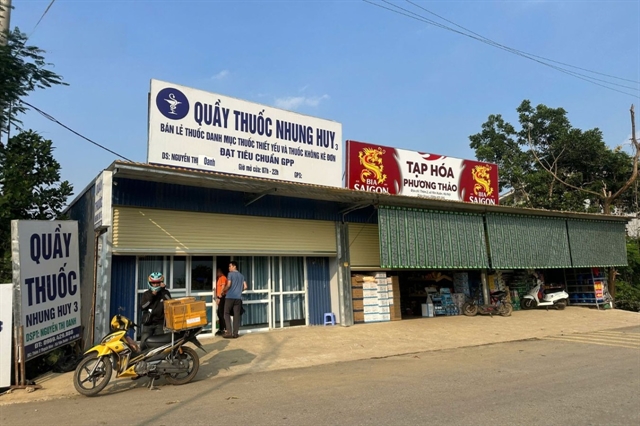 |
| The nearest pharmacy to the campus, one kilometre away. — VNA/VNS Photo |
Those concerns have real-world weight. Vũ Hải Minh, a first-year student living at Hòa Lạc, fell ill with food poisoning late one night and could not locate a nearby clinic or pharmacy.
Unfamiliar with the area, he called his family for guidance. He recovered by the following day, but the episode exposed the gaps in basic services that students at newer campuses routinely navigate.
Transport compounds the problem. Bus services connecting Hòa Lạc to central Hà Nội remain limited in frequency and schedule flexibility. Riding a motorbike means commutes of dozens of kilometres each way.
And part-time work, readily available in the inner city, is scarce in outlying areas, forcing students to choose between forgoing income or continuing to commute for it.
The result is a half-measure: students study on the outskirts but return to the city centre for employment, healthcare and leisure, preserving much of the congestion the policy was designed to relieve.
Associate Professor Nguyễn Thường Lạng from the School of Trade and International Economics at the National Economics University said the missing ecosystem is where the current approach falls short.
"The relocation must be student-centred. If we move the campus but not the community around it, we haven't really solved anything," he said.
Lạng argues that a genuine university town cannot consist solely of lecture halls and dormitories. It requires healthcare facilities, commercial centres, recreational spaces, libraries, cultural venues and, above all, a local job market that gives students access to internships and part-time work without returning downtown.
Without those elements, peripheral campuses function as isolated enclaves rather than self-sustaining knowledge hubs.
He called on the government to introduce sufficiently attractive incentives – in land use, credit and taxation – to draw private investment into university-zone development and create employment on-site.
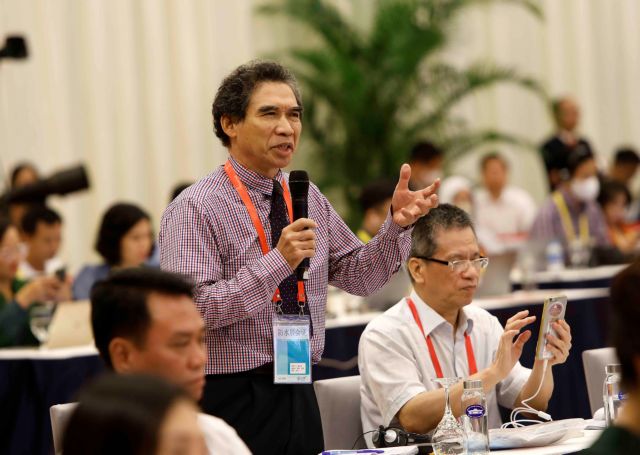 |
| Associate Professor Nguyễn Thường Lạng of the School of Trade and International Economics at the National Economics University. — VNA/VNS Photo |
Lạng also points to metro or urban rail connections between central Hà Nội and Hòa Lạc as essential to cutting commute times and making the distance psychologically manageable.
The relocation drive is irreversible, Lạng said, but its success cannot be measured by how many institutions have moved or how much inner-city land has been freed up, only by the quality of life at the destination.
"As long as students study on the outskirts while commuting downtown for work and a social life, the relocation is only half done," he said. — VNS
Society
 Society
 Society
 Society
 Society
 Society
 Society
 Society
 Society
 Society
 Society
 Society
 Society
 Society
 Society