 Society

AITO Looks Ahead to Europe, Building a Thriving Automotive Ecosystem
1.
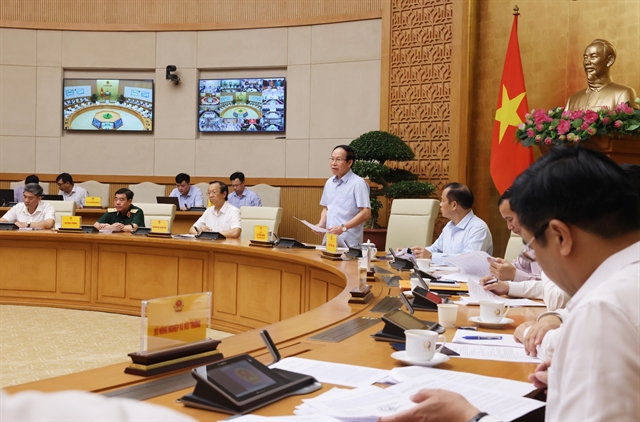 |
| Deputy Prime Minister Lê Tiến Châu chaired the meeting on the school building programme in border communes on January 19. — Photo courtesy of the Government e-Portal |
HÀ NỘI — Emphasising that building schools in border communes is a particularly important political task and a project that embodies public trust and social welfare, Deputy Prime Minister Lê Tiến Châu called on authorities to ensure progress, quality, safety and investment efficiency.
The remarks were made during a Friday meeting between local authorities and the national steering committee for school construction in border communes, chaired by Châu in his capacity as head of the committee.
As of June 2026, construction had begun on 229 schools in a total of 248 border communes and wards, across 21 of the country’s 22 border localities.
In 2025, 108 school projects broke ground in every commune of 19 border localities, including eight schools funded by local budgets. In 2026, construction and groundbreaking ceremonies were held for 121 schools in the remaining border communes.
As of June 15 this year, among the 108 schools launched in 2025, one had been completed and put into operation, while the remaining 107 were under construction.
Among the 100 centrally-funded schools, 11 were in the finishing stage and ahead of schedule; 54 had completed building the fundamental structures and remained on schedule; 29 were underway and facing a risk of delay; and six were behind schedule.
For the schools launched in 2026, all 121 projects across 17 cities and provinces had officially commenced by March 19. Specifically, 110 schools had assigned investors, while 11 had yet to do so but had designated provincial project management boards to undertake preparatory work.
At the same time, 48 schools (39.7 per cent) had completed site clearance and were ready for construction; 57 were undergoing site clearance; 16 were preparing for clearing ground; 13 projects had received approval; and four had begun construction.
Reports from the Ministry of Education and Training (MoET) and local authorities indicated that delays and increases in investment costs were mainly caused by difficult terrain, geological and weather conditions, shortages of construction materials and labour, and sharp increases in the prices of fuel, labour and raw materials.
In addition, some local leaders were at a loss during the implementation process and had not demonstrated sufficient responsibility or oversight, according to reports.
Speaking at the meeting, Deputy PM Châu said: “This is not merely a school construction but a particularly important political task, a project of public trust and social welfare that contributes to strengthening national defence and security and safeguarding national border sovereignty.”
He noted that special mechanisms were already in place, policies for schools and students had been issued, and capital funding had been allocated. Therefore, local authorities must address the delay in implementation and demonstrate responsibility to complete the projects.
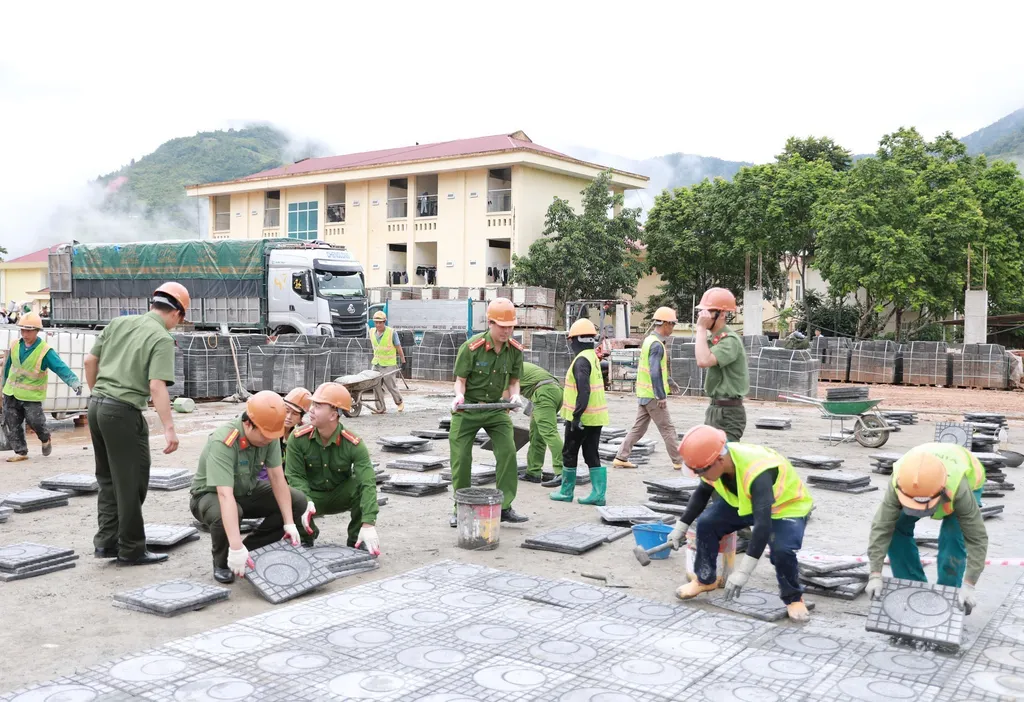 |
| Armed forces assist in the building of schools in the mountainous commune Pa Tần, the northern province of Lào Cai. — VNA/VNS Photo |
In addition to ensuring progress, quality and efficiency, Châu also instructed local leaders to proactively prepare teaching staff, facilities and educational equipment so that schools could become operational immediately upon completion.
The goal is to inaugurate the schools in conjunction with the opening of the new academic year in early September, he noted.
The MoET and relevant departments were tasked with regularly monitoring and inspecting progress to ensure that all schools are operational before August 30, and that no school is inaugurated without being fully ready for teaching and learning activities.
Provincial Party secretaries were instructed to directly oversee and direct implementation, treating the programme as a key political task. They were urged to closely monitor construction sites and individual projects, with daily and weekly progress reports and immediate resolution of any emerging difficulties.
The Deputy PM also requested that provincial People’s Committee chairpersons submit written commitments on project completion schedules to the MoET before June 22.
Particular attention should be paid to the six delayed schools and the 29 school projects at risk of delay. These projects should be monitored more closely and report progress every three days so that obstacles can be addressed promptly, he noted. — VNS
Society
 Society
 Society
 Society
 Society
 Society
 Society
 Society
 Society
 Society
.jpg) Society
Society
 Society
 Society
 Society
 Society