 Society

AITO Looks Ahead to Europe, Building a Thriving Automotive Ecosystem
1.
|
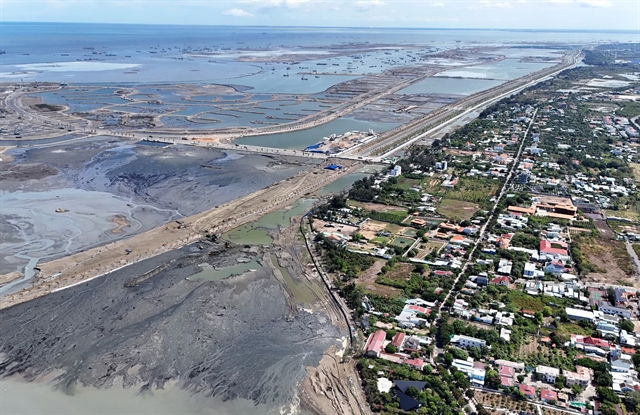
| The under-construction Vinhomes Green Paradise urban area in Cần Giờ Commune. — VNA/VNS Photos Hồng Đạt |
HCM CITY — HCM City’s coastal commune of Cần Giờ holds huge potential to become a green economy and clean energy hub, playing a key role in the city's green growth strategy and Net Zero goals.
According to the "For a green Cần Giờ" programme issued by the People's Committee of HCM City’s coastal commune of Cần Giờ, the area aims to become a smart, eco-friendly growth zone by 2030.
Local authorities have identified several key solutions, such as developing green transport, transitioning to clean energy, controlling plastic waste, improving waste collection and treatment systems, promoting green buildings and raising public awareness about environmental protection.
Furthermore, the locality is implementing key infrastructure development projects, including Cần Giờ Bridge, the Bến Thành - Cần Giờ metro line, the expansion of Rừng Sác Road and others.
These projects contribute to completing the transport infrastructure network, unlocking fresh growth potential for the region in the marine economy, eco-tourism and green transport sectors.
Currently, the area features a green business model and aquaculture activities powered by renewable energy, alongside an under-construction urban area that will operate on wind and solar power.
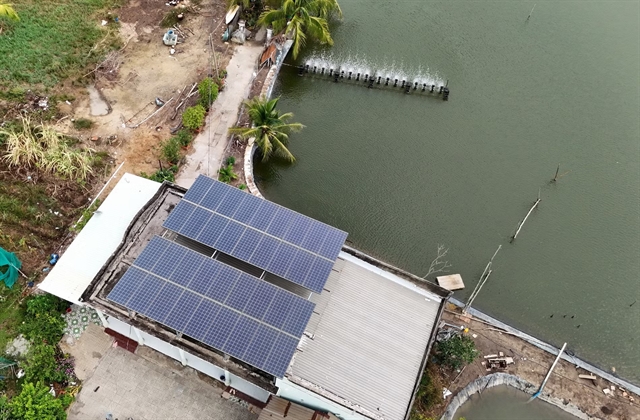
At the Bình Khánh Commune aquaculture cultivation area, Lê Văn Sướng, a local shrimp farmer with 30 years of experience, said that electricity consumption for shrimp farming operations is high while input costs are increasing.
|
| 300 square metres of solar panels installed on shrimp farmer Lê Văn Sướng's house at the Bình Khánh Commune aquaculture cultivation area. — VNA/VNS Photo |
This led him to invest in a solar power system four years ago, with solar panels covering a total area of 300 square metres installed on his roof at a cost of VNĐ300 million.
The electricity generated by the system not only covers his aquaculture operations and household needs but has also become an additional source of income, since the surplus electricity it produces is sold to Vietnam Electricity (EVN).
This helped him gain an extra income of VNĐ1 million per month, and up to VNĐ3 million during periods when he is not farming shrimp.
Phạm Minh Châu, deputy chairman of the Bình Khánh Commune People's Committee, said the solar energy model that Sướng is implementing is a green production model encouraged for widespread replication.
The commune is currently promoting environmentally friendly, circular economy-oriented production models and the application of renewable energy in aquaculture.
Meanwhile, Vietnam Nipa Corporation (VIETNIPA) has spent many years developing a business model of extracting nipa palm nectar to produce juice, alongside expanding the area planted with this species along riverbanks.
Phạm Minh Tiến, the company's general director, said his company's production model is oriented towards green agriculture and a circular economy, allowing the palms to continue growing naturally after the extraction process.
This model helps enhance the economic value provided by the species.
The nipa palm tree serves a major role in the Cần Giờ Commune’s mangrove ecosystem, helping to prevent erosion, limit saltwater intrusion and protect the riverside environment.
Furthermore, the tree's photosynthesis process contributes to carbon dioxide absorption and emission reduction, paving the way for potential carbon credit generation in the future.
There are currently 30 households participating in the raw material production chain, creating new livelihoods closely linked to environmental protection.
"Locals will only truly safeguard the forests when they can earn a livelihood from them. This is also the most sustainable development path for Cần Giờ,” Châu added.
In addition, the Vinhomes Green Paradise urban area under construction in Cần Giờ will be powered by renewable energy generated from offshore wind and solar power.
According to Nguyễn Anh Khoa, general director of VinEnergo under Vingroup, the offshore wind turbine system serving the area is being researched for deployment three to 14 kilometres from the shore to ensure wind exploitation efficiency and minimise impacts on the coastal ecosystem.
Local residents are also a part of the greener locality process.
Nguyễn Văn Hùng Cường, Head of Bình Mỹ Hamlet in Bình Khánh Commune, said that "since the embankment was constructed in the hamlet, local roads have been upgraded, the environment has become cleaner and public awareness about the environment has been raised.”
“Many local households have started switching to electric vehicles and embracing emission-reduction models to help protect the living environment," Cường added.
Professor Dr. Lê Thanh Hải, director of the Institute for Environment and Resources at Việt Nam National University-HCM City, said Cần Giờ stands out for its renewable energy potential, alongside its development model that integrates natural ecological preservation.
Many coastal urban areas in Viêt Nam are facing pressure from rising sea levels, environmental pollution and natural resource depletion. Therefore, Cần Giờ's green development model could serve as a valuable reference point for other coastal localities.
Hải shared that the locality is known as a testing ground for a low-carbon coastal urban development model, utilising renewable energy and conserving natural ecosystems.
"If the model is implemented successfully, it will become a crucial template for many other localities," he added.
Hồ Văn Bình, Deputy Chairman of the Cần Giờ District People’s Committee, noted that the important factor in the area's green transition is building consensus among authorities, businesses and local residents.
For Cần Giờ Commune's green ambitions to become a reality, it requires the joint efforts of all parties, with environmental preservation and protection at its core throughout the entire process. — VNS
Society
 Society
 Society
 Society
 Society
 Society
 Society
 Society
.jpg) Society
Society
 Society
 Society
 Society
 Society
 Society
 Society