 Society

AITO Looks Ahead to Europe, Building a Thriving Automotive Ecosystem
1.
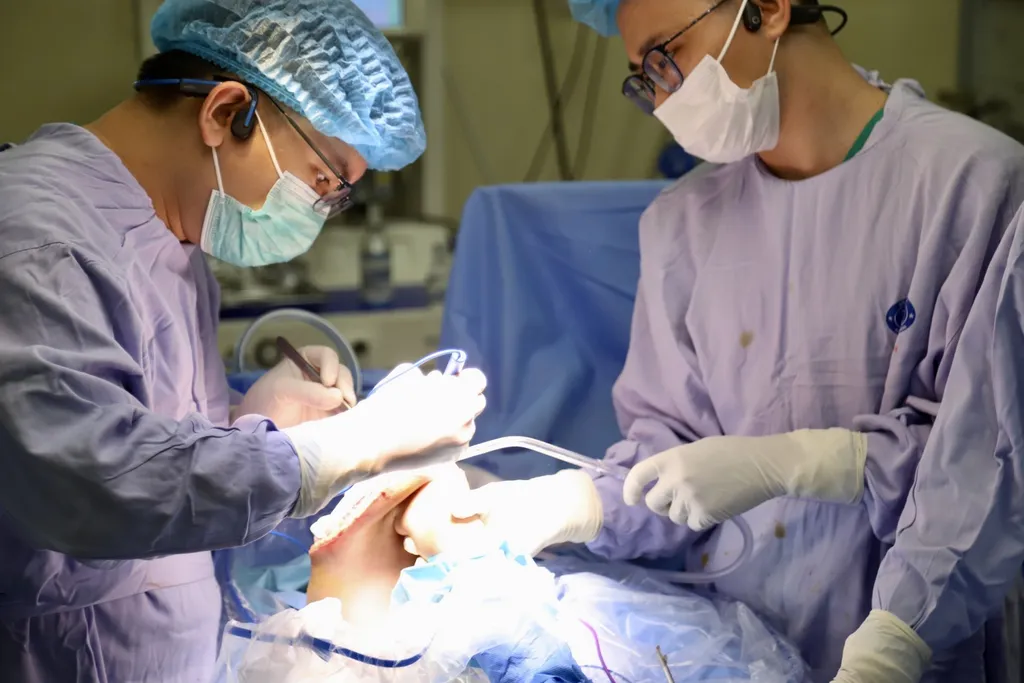 |
| The K Hospital surgical team performs an artificial growth joint replacement surgery on a six-year-old boy with bone cancer. — Photo courtesy of the hospital |
HÀ NỘI — Doctors from the Department of Bone and Soft Surgery at K National Cancer Hospital in Hà Nội have successfully performed a particularly challenging surgery – a right femoral resection combined with artificial growth joint replacement – on a six-year-old boy with bone cancer.
This is also the youngest patient to undergo this advanced surgery at the hospital.
Six-year-old T.A.T., from the northern province of Bắc Ninh, began experiencing swelling in his right knee joint in February this year. After examination and biopsy at K Hospital, the pathology results came quite as a shock for the family: the boy was diagnosed with osteosarcoma, a type of malignant bone cancer.
Following a multidisciplinary consultation, the patient was diagnosed with stage 2B cancer of the lower third of his right femur. He was quickly transferred to the Paediatrics Department for preoperative chemotherapy following the MAP protocol, a fundamental and highly effective medical treatment commonly used in the treatment of bone sarcoma.
After four weeks of chemotherapy, the pain subsided, but the tumour continued to grow, forcing doctors to perform radical surgery.
One of the challenges in this case is that the boy is only six years old, and his musculoskeletal system is still very immature and not yet developed as in an adult.
If a conventional artificial joint replacement method is used, as T. grows up, the surgically altered leg will be shorter than the other leg, causing severe asymmetry, leading to disability and significantly affecting the child's gait and daily activities.
To solve this difficult problem, the surgical team of highly experienced specialists decided to employ the most advanced technique currently available: right femoral resection and artificial growth joint replacement.
"Artificial growth joints represent a technological breakthrough in orthopaedic trauma and bone cancer. This special type of joint can 'stretch' over time to catch up with the natural growth rate of the healthy leg on the opposite side," said Dr Hoàng Tuấn Anh, head of the Department of Bone and Soft Surgery.
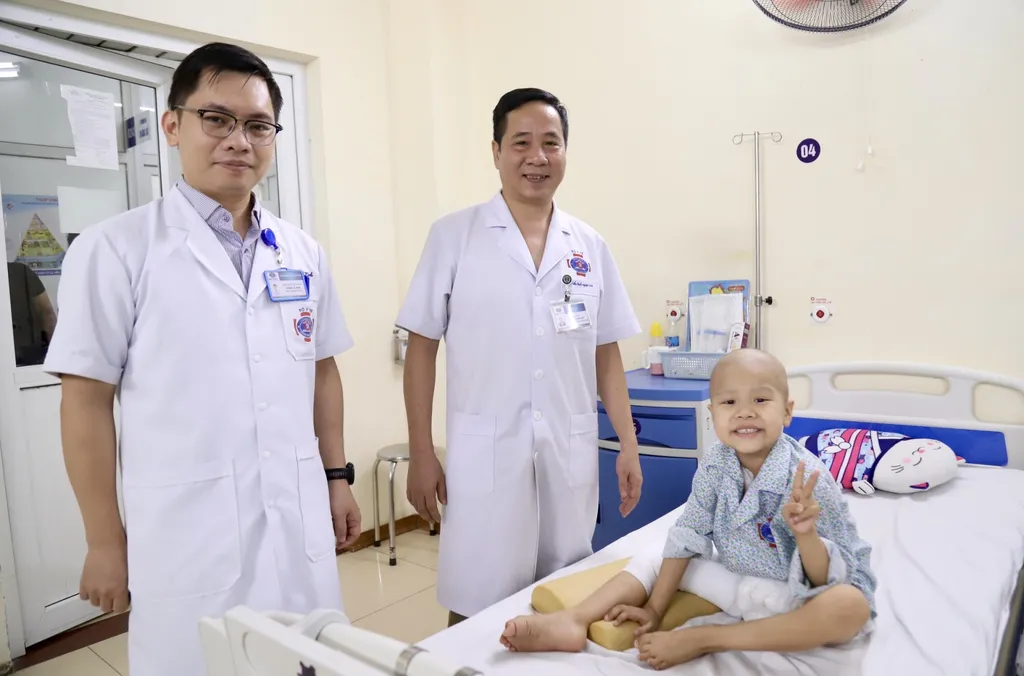 |
| The six-year-old patient recovers after the surgery. — Photo courtesy of the hospital |
But Dr Anh said that securely inserting the articular stem into the tiny medullary canal, precisely positioning it, and preserving as many of the surrounding blood vessels, nerves and ligaments as possible within the delicate skeletal framework of a six-year-old child requires extensive skill and millimetre-level precision from the surgeon.
With their high level of expertise and meticulous preparation, the surgical team completely removed the segment of the femur containing the malignant tumour with a safe resection margin, and successfully replaced it with an artificial growth joint system.
The complex surgery was completed as planned, marking the youngest patient to undergo this advanced surgical technique at the hospital.
The success of this major surgery not only removed the stage 2B malignant tumour from the child, but more importantly, it opened up a completely new future for T. The implanted artificial growth joint will help stabilise mobility immediately after the surgery, while also ensuring that the child's legs will develop evenly and proportionally as he grows older.
This challenging case once again confirms the remarkable professional progress of the team of doctors at K Hospital and the field of orthopaedic oncology surgery in Việt Nam, while also opening up opportunities for healthy lives for many other paediatric bone cancer patients. — VNS
Society
 Society
 Society
 Society
 Society
 Society
 Society
.jpg) Society
Society
 Society
 Society
 Society
 Society
 Society
 Society
 Society