 Life & Style
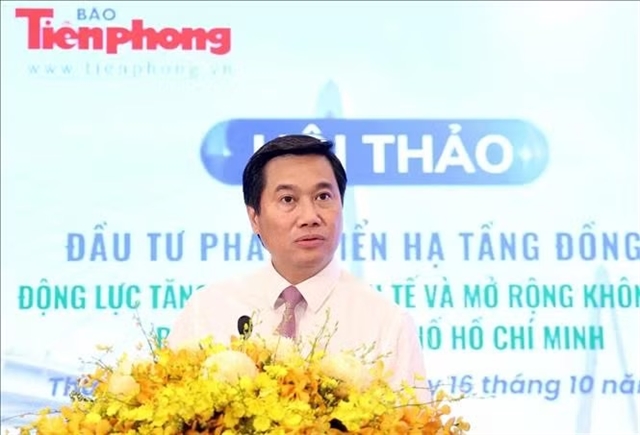
Synchronised infrastructure vital for HCM City’s expansion: official
1.
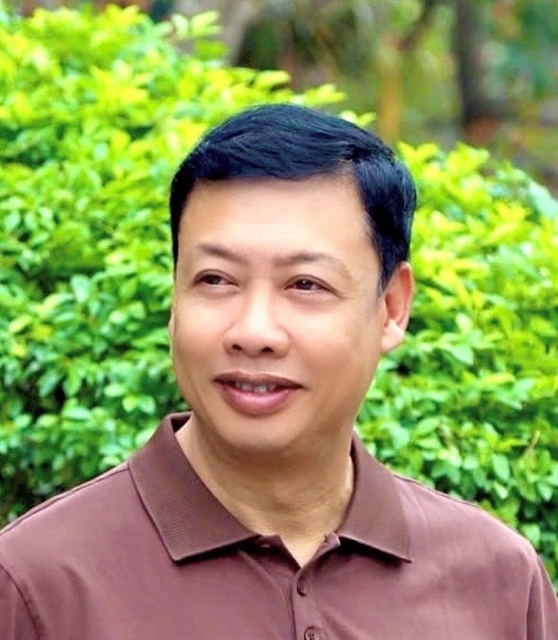 |
| Director of the Việt Nam National Puppetry Theatre Nguyễn Tiến Dũng. — Photo baovanhoa.vn |
Director of the Việt Nam National Puppetry Theatre Nguyễn Tiến Dũng continues to challenge himself by exploring diverse theatrical forms, from spoken drama and chèo (traditional opera) to cải lương (reformed theatre) and circus.
Dũng spoke to the media about his efforts to broaden the dialogue between traditional theatre and contemporary life.
You have recently been working with a range of theatre troupes, including the Military Drama Theatre, the Hà Nội Chèo Theatre and the Hải Phòng Traditional Theatre. How come?
I think I’m broadening my creativity. Before becoming closely involved with puppetry, I was trained in spoken drama and worked as an actor at the Military Drama Theatre.
I have expanded my professional experience by directing spoken drama, chèo, cải lương and circus productions, drawing on the life experience and creative thinking I have accumulated through many years of working in puppetry.
Each art form has its own language, and artists must constantly innovate, embrace challenges and reinvent themselves. When my work is recognised by fellow artists, it brings me great joy and is a valuable form of recognition for me.
Could you tell us about your two recent productions, the spoken drama Vì Tổ Quốc (For the Motherland) and the chèo production Nét Duyên Chèo Hà Thành (Hà Nội City Chèo Charm), which are different in both theatrical form and subject matter?
I believe every script and every art form has its own code. The director’s most important task is to decipher that code and find the key to unlocking the world of the work, rather than imposing familiar directing techniques.
The key may lie in a recurring image, the arrangement of space, rhythm, structure or music. What matters most is finding the right form of expression to bring out the work’s ideas and emotions.
In Vì Tổ Quốc, the key lies in a central image that encapsulates the work’s ideas, connects its epic spaces and guides the audience’s emotions.
In Nét Duyên Chèo Hà Thành, it is the structure that allows traditionally independent excerpts to come together as a cohesive whole, while shifting seamlessly between tragedy and comedy.
Finding new forms does not mean abandoning the defining characteristics of each art form. Spoken drama must respect the psychology and fate of its characters. Chèo and cải lương should emphasise music, theatrical convention and their distinctive performance techniques.
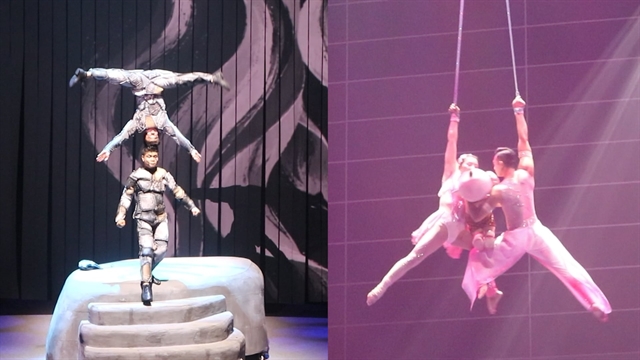
Circus needs to integrate technical skill and spectacle into a cohesive structure, while in puppetry, the imagery and movement of the puppets must remain at the centre.
A successful formula from one production cannot simply be applied to another. Some productions call for grand staging and a dynamic pace, while others demand simplicity, moments of stillness and greater psychological depth.
Puppetry has taught me to think in terms of imagery, space and rhythm. Spoken drama, meanwhile, allows me to delve into character psychology, while chèo and cải lương draw on the power of traditional music and theatrical convention. Circus offers new ways of organising movement, rhythm and visual effects.
A director’s signature is not about introducing as many new elements as possible, but about finding the right form for each work while preserving the distinctive identity of its theatrical tradition.
Are your creative efforts also aimed at broadening audiences’ perceptions of puppetry and expanding the spaces in which it can be performed?
Creativity does not necessarily have to begin with a completely new story. Sometimes, it lies in offering a fresh perspective on familiar values.
In the past, puppetry was often seen primarily as an art form for children or tourists. But its visual language, theatrical convention and versatility can convey a wide range of themes, from history and culture to the human condition and contemporary life.
Some productions are created specifically for adult audiences, requiring greater intellectual depth and a different way of engaging with the work.
At the same time, I still aim to create an open space for audiences of all ages, where older people, young adults and children can each find something that speaks to them.
A production can captivate children through imagery, movement and a sense of wonder, while also prompting adults to reflect on culture, history and life. A good show should have multiple layers of meaning, allowing different audiences to engage with it at different levels.
Puppetry also needs to move beyond its traditional settings. Bringing water puppetry from village ponds, water puppet stages and festivals to public squares, urban spaces and community events is one way to reconnect this heritage with contemporary life.
As director of the Việt Nam National Puppetry Theatre, how do you balance artistic values with audience expectations?
Artistic excellence and audience appeal are not opposing goals. A good production that fails to connect with audiences will have limited staying power, while chasing short-lived trends can undermine a theatre’s long-term identity.
We need a diverse range of productions including experimental works, programmes for children, schools and tourists, productions with cultural and diplomatic purposes and works with potential for international touring.
Whatever the category, artists must approach their craft with professionalism and dedication. Building audiences for traditional theatre is a long-term endeavour.
Is puppetry still the art form you want to continue pursuing?
I have always considered puppetry the art form where I belong. My experiences with spoken drama, chèo, cải lương, circus and festival performances have not taken me away from puppetry. Rather, they have helped me see more clearly the possibilities of the traditional art form.
I want to continue creating works that are deeply rooted in Vietnamese cultural identity, while telling their stories through a modern language that appeals to younger audiences and international audiences.
Alongside creating new works, I also want to train young artists, preserve traditional techniques at risk of being lost and give them the space to experiment and develop their own artistic voices.
Heritage can only truly remain alive when each generation of artists continues to create, adding new values while preserving its cultural identity. — VNS
Life & Style
 Life & Style
 Life & Style
 Life & Style
 Life & Style
 Life & Style
 Life & Style
 Life & Style
 Life & Style
 Life & Style
 Life & Style
 Life & Style
 Life & Style
 Life & Style
 Life & Style