 Society
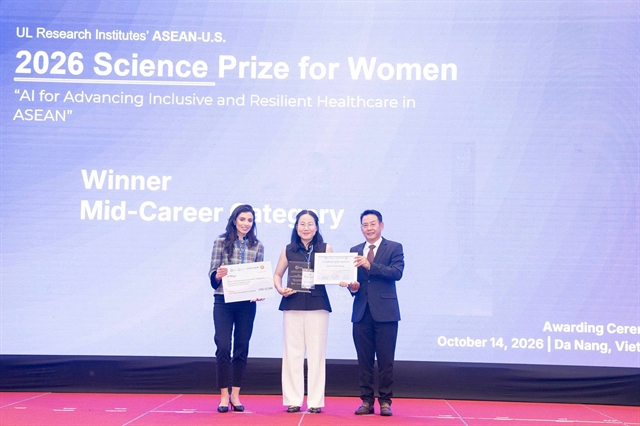
Vietnamese scientist wins ASEAN-US Science Prize for Women
1.
|
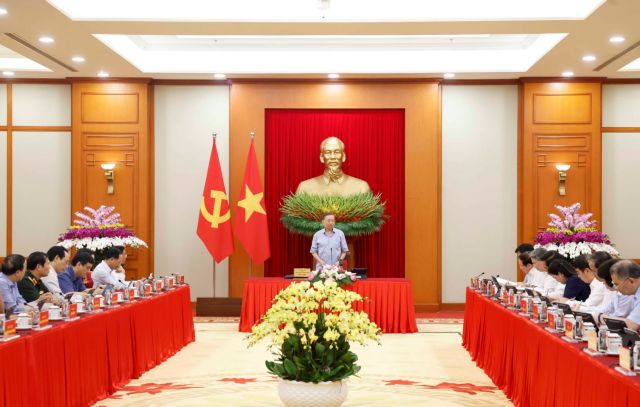
| Party General Secretary and State President Tô Lâm chairs a high-level working session with senior officials from the Ministry of Education and Training on Monday. — VNA/VNS Photo |
HÀ NỘI — Việt Nam's top leader said on Monday that education policy must follow a clear principle: the harder the conditions in an area, the more resources it should receive, and teachers who work in those postings should be paid better than those who do not.
Party General Secretary and State President Tô Lâm made the remarks while presiding over a high-level working session with senior officials from the Ministry of Education and Training.
A central theme of Lâm's remarks was a fundamental shift in how education authorities conceive of their role.
He called on the sector to move away from a mindset of administrative control toward what he termed "development governance", a more proactive orientation in which the education system is actively engineered to serve the country's strategic needs.
That means, he said, that education must move one step ahead in building the talent pipeline Việt Nam will need highly skilled professionals, technically trained workers and specialists in science and technology, artificial intelligence and other priority fields.
At the operational level, the top leader directed the ministry to preserve its role as the national standard-setter for curriculum quality and teacher qualifications, while granting significantly greater autonomy to schools, paired with clearer accountability.
Lâm also ordered a systematic review of outdated regulations and a reduction in administrative reporting requirements so that teachers can spend more time on instruction.
He framed the upcoming school year as the first real-world test of Resolution 71's implementation, placing direct responsibility on provincial and municipal authorities to ensure every school has adequate classrooms, textbooks and teaching equipment before classes begin.
"Under no circumstances should a student be kept out of school by financial hardship," he said.
One of the session's sharpest exchanges centred on the paradox of rising household education costs, even as the Government has cut or waived tuition fees.
The country's top leader relayed a complaint he had heard directly from parents: official fees may have fallen, but actual out-of-pocket spending keeps climbing.
The culprit, he suggested, is a proliferation of add-on charges – English-language classes, music lessons and other activities that schools have offloaded to the private sector under what Vietnamese policy refers to as 'socialisation', meaning services the State can no longer fully fund are open to fee-charging private providers.
Extra tutoring and supplementary classes are not inherently bad; they only turn problematic when people distort them, he said.
The Party chief and State president called for tighter oversight of out-of-school instruction and a crackdown on gaming the numbers, in which the grade on the report card matters more than what the student learned.
He also urged the Government to act quickly on an unused property solution: converting surplus Government office buildings into schools and healthcare facilities, rather than allowing them to sit idle and deteriorate while children lack places to study and communities lack clinics.
Lâm called for a set of equity indices that would track educational outcomes across geographic regions, income groups and vulnerable populations, creating a data-driven mechanism for identifying and closing gaps.
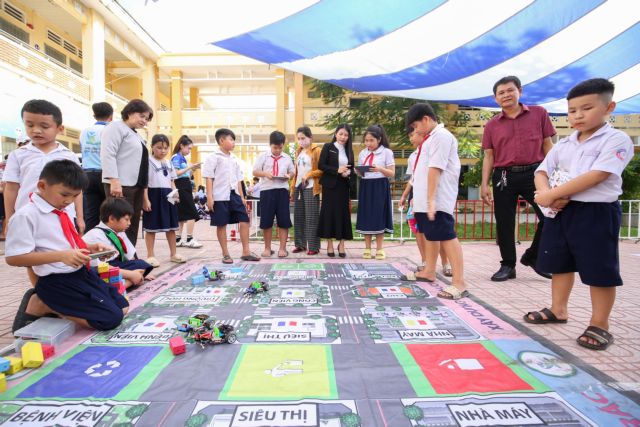
|
| Students at a primary school in the southern province of Tây Ninh try out a waste-sorting robot, learning about environmental protection through hands-on technology. — VNA/VNS Photo |
For ethnic communities, mountainous areas and island communes, he outlined a specific set of priorities: preschool access, Vietnamese-language preparation before children enter first grade, school boarding programmes with daily meals and dormitory housing for teachers.
Schools in these areas carry a purpose beyond literacy, he said. They are not only places of learning, but community institutions that help preserve culture, reinforce trust and protect the nation's borders.
As for disability inclusion, he pushed back against the hollow practice of enrolling disabled children in school without actually meeting their learning needs.
Genuine inclusive education, he said, requires dedicated support teachers, assistive equipment, adapted curricula and coordination with health and social services, not just a name on the class register.
The top leader also designated the prevention of school violence as a top priority for the 2026–2027 academic year, calling for a school environment that is disciplined, humane and health-oriented.
This approach should emphasise prevention and remediation over punishment, while still enforcing firm consequences for misconduct, he said.
Closing his remarks, Lâm said every education policy must be measured by the progress, happiness and future of the learner.
He directed the Ministry to incorporate the session feedback into a concrete action plan and begin producing visible results from the very start of the new school year. — VNS
Society
 Society
 Society
 Society
 Society
 Society
 Society
 Society
 Society
 Society
 Society
 Society
 Society
 Society
 Society