 Society

LANDMARK Launches ‘Destination CENTRAL’: A District-Wide Invitation to Explore the Dynamism, Luxury, and Soul of Central
1.
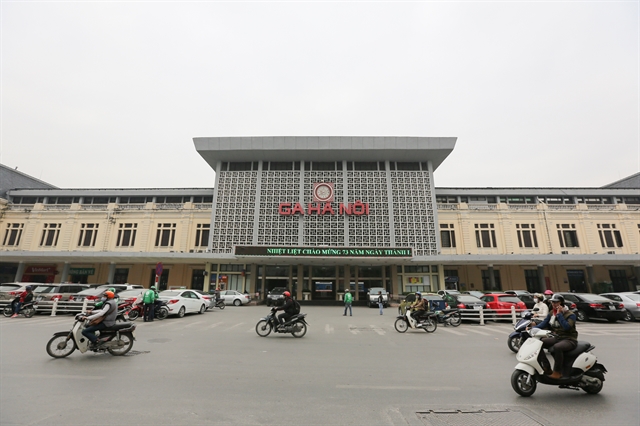 |
| Hà Nội Station on Lê Duẫn Street. — VNA/VNS Photo |
HÀ NỘI — Deputy Prime Minister Phạm Gia Túc has called for a thorough assessment of Hà Nội Station’s relocation plan on transport operations, social costs and traffic congestion.
Hà Nội Station on Lê Duẩn Street in the city centre, is proposed to be relocated to Ngọc Hồi area, about 14km to the south of its current location, as part of the National Route 1A expansion project.
The station building was considered to be of historic significance. Its original architecture was built by the French in 1899 and inaugurated in 1902. The main lobby was destroyed by American bombing and rebuilt in the early 1970s.
Earlier, Vingroup, the project's head investor, had proposed relocating Hà Nội Station to another site designated by the Ministry of Construction (MoC) and municipal authorities to facilitate site clearance within this year.
Under this proposal, passengers travelling to southern provinces would depart from Ngọc Hồi, while freight operations at Thường Tín and Ngọc Hồi stations would run on an eastern ring route linking Ngọc Hồi and Kim Sơn.
Permanent Deputy PM Túc has assigned the MoC to lead and coordinate with Hà Nội People’s Committee and relevant departments to review the proposal submitted by the private investor to reach a decision.
If the proposed solution exceeds the ministry’s authority, it would be reported to higher authorities for consideration and approval in accordance with current laws and regulations.
Túc also noted the need to consider issues arising from relocating the city’s central railway hub, particularly while connecting infrastructure and facilities at Ngọc Hồi have yet to be fully developed and synchronised.
Based on the assessment, he requested appropriate solutions to ensure that freight and passenger transport services, traffic conditions, the operations of the Vietnam Railways Corporation, and workers’ livelihoods and employment are not adversely affected.
In addition, investment options must be thoroughly evaluated to ensure optimal efficiency and effectiveness, he added.
Túc said that if the project is implemented under a public-private partnership (PPP) model, investor selection must strictly comply with legal regulations and be conducted in a transparent and open manner, preventing waste or loss of state resources. — VNS
Society
 Society
 Society
 Society
 Society
 Society
 Society
 Society
 Society
 Society
 Society
 Society
 Society
 Society
 Society