 Society

Viên dives again to popularise swimming passion
1.
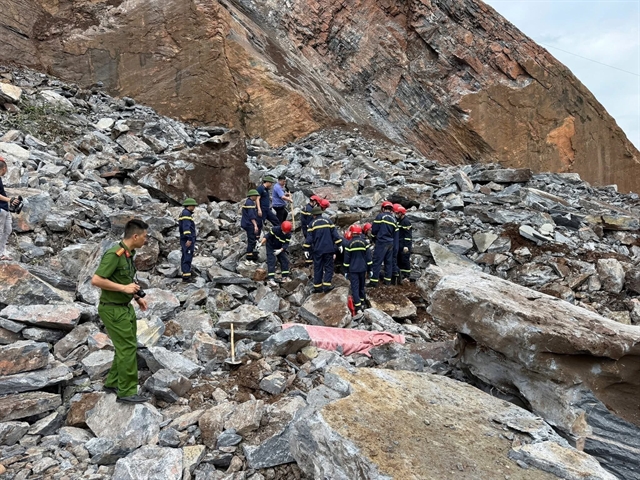 |
| The scene of a limestone quarry accident in the northern province of Thanh Hóa that killed three workers on May 21. — VNA/VNS Photo |
HÀ NỘI — Across Việt Nam, 658 workers were killed on the job in 2025, even as the total number of workplace accidents fell sharply from the preceding year, according to the Ministry of Home Affairs.
The country recorded 7,004 workplace accidents last year that affected 7,156 people, down by roughly 15.5 per cent in both figures compared to 2024. Fatal accidents declined by 63 cases, or 9.3 per cent, but 621 deadly incidents still occurred.
Serious injuries moved in the opposite direction, rising by 89 cases to 1,779, a 5.3 per cent increase. HCM City, Hà Nội, Quảng Ninh, Hải Phòng and Lào Cai reported the highest death tolls.
Deaths and fatal accidents declined among formally contracted workers, but rose among those without contracts, while the toll has carried into the new year.
In the first five months of 2026, the northern province of Thanh Hóa has recorded 11 workplace accidents, killing 12 people and seriously injuring another person; two involved quarrying and stone processing, leaving four dead.
The most recent occurred this month, during the annual Month of Action on Occupational Safety and Hygiene, when a limestone quarry accident killed three workers at a site in Cẩm Tú Commune.
On May 20, in the southern province of Gia Lai, a concrete pump truck suffered a boom failure that swung into nearby workers, killing a construction worker at the scene and seriously injuring two others.
The human cost has a financial dimension as well. Workplace accidents in the formal sector cost more than VNĐ14 trillion (US$534 million) in 2025. Workers lost more than 126,000 days to injury-related absences, generating additional indirect costs for businesses and the broader economy.
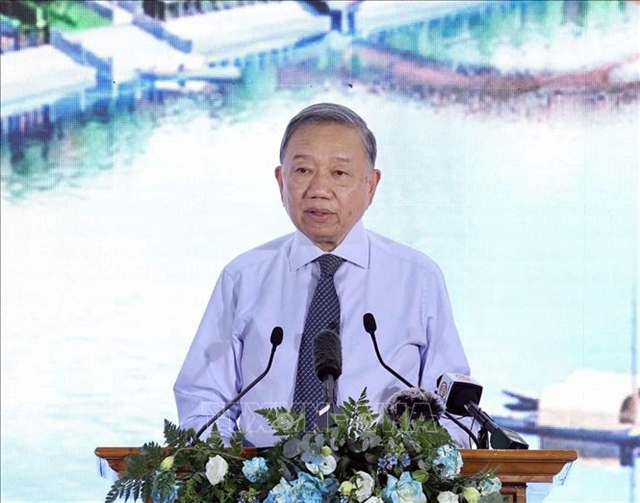
Party General Secretary and State President Tô Lâm spoke directly during a visit to Quảng Ninh, a major mining province in the northeast of the country, earlier this year.
"Worker safety cannot be sacrificed for output or economic growth, not under any circumstances," he said.
"This goes beyond production management. It is a matter of moral responsibility. Keeping workers safe is a political imperative."
The country's top leader called for stronger on-site supervision, early-warning technology and stricter safety discipline at every level.
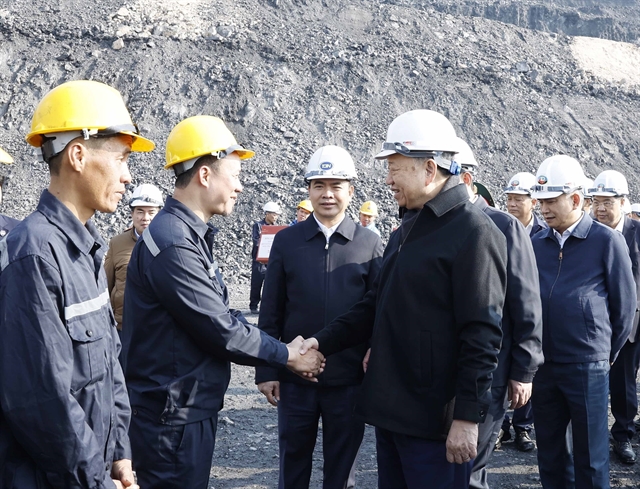 |
| The top leader met coal workers during his visit to the northern province of Quảng Ninh earlier this year. — VNA/VNS Photo |
Safe working conditions are the global standard for sustainable development and international integration, and are increasingly important for exports as global supply chains face new barriers and tariff pressures, he said.
The head of state also outlined a set of requirements for businesses, covering hazard assessment, equipment certification, safety training, personal protective equipment and worker health management.
Lê Minh Trí, a Politburo member and head of the Party Central Committee's Commission for Internal Affairs, offered a blunt diagnosis at the launch of this year's Action Month.
He said that working conditions at many facilities remain poor, with cramped space, outdated machinery and inadequate safety measures.
Compounding this is a structural shift: large numbers of workers are moving from agriculture into industry and services, but many arrive without the skills, discipline or industrial habits that those environments demand.
"Safety regulations at many facilities is not being enforced strictly. Serious accidents that kill and injure multiple people are still occurring," he said.
Minister of Home Affairs Đỗ Thanh Bình identified failures on both sides of the employment relationship.
"Many employers have not prioritised improving working conditions, or approach them in a perfunctory way," he said.
"Many workers, including farmers and fishermen, still do not fully understand the importance of safe practices."
The Government's response has taken the form of a nationwide campaign. This year's Action Month carries the theme 'Innovating Management and Improving Workplace Safety and Hygiene in the Digital Era.'
Việt Nam's national trade union federation, the General Confederation of Labour, is running a parallel Workers' Month under the theme 'Vietnamese Workers: Innovation, Creativity, Higher Labour Productivity.'
Trí called on party committees, local governments, businesses and workers to take shared responsibility by improving conditions, controlling risk and investing in training to prepare workers for an increasingly digital industrial economy.
He also called for expanding social welfare for workers, covering housing, healthcare and education. He singled out trade unions as the institutions most directly accountable for whether conditions on the ground actually improve.
"Worker safety is the yardstick for how well trade unions are functioning," he said. — VNS
Society
 Society
 Society
 Society
 Society
 Society
 Society
 Society
 Society
 Society
.jpeg) Society
Society
 Society
 Society
 Society
 Society